
Table of Contents
The Blisters That Appear Overnight, Cause No Pain, and Keep Coming Back
A male with two years of recurrent, tense blisters on his feet, no trauma, no chemical exposure, and no symptoms at all, presents one of the more distinctive diagnostic patterns in dermatology. Here is the full clinical picture, from diagnosis to management.
The Case: Recurrent, Painless Blisters on the Feet
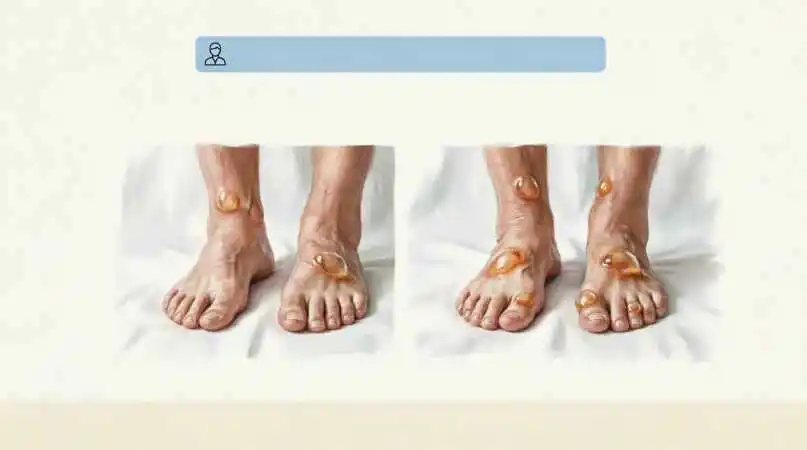
A 65-year-old male presents with a two-year history of recurrent, asymptomatic, tense blisters on his feet. There is no history of repeated trauma, chemical exposure, insect bites, or any constitutional symptoms such as fever, weight loss, or malaise. He reports having experienced similar episodes previously, with blisters that appear suddenly, are tense and often hemorrhagic in appearance, and cause no pain or itching despite their size and prominence.
This specific combination of features, sudden onset, tense and sometimes blood-tinged blisters, a distinctly acral location on the feet and lower legs, complete absence of pain or itch, no identifiable external trigger, and a recurring pattern over years, is a highly recognizable presentation in clinical dermatology, one that points strongly toward a specific, well-characterized diagnosis once the more common alternative explanations are systematically ruled out. Walking through that reasoning process, from the initial presenting features to the underlying mechanism and long-term management, explains both why this diagnosis fits so well and why it deserves more clinical attention than its benign course might initially suggest.
Why This Pattern Points So Strongly Toward One Diagnosis
In blistering skin conditions, the combination of location, symptom profile, and trigger history narrows the diagnosis considerably before a biopsy or any laboratory test is even ordered. Blisters caused by friction or repeated trauma are typically tender and directly correlate with a specific mechanical cause the patient can usually identify. Blisters caused by an allergic or irritant contact reaction are typically itchy or mildly painful and localized to the specific area of contact. Insect bite reactions are typically itchy, often clustered, and accompanied by a visible bite mark or surrounding redness.

The presentation described here lacks every one of these hallmark features: it is entirely painless, has no identifiable mechanical or chemical trigger, and recurs spontaneously over an extended period rather than following a single, identifiable exposure. This specific combination, particularly when the blisters are tense, sometimes hemorrhagic, and confined to the feet and lower legs of an older adult, is the textbook presentation of a condition called bullosis diabeticorum, also known as diabetic bullae or bullous disease of diabetes.
What Bullosis Diabeticorum Actually Is
Bullosis diabeticorum is an uncommon but well-documented skin condition occurring in people with diabetes, characterized by the spontaneous appearance of tense blisters, most often on the lower legs and feet, without any preceding trauma or identifiable trigger. The condition was first formally described in the medical literature in the 1960s and has since been recognized as a distinct clinical entity rather than a variant of another blistering skin disease.
The blisters are typically several millimeters to a few centimeters in diameter, filled with clear or, in some cases, blood-tinged fluid, giving them a hemorrhagic appearance similar to what is described in this case. They arise suddenly, often noticed by the patient upon waking, with no memory of any injury the night before, and this abrupt, unexplained onset is one of the condition’s most consistently reported and diagnostically useful features.
A blister that appears overnight, causes no pain, and cannot be traced to any injury is one of the more distinctive clues in dermatology, and it usually points toward diabetes rather than the skin itself.
Why This Happens in People With Diabetes
The precise mechanism behind bullosis diabeticorum remains incompletely understood, but several contributing factors have been identified through research and clinical observation. Long-standing diabetes is associated with microvascular changes affecting small blood vessels in the skin, alongside diabetic neuropathy, nerve damage that can reduce sensation in the feet and lower legs, both of which are believed to make the skin in these areas more vulnerable to blister formation from minor, often unnoticed mechanical stress that would not produce a blister in someone with normal skin integrity and sensation.
The condition is more commonly seen in patients with long-standing diabetes, particularly those with evidence of other diabetic complications such as neuropathy, retinopathy, or nephropathy, suggesting bullosis diabeticorum may serve as a visible marker of broader underlying microvascular disease rather than an isolated skin problem unrelated to the patient’s overall diabetic control and disease duration.
The Differential Diagnosis Worth Ruling Out
Despite how strongly this presentation points toward bullosis diabeticorum, a thorough evaluation always considers other conditions capable of producing tense blisters on the lower extremities. Bullous pemphigoid, an autoimmune blistering disease most common in older adults, also produces tense blisters, but it is typically accompanied by significant itching and tends to involve a more widespread distribution across the trunk and limbs rather than remaining confined to the feet, an important distinguishing feature from the localized, asymptomatic presentation described here.
Porphyria cutanea tarda produces blistering and skin fragility, but characteristically affects sun-exposed areas like the hands and face rather than the feet, and is typically associated with skin fragility and photosensitivity rather than spontaneously appearing tense bullae. Epidermolysis bullosa acquisita, a rare autoimmune blistering disorder, is generally triggered by trauma or friction rather than appearing spontaneously. Bullous impetigo, a bacterial skin infection, typically presents with more inflammatory-appearing lesions and is not usually recurrent over a multi-year span without treatment. The absence of itching, widespread distribution, photosensitivity, and trauma history in this case argues against each of these alternatives and further supports bullosis diabeticorum as the leading diagnosis.
How the Diagnosis Is Actually Confirmed
Bullosis diabeticorum is primarily a clinical diagnosis, meaning an experienced clinician can often recognize the condition based on the characteristic history and appearance alone, particularly in a patient with known diabetes. Confirming the diagnosis and ruling out the alternatives discussed above typically involves checking blood glucose and hemoglobin A1c levels to confirm diabetes status and assess long-term glucose control, since this presentation would prompt a new diabetes workup in a patient not already known to have the condition.
A skin biopsy is sometimes performed, particularly when the diagnosis is uncertain or when ruling out an autoimmune blistering disease is important, showing a blister forming without the inflammatory infiltrate or specific antibody deposits seen in conditions like bullous pemphigoid. Direct immunofluorescence testing, which looks for antibody deposits in the skin, is typically negative in bullosis diabeticorum, a key laboratory finding that helps distinguish it from autoimmune blistering conditions that would show a positive result on this specific test.
What Happens to the Blisters Over Time
One of the most reassuring features of bullosis diabeticorum is its natural course: the blisters typically resolve on their own within two to five weeks without scarring, even without specific treatment beyond basic wound care, distinguishing it from many other blistering skin conditions that require active, ongoing treatment to control and resolve. This self-limited course is part of why the condition, despite its dramatic appearance, is generally considered benign from a dermatological standpoint.
Recurrence, as described in this case, is a well-documented feature of the condition, with new episodes often appearing in different locations on the feet or lower legs over subsequent months or years, particularly in patients whose underlying diabetes remains poorly controlled, reinforcing the connection between this skin finding and the patient’s broader metabolic status rather than representing a series of unrelated, coincidental skin events.
How Bullosis Diabeticorum Is Actually Managed
Management centers primarily on conservative, supportive wound care rather than aggressive medical intervention, since the blisters resolve spontaneously in most cases. This typically includes keeping the blister intact when possible, since the overlying skin serves as a natural, sterile barrier protecting the underlying tissue from infection, along with gentle cleansing and covering with a non-adherent dressing if the blister ruptures on its own.
If a blister does rupture, proper wound care to prevent secondary bacterial infection becomes the primary concern, particularly important in diabetic patients given their generally elevated infection risk and, in some cases, reduced ability to fight infection effectively due to impaired circulation and immune function associated with long-standing diabetes. Prophylactic drainage of intact blisters is generally not recommended, since intentionally opening an intact blister removes the natural protective barrier without providing meaningful clinical benefit in most cases.
Why Diabetes Management Is the Real Long-Term Treatment
Because bullosis diabeticorum is fundamentally a manifestation of underlying diabetic microvascular and neuropathic changes rather than an isolated skin disease, the most meaningful long-term management strategy involves optimizing overall diabetes control rather than treating each individual blistering episode in isolation. This includes working with the patient’s primary care provider or endocrinologist to review and, if needed, adjust glucose management, alongside routine screening for other diabetic complications the condition may signal, including diabetic retinopathy, nephropathy, and peripheral neuropathy.
Patients with recurrent bullosis diabeticorum should also receive reinforced diabetic foot care education, including daily foot inspection, proper footwear to minimize unnoticed mechanical stress on already vulnerable skin, and prompt attention to any new lesion, since the same neuropathy that can contribute to blister formation also reduces a patient’s ability to feel early warning signs of a developing foot ulcer or infection, a genuinely serious complication risk in long-standing diabetes that this recurring blistering pattern should prompt clinicians to actively screen for.
Why Painlessness Is Itself an Important Clinical Clue
The complete absence of pain in this presentation is not simply an incidental detail; it is directly relevant to the underlying pathophysiology and worth specific clinical attention. Reduced or absent sensation in the affected area strongly suggests peripheral neuropathy, a common long-term complication of diabetes affecting the nerves of the feet and lower legs, and this same neuropathy is part of why patients with bullosis diabeticorum often do not notice the minor mechanical stress believed to contribute to blister formation in the first place.
Recognizing this connection matters clinically because peripheral neuropathy is itself a significant risk factor for more serious diabetic foot complications, including unnoticed injuries progressing to non-healing ulcers, making a formal neuropathy assessment, including monofilament testing and vibration sensation testing, a reasonable and clinically appropriate part of the evaluation for any patient presenting with this pattern of painless, recurrent blistering.
What This Case Illustrates About Diabetic Skin Complications
Bullosis diabeticorum belongs to a broader category of diabetes-associated skin conditions that clinicians increasingly recognize as visible markers of internal disease processes, alongside conditions like diabetic dermopathy, necrobiosis lipoidica, and acanthosis nigricans, each reflecting different aspects of how prolonged elevated blood glucose affects skin structure, blood vessels, and nerve function over time. Recognizing these skin findings accurately allows for earlier identification of poorly controlled diabetes or previously undiagnosed diabetes altogether, in cases where a patient’s skin presentation is the first clinical clue prompting a diabetes workup.
This case, presenting with a well-established two-year history of similar episodes, illustrates the recurrent, chronic nature of the condition when underlying diabetes remains a persistent, ongoing factor, reinforcing why addressing the root metabolic cause, rather than treating each individual blister as an isolated dermatological event, represents the more clinically meaningful long-term approach to a presentation like this one.
When Additional Investigation Becomes Necessary
While the classic presentation described here often allows a confident clinical diagnosis, certain features would appropriately prompt a more extensive workup rather than settling on bullosis diabeticorum by default. Widespread blistering extending well beyond the feet and lower legs, the presence of itching or pain, involvement of mucous membranes such as the mouth, or systemic symptoms like fever or malaise would all argue against this diagnosis and warrant biopsy with immunofluorescence testing to rule out an autoimmune blistering disorder more definitively.
Similarly, a patient without a known diabetes diagnosis presenting with this exact pattern should prompt an urgent diabetes workup rather than an assumption that the skin finding is unrelated to any systemic condition, since bullosis diabeticorum occurring as the presenting sign of previously undiagnosed diabetes has been documented in the medical literature and represents exactly the kind of case where recognizing the skin finding accurately leads directly to a significant, actionable medical diagnosis.
The Overall Clinical Takeaway
This presentation, tense, painless, recurrent blisters on the feet of an older adult with no identifiable trauma, chemical, or insect exposure, most strongly supports a diagnosis of bullosis diabeticorum, a benign but clinically significant marker of underlying diabetes and its associated microvascular and neuropathic changes. Confirming diabetes status through blood glucose and hemoglobin A1c testing, ruling out autoimmune and other blistering alternatives when the picture is not entirely clear-cut, and shifting focus toward long-term glucose control and diabetic foot care represent the most clinically appropriate path forward for a case matching this description.
Frequently Asked Questions
| Question | Answer |
| What is the most likely diagnosis for recurrent, painless, tense blisters on the feet? | Bullosis diabeticorum is the classic diagnosis for this specific presentation. |
| What is bullosis diabeticorum? | It is a spontaneous blistering skin condition occurring in people with diabetes, mainly on the feet and lower legs. |
| Is bullosis diabeticorum painful? | No, it is characteristically painless despite the blisters often appearing large and tense. |
| What causes bullosis diabeticorum? | The exact cause is unclear, but it is linked to diabetic microvascular changes and neuropathy. |
| Does bullosis diabeticorum require trauma to occur? | No, it appears spontaneously without any identifiable trauma or trigger. |
| Who is most likely to develop bullosis diabeticorum? | It typically occurs in patients with long-standing diabetes, especially with other diabetic complications. |
| How long do the blisters typically last? | They usually resolve on their own within two to five weeks without scarring. |
| Is bullosis diabeticorum dangerous? | It is generally considered benign, though proper wound care is important to prevent infection. |
| Can bullosis diabeticorum recur? | Yes, recurrence is common, especially with poorly controlled diabetes. |
| How is bullosis diabeticorum diagnosed? | It is primarily diagnosed clinically, supported by blood glucose testing and sometimes skin biopsy. |
| What does direct immunofluorescence testing show in this condition? | It is typically negative, helping distinguish it from autoimmune blistering diseases. |
| What is bullous pemphigoid, and how is it different? | It is an autoimmune blistering disease that is usually itchy and more widespread than bullosis diabeticorum. |
| What is porphyria cutanea tarda? | It is a condition causing blistering and skin fragility, typically in sun-exposed areas rather than the feet. |
| Why are the feet the most common location for these blisters? | Microvascular and neuropathic changes in diabetes particularly affect the lower legs and feet. |
| Should intact blisters be drained? | Generally no, since the intact skin protects the wound and drainage is not typically recommended. |
| What should be done if a blister ruptures? | Gentle cleansing and a non-adherent dressing help prevent infection. |
| Why is infection risk a concern in diabetic patients with this condition? | Diabetes can impair circulation and immune response, increasing infection risk. |
| Does treating the blisters directly cure the condition? | No, managing underlying diabetes is the key long-term approach rather than treating each blister alone. |
| What is the connection between neuropathy and this condition? | Reduced sensation from neuropathy may allow minor unnoticed stress to trigger blister formation. |
| Should neuropathy testing be part of the evaluation? | Yes, given the strong connection between painless blistering and diabetic neuropathy. |
| What other skin conditions are associated with diabetes? | Diabetic dermopathy, necrobiosis lipoidica, and acanthosis nigricans are also diabetes-associated skin findings. |
| Can this skin finding reveal previously undiagnosed diabetes? | Yes, in some cases it prompts the initial diabetes diagnosis in a previously unscreened patient. |
| Is a skin biopsy always necessary? | Not always, since the diagnosis is often clear based on history and clinical appearance alone. |
| What blood tests help confirm the diagnosis? | Blood glucose and hemoglobin A1c levels help confirm diabetes and assess long-term control. |
| Can good diabetes control reduce recurrence? | Yes, better glucose management is associated with reduced recurrence over time. |
| Is this condition contagious? | No, it is not an infectious condition and cannot spread to others. |
| What is diabetic foot care education, and why does it matter here? | It involves daily foot checks and proper footwear, important given reduced sensation risk. |
| Can bullosis diabeticorum resemble a burn? | It can visually resemble a burn or friction blister, though no such history is present. |
| Why is hemorrhagic fluid sometimes seen in these blisters? | Underlying small blood vessel involvement can cause blood-tinged blister fluid. |
| What is the overall prognosis for this condition? | The prognosis is generally good, with spontaneous healing, though recurrence and diabetes monitoring remain important. |
⚕️Medical Disclaimer:
The information provided on this website is for general educational and informational purposes only and is not intended as a substitute for professional medical advice, diagnosis, or treatment. Always seek the advice of your physician or other qualified health provider with any questions you may have regarding a medical condition. Never disregard professional medical advice or delay in seeking it because of something you have read on this website.
