
Table of Contents
The Part of Your Gut Nobody Talks About: A Plain-Spoken Guide to the Rectum
Anatomy, everyday function, the problems that send people to Google at 1 a.m., and the habits that keep everything running smoothly.
It’s a quiet Tuesday evening. You wipe, glance down, and spot a streak of bright red on the paper. Your stomach drops. You tell yourself it’s nothing, probably the chilli from lunch, and flush before you can think about it any further. Three days later you’re typing a half-formed question into a search bar at one in the morning, hoping the internet will say something comforting.
If that sounds familiar, you’re in enormous company. The rectum is one of the most overlooked organs in the body, and not because it’s unimportant. It’s overlooked because it’s awkward. We’ll happily chat about our hearts, our blood sugar, even our gut bacteria over dinner. But rectum anatomy, rectal pain and rectal bleeding? Those get whispered about, or skipped entirely, sometimes until a small problem has been growing quietly for years.
That silence has a price. Hemorrhoids get blamed for symptoms that deserved a closer look. An anal fissure gets endured for months instead of treated in weeks. And rectal cancer, which responds very well to treatment when it’s found early, gets found late, partly because people hesitate to say the word “rectal” out loud to a doctor.

So let’s say it plainly. This guide covers what the rectum is, what it does all day, the problems that show up most often, how to read the warning signs, and the daily habits that protect it. No jargon walls and no scare tactics. Just the kind of straight talk you’d get from a friend who happens to know a lot about gut health.
Your rectum has no sense of embarrassment. Your symptoms deserve the same honesty you’d give a sore throat.
Rectum Anatomy: What Is Actually Down There
Most people picture the rectum as a vague tube at the very end of the digestive system and leave it at that. The reality is more interesting, and understanding rectum anatomy makes every symptom later in this guide easier to make sense of.
Where it sits and how it’s built
The rectum is the last stretch of your large intestine, roughly 12 to 15 centimeters (5 to 6 inches) long. It picks up where the sigmoid colon leaves off, near the lower part of your sacrum, then follows the curve of your tailbone down to the anal canal. In men it sits behind the bladder and prostate. In women it sits behind the vagina and uterus. That close company explains why trouble in one pelvic organ can show up as odd symptoms in its neighbor.
Its name comes from the Latin for “straight,” which is a bit of a misnomer. The human rectum curves along the sacrum and bends from side to side inside, forming three internal shelves known as the valves of Houston. Think of them as baffles in a drainpipe: they help support the weight of stool so the exit isn’t taking the full load at once.
The wall has the same layered design as the rest of the gut: an inner mucosal lining, a connective layer beneath it, and two layers of smooth muscle on the outside. What sets the rectum apart is its stretch. The widest section, called the ampulla, is built to expand like a soft, flexible holding chamber.
The muscles and the angle that keep you dry
Below the rectum sits the anal canal, about 3 to 4 centimeters long, wrapped in two sphincters that work as a team. The internal anal sphincter is smooth muscle you can’t consciously control, and it handles most of the holding-shut at rest. The external anal sphincter is skeletal muscle, the one you clench on purpose when you’re stuck in traffic and really need a restroom.
Then there’s the puborectalis, a U-shaped band of the pelvic floor that loops behind the rectum like a sling and tugs it forward. That pull creates a bend of roughly 90 degrees called the anorectal angle. Picture a garden hose with a kink in it: nothing flows until you straighten the kink. When you sit or squat for a bowel movement, the puborectalis relaxes, the angle opens up, and the way is clear. A healthy pelvic floor isn’t a luxury here. It’s half of your continence system.
The dividing line most people have never heard of
About two centimeters inside the anal canal runs a wavy border called the dentate line. Above it, the lining belongs to the rectum and is wired like the rest of the gut: excellent at sensing fullness and stretch, poor at sensing sharp pain. Below it, the lining is skin-like and packed with nerves that detect touch, heat, and pain.
That single boundary explains a lot. It’s why internal hemorrhoids can bleed without hurting at all, while a tiny tear in the lower lining, an anal fissure, can feel like a paper cut made of fire.
RECTUM VS. ANAL CANAL AT A GLANCE
| Feature | Rectum | Anal canal |
| Length | About 12 to 15 cm | About 3 to 4 cm |
| Lining | Moist, glandular mucosa | Skin-like lining below the dentate line |
| Pain sensitivity | Low; senses stretch and fullness | High; senses touch, heat, and pain |
| Muscle control | Mostly involuntary | Internal sphincter involuntary, external sphincter voluntary |
| Typical problems | Polyps, rectal cancer, proctitis, rectal prolapse | Fissures, external hemorrhoids, abscesses, fistulas |
Rectum Function: Far More Than a Waiting Room
If digestion is a long assembly line, the rectum is the loading dock, and a surprisingly clever one. Rectum function comes down to three jobs: holding stool, sensing it, and deciding, with your help, when to let it go.
Storing and sensing
A few times a day, the sigmoid colon pushes a mass of stool down into the rectum. The wall stretches, and stretch receptors in the rectal wall and the surrounding pelvic floor muscles fire signals to your spinal cord and brain. That’s the “I should find a bathroom” feeling.
Here’s the part that surprises people: the rectum adapts. If you ignore the first urge, the wall relaxes to make room and the signal fades, sometimes for hours. It’s a handy trick during a long meeting. It’s also why habitually putting things off can dull the signal over time and make constipation more likely.
The sampling reflex
When stool enters the rectum, the internal sphincter relaxes briefly, a response called the rectoanal inhibitory reflex. This lets a tiny amount of contents slip into the upper anal canal, where the sensitive lining works out whether it’s gas, liquid, or solid. Meanwhile the external sphincter tightens to keep everything where it belongs. Your body quietly asks “gas or not gas?” dozens of times a day, and you rarely notice.
Step by step: what happens during a bowel movement
- Stool arrives and stretches the rectal wall.
- Stretch receptors signal your brain, and you feel the urge.
- The sampling reflex checks whether the contents are gas or stool while the external sphincter holds firm.
- You reach a toilet and sit. The puborectalis relaxes and the anorectal angle straightens.
- The rectum contracts, helped by mild abdominal pressure, and both sphincters relax.
- Stool passes, and a closing reflex tightens the sphincters again.
When that chain runs smoothly, a bowel movement takes a minute or two with little effort. When any link is off, whether the muscles are weak, too tight, or the rectum has lost some of its sensitivity, you get straining, incomplete emptying, or leakage.
Why mornings are so busy
Eating, especially breakfast, triggers the gastrocolic reflex: the stomach stretches, and the colon responds by moving its contents along. The same thing happens when you wake and get upright. Add a hot cup of coffee, which stimulates the bowel in many people, and you have the classic morning ritual. If your own rhythm looks different, that’s fine. Anywhere from three times a day to three times a week counts as normal, as long as it’s comfortable and consistent for you.
A side job: the rectum as a route for medicine
The rectum’s rich blood supply makes it a handy entry point for medication. Suppositories and rectal gels are used when someone is vomiting, can’t swallow, or needs a drug quickly, as with some anti-seizure and pain medicines. And because the lower and middle rectal veins drain into the general circulation rather than straight to the liver, part of the dose skips the liver’s first pass.
Common Rectal Problems: Hemorrhoids, Fissures, Prolapse, and Pain
Most rectal complaints fall into a handful of families. The table below is a quick orientation, and the sections after it unpack each one. Treat it as a map rather than a diagnosis; these conditions overlap, and symptoms alone can’t reliably tell them apart.
COMMON RECTAL AND ANORECTAL CONDITIONS
| Condition | What you notice | Pain | Bleeding | First steps |
| Hemorrhoids | Itching, swelling, a lump, bright red blood on paper | Mild, unless clotted | Common | Fiber, fluids, sitz baths |
| Anal fissure | Sharp pain with a bowel movement, lingering burn | Moderate to severe | Small streaks | Soft stools, sitz baths, prescription ointment |
| Rectal prolapse | Tissue bulging out, mucus leakage, incomplete emptying | Often mild | Occasional | Surgical evaluation; treat constipation |
| Rectocele | Pressure, pressing on the vaginal wall to empty | Mild pressure | Rare | Pelvic floor therapy |
| Proctitis | Urgency, mucus, blood, tenesmus | Cramping, aching | Common | Treat the underlying cause |
| Rectal cancer | Persistent bleeding, changed bowel habits, tenesmus | Often painless early | Common | Prompt evaluation |
Hemorrhoids
First, a common misconception: everyone has hemorrhoids. They’re cushions of blood vessels and connective tissue lining the anal canal, and they help with continence. They only become a problem when they swell, slip, or get irritated.
Internal hemorrhoids form above the dentate line. Because that area has few pain nerves, they usually announce themselves with painless bright red blood on the toilet paper or in the bowl, and sometimes a soft bulge that slides out during a bowel movement. External hemorrhoids form under the skin around the anal opening. They itch, swell, and can make sitting uncomfortable. If one clots, you get a thrombosed hemorrhoid: a sudden, firm, painful, blue-purple lump that tends to peak in the first two or three days.
The usual culprits are straining, long stretches on the toilet, chronic constipation or diarrhea, pregnancy, heavy lifting, and a low-fiber diet. Most flare-ups settle within a week or two with simple measures:
- Raise fiber gradually toward 25 to 30 grams a day and drink enough to keep stool soft.
- Soak in warm water for 10 to 15 minutes once or twice a day (a sitz bath).
- Skip the straining, and leave the phone outside the bathroom.
- Use over-the-counter creams for a few days only; steroid creams shouldn’t run beyond about a week without advice.
- Clean with water or unscented wipes instead of dry, rough toilet paper.
If symptoms persist, office procedures such as rubber band ligation work well for internal hemorrhoids, and surgery is kept for stubborn, advanced cases. One rule matters more than the rest: don’t label every episode of rectal bleeding “piles” without having it checked, especially after 45. More on that shortly.
Anal fissure
Technically an anal fissure sits just below the rectum, but it gets lumped in because it feels like a rectal problem and it’s one of the most common causes of bleeding in younger adults. It’s a small tear in the lining of the anal canal, usually at the back, caused by passing a hard or large stool.
The classic story goes like this: sharp, tearing pain during a bowel movement, then a burning ache that can last minutes to hours, then a little bright red blood on the paper. Many people begin to dread the toilet, hold things in, end up with harder stools, and tear again. The sphincter also spasms in response to pain, which squeezes the blood vessels and slows healing. It’s a vicious circle.
The good news is that most acute fissures heal within a few weeks with softer stools, warm sitz baths, and a bit of patience. If it hangs around beyond six to eight weeks, it’s considered chronic, and your doctor has stronger options: prescription ointments that relax the sphincter (nitroglycerin or diltiazem), botulinum toxin injections, or a small procedure called lateral internal sphincterotomy, which has a high success rate. A fissure sitting off to the side rather than at the back is a clue to look for other causes, such as Crohn’s disease.
Rectal prolapse and rectocele
Rectal prolapse happens when the wall of the rectum slides down and out through the anus, a little like a sock turning inside out. It often begins as a bulge that appears only during straining and goes back by itself, then progresses until it comes out with walking or standing. It’s more common in older women, and in people with long-standing constipation, a weak pelvic floor, or a history of difficult childbirth. Related symptoms include mucus leakage, a feeling that you haven’t finished, and sometimes incontinence.
People often mistake it for hemorrhoids. One clue clinicians look for: a prolapsed rectum shows concentric rings of folds, while hemorrhoids look like separate radial cushions. Beyond the mildest cases, treatment is usually surgical, with several approaches (through the abdomen or through the perineum) chosen according to age, fitness, and severity. Treating constipation and straining stays part of the plan either way.
Rectocele is a related problem in women: the wall between the rectum and vagina weakens, letting the rectum bulge forward. The signs are vaginal pressure, a sense of incomplete emptying, and sometimes needing to press on the vaginal wall with a finger to finish a bowel movement. Mild cases often improve with pelvic floor physical therapy, stool softening, and avoiding straining.
Rectal pain with no obvious cause
Not every ache has a visible culprit. A few patterns are worth knowing:
- Proctalgia fugax: a sudden, intense, stabbing pain deep in the rectum, often at night, lasting seconds to a few minutes and then vanishing. Startling, but harmless.
- Levator ani syndrome: a dull, pressure-like ache that worsens with sitting, linked to a tight, overworked pelvic floor. Pelvic floor physical therapy and biofeedback are the main treatments.
- Tenesmus: the persistent feeling that you need to go when there’s little or nothing to pass. It can come from inflammation, infection, or a tumor, so ongoing tenesmus needs a proper evaluation.
- Abscess: throbbing pain, swelling, and sometimes fever near the anus or rectum. This one is urgent, because pus needs to be drained.
Proctitis: when the lining is inflamed
Proctitis is inflammation of the rectal lining, and it has several causes: ulcerative colitis (which very often starts in the rectum), infections including sexually transmitted ones such as gonorrhea, chlamydia, herpes, and syphilis, radiation therapy for pelvic cancers, and certain medications. The symptoms are urgency, mucus, blood, cramping, and tenesmus. Treatment depends entirely on the cause, which is why a swab, stool test, or scope is so useful. There’s nothing shameful about being asked about sexual health during the workup. Clinicians ask routinely, and an honest answer gets you the right treatment faster.
Rectal Bleeding: When It’s Probably Nothing and When It Isn’t
Picture someone in their early fifties who has noticed the occasional streak of blood for months and has always assumed it was piles. Often that assumption is right. Sometimes it isn’t, and the only way to know is to look. Rectal bleeding is common, usually benign, and never something to ignore for long.
Reading the color and the clues
WHAT THE BLOOD MAY BE TELLING YOU
| What you see | What it may point to | What to do |
| Bright red streaks on paper or drops in the bowl | Hemorrhoids or an anal fissure | Try home care; see a doctor if it lasts beyond 1 to 2 weeks, keeps returning, or you are over 45 |
| Bright or dark red blood mixed through the stool | Bleeding higher up: polyps, diverticular disease, colitis, rectal cancer | Book an evaluation soon |
| Black, tarry, foul-smelling stool | Bleeding in the upper digestive tract | Seek urgent care |
| Maroon stool or clots, with dizziness | Significant bleeding | Go to emergency care |
| Blood with mucus, urgency, or diarrhea | Inflammatory bowel disease or infection | Get checked, usually with a stool test |
One quick sanity check before you panic: beets, red food dyes, and tomato-heavy meals can tint stool red, while iron tablets and bismuth-containing stomach remedies turn it black. If it’s a food or supplement effect, the toilet paper won’t be bloody, and the color should clear within a day or two.
Red flags that move this up your list
- Bleeding with dizziness, fainting, a racing heartbeat, or sudden paleness
- A change in bowel habits lasting longer than two to three weeks
- Unexplained weight loss, ongoing tiredness, or iron-deficiency anemia on a blood test
- Narrow, pencil-like stools, or a constant sense of incomplete emptying
- A family history of colorectal cancer or polyps
- Bleeding while taking blood thinners (never stop them without medical advice)
What a visit actually involves
Many people avoid the appointment because of what they imagine will happen. The reality is more routine than you’d expect. You’ll answer questions about your bowel habits, diet, and family history. The doctor may do a digital rectal exam, which takes under a minute, and perhaps a brief anoscopy to look at the anal canal. Blood tests can check for anemia. Depending on your age and symptoms, you may be referred for a flexible sigmoidoscopy or a colonoscopy.
You’re allowed to ask for a chaperone, request a pause, or ask the doctor to explain each step beforehand. Good clinicians welcome that.
Rectal Cancer: What to Know Without Losing Sleep
Now for the topic that sits behind a lot of those late-night searches. Rectal cancer belongs to the wider family of colorectal cancers and accounts for roughly one in three of them. The encouraging part is that it’s one of the more preventable and treatable cancers when it’s found early. The worrying part is that rates in adults under 50 have been climbing in many countries for years, which is why symptoms in younger people should no longer be brushed aside.
Symptoms worth acting on
- Blood in or on the stool that keeps coming back
- A lasting change in bowel habits, such as new constipation or diarrhea
- Stools that are narrower than usual
- Tenesmus, the urge to go without much to pass
- Persistent pelvic or rectal discomfort
- Unexplained weight loss or tiredness from slow blood loss
The tricky part is that early rectal cancer often causes no symptoms at all. That’s the whole reason screening exists.
Who’s at higher risk
Age is the biggest factor, but it isn’t the only one. A family history of colorectal cancer or advanced polyps, long-standing inflammatory bowel disease, and inherited conditions such as Lynch syndrome and familial adenomatous polyposis all raise the odds. Lifestyle plays a part too: diets heavy in processed meat and low in fiber, excess body weight, little physical activity, smoking, and heavy drinking. Having risk factors doesn’t mean you’ll get it, and having none doesn’t mean you can’t. They simply shape when to start screening and how often.
Screening and the role of colonoscopy
Colonoscopy deserves a special mention because it does something few other tests can: it finds and removes precancerous polyps in the same session. Most colorectal cancers grow from adenomatous polyps over many years, often a decade or more. Take out the polyp and you’ve prevented the cancer, not just detected it.
Screening options include annual stool tests such as the fecal immunochemical test (FIT), stool DNA tests every one to three years, flexible sigmoidoscopy (which examines the rectum and lower colon), and colonoscopy, typically every ten years when results are normal. In the United States, major guidelines recommend starting average-risk screening at 45. Recommendations differ elsewhere, and a family history may mean starting earlier, so ask your doctor what fits your situation.
As for the dreaded prep: yes, it’s unpleasant, and no, it isn’t dangerous for most people. Splitting the dose (half the evening before, half on the morning of the procedure), chilling the solution, and sipping through a straw all help. The procedure itself is done under sedation. Most people remember the prep far more than the test.
How it’s diagnosed and treated
A biopsy taken during a scope confirms the diagnosis. A pelvic MRI then maps how deeply the tumor has grown and how close it sits to the sphincter muscles and surrounding tissue, which is crucial for planning surgery. CT scans of the chest and abdomen check for spread, and a blood marker called CEA is often used as a baseline and for follow-up.
Treatment is tailored to the stage and the exact position of the tumor. Very small, early lesions can sometimes be removed through the anus without major surgery. For most others, the standard operation is total mesorectal excision, which takes out the diseased rectum along with the fatty tissue and lymph nodes around it. Many patients receive radiation and chemotherapy beforehand to shrink the tumor, and in carefully selected patients at specialist centers, a complete response can sometimes allow surgery to be deferred under close surveillance.
A question on everyone’s mind: will I need a bag? Thanks to sphincter-preserving techniques, most people with rectal cancer keep their natural route. Some need a temporary ileostomy while the join heals, and a minority need a permanent stoma when the tumor sits very low and the sphincter can’t be saved. Stoma nurses are a remarkable resource if this applies to you.
For perspective, in large U.S. data sets the five-year survival for rectal cancer that hasn’t spread beyond the rectum is around nine in ten, and it drops considerably once the disease has spread. That gap is the strongest argument for early detection.
Life after treatment
Recovery doesn’t end when surgery does. Many people develop low anterior resection syndrome (LARS): urgency, frequent small bowel movements, clustering, and sometimes leakage. It’s frustrating, but it improves for many people over months to a couple of years, and help exists: dietary changes, fiber supplements, anti-diarrheal medicines, pelvic floor rehabilitation, biofeedback, and transanal irrigation for stubborn cases. Follow-up usually includes regular check-ups, blood tests, imaging, and surveillance colonoscopy. Emotional support is part of the package, so talk to your care team and look for a patient support group.
Daily Habits That Protect Your Rectal Health
The good news is that most of what keeps your rectum happy is fairly boring, which is exactly why it works. None of it requires special products or supplements.
Step by step: build a gentler bowel routine
- Raise your fiber, slowly. Aim for roughly 25 grams a day for women and 38 for men, from oats, lentils, beans, fruit with the skin on, vegetables, seeds, and whole grains. Add it over two to three weeks, or you’ll swap constipation for bloating.
- Drink enough to keep stool soft. There’s no magic number. If your urine is pale yellow, you’re in decent shape.
- Answer the call. When the urge hits, go within a reasonable time instead of training your rectum to stay quiet.
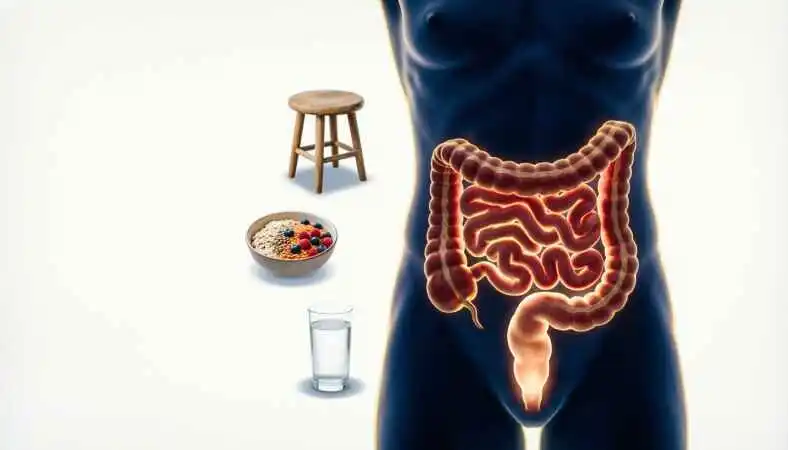
- Change your posture. Put a small stool under your feet so your knees sit above your hips. It mimics a squat and helps open the anorectal angle.
- Set a time limit. Five minutes is plenty. If nothing’s happening, get up and try later.
- Clean gently. Water-based cleansing or soft unscented wipes beat dry scrubbing. Pat dry afterward.
- Move your body. Daily walking, especially after meals, nudges the gut along. Aim for around 150 minutes of moderate activity a week.
- Look after your pelvic floor. Stronger isn’t always better; some people have a pelvic floor that’s too tight. If you have pain, leakage, or difficulty emptying, see a pelvic floor physiotherapist before launching into Kegels.
- Trim the risk factors. Cut back on processed meats and alcohol, avoid smoking, and aim for a healthy weight.
- Keep your screening date. Put it in the calendar like a passport renewal.
Know your stool: a quick Bristol scale cheat sheet
BRISTOL STOOL SCALE, SIMPLIFIED
| Type | Appearance | What it usually means |
| 1 to 2 | Hard lumps, or a lumpy sausage shape | Constipation; needs more fiber, fluid, and movement |
| 3 to 4 | Smooth, soft sausage or snake | The healthy zone |
| 5 to 6 | Soft blobs or mushy, fluffy pieces | Leaning loose; watch diet and stress |
| 7 | Entirely liquid | Diarrhea; hydrate, and see a doctor if it lasts |
Habits worth dropping
- Sitting on the toilet for long stretches, which increases pressure on the veins
- Straining to force a stool
- Relying on stimulant laxatives day after day
- Using scented or harsh products around the area, or scrubbing hard
- Applying steroid creams for weeks on end
- Experimenting with home remedies involving chilli, acids, or inserted objects
- Waiting months with rectal bleeding because it feels embarrassing
| GOOD TO KNOW
When to book an appointment: bleeding that keeps coming back, pain that doesn’t settle within a couple of weeks, a lasting change in bowel habits, a bulge that won’t go back in, or a family history you’ve never mentioned to a doctor. |
FAQs
Quick, direct answers to the questions people ask most often about the rectum and rectal health.
- What is the rectum, in plain terms?
It’s the last section of your large intestine, a stretchy chamber about 12 to 15 centimeters long that holds stool until you’re ready to pass it. It sits between the sigmoid colon above and the anal canal below.
- How long is the rectum, and does it vary between people?
Most adults have a rectum of about 12 to 15 centimeters. Its ability to stretch matters more than its length, and that varies with age, sex, childbirth, and conditions like chronic constipation, which can leave the rectum overstretched and less sensitive.
- What’s the difference between the rectum and the anus?
The rectum is the storage chamber. The anus, or anal canal, is the short exit passage controlled by the sphincters. They meet at the anorectal junction but have different nerve supplies, which is why their problems feel so different.
- What does the rectum actually do?
It stores stool, senses fullness, helps your brain decide when to go, and cooperates with the sphincters and pelvic floor during a bowel movement. It also absorbs some medicines given as suppositories.
- Why do I get a sudden urge to go after eating?
That’s the gastrocolic reflex. When food stretches your stomach, the colon responds by pushing its contents along, and stool moves into the rectum. It’s normal, though it can be exaggerated in irritable bowel syndrome.
- Is a little blood on the toilet paper normal?
Occasional bright red streaks after a hard stool usually come from a hemorrhoid or fissure and aren’t an emergency. But common isn’t the same as normal. If it happens repeatedly, lasts beyond a couple of weeks, or you’re over 45, get it checked.
- Can hemorrhoids turn into cancer?
No. Hemorrhoids are normal vascular cushions and they don’t become cancerous. The risk is that they can coexist with, or hide, a more serious cause of bleeding, which is why persistent bleeding deserves an exam.
- Can I tell hemorrhoids from rectal cancer by symptoms?
Not reliably, because both can cause bleeding. Clues that point away from simple hemorrhoids include blood mixed into the stool, a lasting change in bowel habits, tenesmus, weight loss, and anemia. Only an exam and sometimes a scope can settle it.
- What causes rectal pain?
Common causes include fissures, clotted hemorrhoids, abscesses, proctitis, constipation, and tense pelvic floor muscles. Less often, tumors are responsible. Sharp pain with bowel movements suggests a fissure, while a deep dull ache when sitting hints at pelvic floor tension.
- Why do I get sudden stabbing rectal pain at night?
It may be proctalgia fugax, a brief spasm-like pain lasting seconds to minutes that tends to strike at night. It’s harmless and self-limiting. If the pain is constant, comes with fever, or lasts longer, see a doctor.
- How long does an anal fissure take to heal?
Acute fissures often heal in four to six weeks with fiber, fluids, and warm sitz baths. If it’s still there after six to eight weeks, it’s chronic and usually needs a prescription ointment or a minor procedure.
- Will I need surgery for hemorrhoids?
Most people never do. Diet, fluids, and avoiding straining settle the majority of cases, and office procedures like rubber band ligation handle many of the rest. Surgery is reserved for large, prolapsing, or recurrent hemorrhoids.
- How is rectal prolapse different from hemorrhoids?
In a prolapse the full thickness of the rectal wall slips out through the anus and shows concentric rings of folds. Hemorrhoids are separate vascular cushions. Prolapse usually needs surgical assessment, so don’t assume a bulge is “just piles.”
- What is tenesmus?
It’s the feeling that you urgently need to pass stool even when your bowel is nearly empty, sometimes with cramping or straining. Causes include proctitis, infection, and tumors, so persistent tenesmus calls for medical evaluation.
- What is a rectocele?
A rectocele occurs when the wall between the rectum and vagina weakens and the rectum bulges forward. It can cause pressure and trouble emptying fully. Pelvic floor therapy helps mild cases, and surgery is an option for severe ones.
- What is a digital rectal exam, and does it hurt?
The clinician gently inserts a lubricated, gloved finger to check sphincter tone, feel for lumps, and examine the prostate in men. It takes under a minute and is usually uncomfortable rather than painful. If it does hurt, say so, because that’s a useful clue.
- Does a colonoscopy examine the rectum?
Yes. The scope passes through the rectum first, then travels the full length of the colon. At the end, the doctor typically turns the tip back on itself to view the lowest part of the rectum, a spot that’s easy to miss.
- At what age should I start screening?
US guidelines recommend starting average-risk screening at 45. With a close relative who had colorectal cancer or advanced polyps, you may need to start earlier. Follow local guidance and talk to your doctor about your personal risk.
- Is colonoscopy prep really that bad?
It’s the least pleasant part, but it’s manageable. Split-dose prep, a chilled solution, clear-liquid snacks, and staying near a bathroom make a big difference. The procedure itself is done under sedation, and most people find it easier than expected.
- What are the early signs of rectal cancer?
Persistent rectal bleeding, a lasting change in bowel habits, narrow stools, tenesmus, and unexplained tiredness or weight loss. Early disease often has no symptoms, which is why screening matters even when you feel perfectly well.
- Is rectal cancer different from colon cancer?
They share biology and screening, but the rectum’s tight position in the pelvis changes the plan. Rectal cancers are staged with MRI, more often treated with radiation before surgery, and surgery is more complex, with different effects on bowel function afterward.
- Can young people get rectal cancer?
Yes. Rates in adults under 50 have been rising in many countries. That doesn’t mean it’s likely in any one young person, but persistent bleeding or changed bowel habits shouldn’t be dismissed simply because of age.
- Will I definitely need a colostomy bag if I have rectal cancer?
No. Most people keep their natural bowel route thanks to sphincter-preserving surgery. Some need a temporary stoma while healing, and a minority with very low tumors need a permanent one.
- What is low anterior resection syndrome?
LARS is a cluster of bowel problems after rectal surgery: urgency, frequency, clustering, and sometimes leakage. It often improves over months to a couple of years, and treatments such as dietary changes, pelvic floor rehab, and irrigation can help.
- Can stress affect my rectum and bowel habits?
Yes. The gut and brain are in constant conversation. Stress can speed up or slow the bowel, trigger urgency, and tighten the pelvic floor, which worsens constipation and rectal pain. It isn’t a known cause of rectal cancer, but it can amplify symptoms.
- Do suppositories work as well as tablets?
For local problems like constipation, hemorrhoids, or rectal inflammation, they’re often ideal. For whole-body effects, absorption can be less predictable than with tablets, so use them as directed and ask a pharmacist if you’re unsure.
- Is it safe to use enemas regularly?
An occasional enema is fine for most people. Frequent use can irritate the lining, upset electrolytes, and make the bowel reliant on them, and phosphate enemas are risky in kidney disease and for older adults and young children. If you need them regularly, see a doctor.
- Do pregnancy and childbirth affect the rectum?
Yes. Hemorrhoids are common in pregnancy and afterward because of higher pressure, more blood volume, hormone-related vein relaxation, and constipation. Most improve after delivery. Ongoing leakage or pelvic pressure deserves a pelvic floor assessment rather than quiet endurance.
- Does squatting, or using a footstool, really help?
It can. Raising your knees above your hips straightens the anorectal angle, and small studies show easier, quicker emptying with less straining. It isn’t a cure-all, but it’s a cheap, low-risk habit worth trying.
- Can pelvic floor exercises help rectal problems?
It depends on the problem. A weak pelvic floor with leakage may benefit from strengthening, but a tight one, causing pain or difficult emptying, needs relaxation training and biofeedback. Get assessed by a pelvic floor physiotherapist before starting.
The Bottom Line on Your Rectum
Your rectum works quietly, several times a day, for decades, and asks for very little in return: some fiber, some water, a bit of movement, and the occasional respectful glance when something changes. The real risk was never the organ itself. It’s the silence around it, the shrug at a symptom that’s been there for months, the appointment that never gets booked.
Knowing your rectum anatomy, understanding how rectum function works, and recognizing the difference between a hemorrhoid flare and a warning sign puts you in a far stronger position than most people. Small habits do the heavy lifting, and early checks do the rest.
Here’s your next step. Pick one thing today. Add a fiber-rich food to your next meal. Put a footstool by the toilet. Book the screening you’ve been postponing, or call your doctor about the symptom you’ve been meaning to mention. Then share this guide with someone who’d benefit from a nudge, and follow CloudTechBull for more plain-spoken health guides.
⚕️Medical Disclaimer:
The information provided on this website is for general educational and informational purposes only and is not intended as a substitute for professional medical advice, diagnosis, or treatment. Always seek the advice of your physician or other qualified health provider with any questions you may have regarding a medical condition. Never disregard professional medical advice or delay in seeking it because of something you have read on this website.
