Table of Contents
Discovering Slovenia: The Emerald Gem of Europe Where Alpine Grandeur Meets Mediterranean Charm
Nestled at the crossroads of some of Europe’s most distinct geographical and cultural worlds, Slovenia is a nation that consistently defies expectations. For many travelers, it remains the ultimate hidden gem—a place where you can wake up to the sound of cowbells in the shadow of jagged Alpine peaks, spend your afternoon exploring subterranean caves that look like the set of a science fiction film, and end your evening dining on fresh seafood as the sun sets over the Adriatic Sea. Despite its modest size—roughly the size of New Jersey or Wales—Slovenia packs an astonishing amount of diversity, natural beauty, and historical depth into its borders.
Often overshadowed by its louder, more bustling neighbors like Italy, Austria, Hungary, and Croatia, Slovenia has quietly carved out a reputation as one of the most sustainable, safe, and enchanting destinations on the continent. It is a country that has mastered the art of balance, seamlessly blending the efficiency and order of Central Europe with the passionate, laid-back spirit of the Mediterranean, all while retaining a unique Slavic soul. Whether you are an adrenaline-seeking mountaineer, a dedicated foodie, a history buff, or simply a weary traveler looking for a peaceful escape into nature, Slovenia offers a bespoke experience that feels both intimately familiar and wonderfully exotic.
Location and Geography: A Crossroads of Worlds
To understand Slovenia, one must first look at a map. It sits squarely in the heart of Europe, occupying a strategic transition point between the Julian Alps, the Dinaric Mountains, the Pannonian Basin, and the Mediterranean Sea. This unique geographical confluence gives Slovenia an incredibly varied topography.
Despite having only a tiny sliver of coastline—stretching for a mere 46 kilometers (about 29 miles) along the Gulf of Trieste—this coastal access is vital, granting the country a Mediterranean climate and lifestyle in towns like Koper and Piran. Inland, the landscape transforms dramatically. The northern and northwestern regions are dominated by the towering peaks of the Julian Alps and the Kamnik-Savinja Alps, where snow-capped mountains, pristine glacial lakes, and deep valleys create a breathtaking alpine panorama.

Moving east and northeast, the jagged mountains soften into the rolling, forested hills of the Dinaric range, which eventually flatten out into the Pannonian Plain, a fertile agricultural heartland known for vineyards, thermal spas, and wide-open skies. Furthermore, Slovenia is a heavily forested nation; over 60% of its territory is covered by woods, making it one of the most densely forested countries in Europe. Hidden beneath these lush forests lies a magical karst landscape—a porous limestone terrain characterized by sinkholes, underground rivers, and over 10,000 discovered caves. It is a country literally built on water, with some of the cleanest, most emerald-hued rivers in the world, such as the Soča and the Krka, carving their way through the rugged terrain.
A Journey Through Time: The History of Slovenia
The history of Slovenia is a fascinating saga of shifting borders, empires, and a relentless quest for self-determination. The area has been inhabited since the Paleolithic era, but the first major cultural footprint was left by the Illyrians and Celts. In the 1st century BC, the Romans marched in, establishing the province of Pannonia and building key settlements like Emona (modern-day Ljubljana) and Celeia (Celje). The legacy of Roman roads and infrastructure still echoes through the Slovenian landscape today.
As the Roman Empire crumbled, Slavic tribes migrated into the region in the 6th century AD, laying the foundational ethnic and linguistic bedrock of the modern Slovenian people. For centuries, these Slavic dukedoms were caught in a geopolitical tug-of-war between the Frankish Empire to the west and the Avars and Magyars to the east. By the late Middle Ages, the Slovenian lands had largely fallen under the dominion of the Habsburg Monarchy, an empire that would rule the region for nearly a millennium.
Life under the Habsburgs was characterized by feudalism, but also by a profound cultural and architectural influence. The Slovenian lands were administered from Vienna and Graz, leading to the development of a distinct Central European aesthetic in the cities, complete with Baroque churches, neoclassical town halls, and a strong tradition of Austrian-style education and bureaucracy. Yet, the Slovenian language and rural traditions survived, particularly in the countryside. In the 16th century, the Protestant Reformation played a crucial role in Slovenian national identity; it was during this time that Primoz Trubar published the first books in the Slovenian language, cementing a written linguistic tradition that survived the subsequent Catholic Counter-Reformation.
The 19th century ushered in the era of romantic nationalism. Slovenian intellectuals, poets, and politicians began to agitate for greater autonomy within the Austro-Hungarian Empire. This cultural awakening laid the groundwork for the turbulent 20th century. Following the collapse of the empire after World War I, Slovenia joined the Kingdom of Serbs, Croats, and Slovenes (later renamed Yugoslavia).
World War II was a dark and devastating period. Slovenia was dissected by Nazi Germany, Fascist Italy, and Hungary. The Slovenian people responded with fierce resistance, spearheading one of the most effective partisan movements in occupied Europe. After the war, Slovenia became a founding republic of Socialist Yugoslavia under the leadership of Josip Broz Tito. It was a relatively prosperous socialist state, benefiting from its proximity to Western Europe and a degree of economic openness.
The defining moment of modern Slovenian history occurred on June 25, 1991, when Slovenia declared its independence from the disintegrating Yugoslav federation. What followed was the Ten-Day War, a brief but intense conflict with the Yugoslav People’s Army. Slovenia emerged victorious, becoming the first republic to break free from Yugoslavia. Since then, it has undergone a remarkable transformation, joining the European Union and NATO in 2004, adopting the Euro in 2007, and establishing itself as a stable, prosperous, and forward-thinking democratic nation.
The Heart of the Nation: Culture and Traditions
Slovenian culture is a unique tapestry woven from Slavic roots, Central European influences, and Mediterranean warmth. At the core of this culture is the Slovenian language. Unlike its South Slavic counterparts (Serbian, Croatian, Bosnian), Slovenian is incredibly diverse, boasting over 40 distinct dialects. It is a language of great literary prestige, deeply cherished by its speakers as a cornerstone of their national identity.
Slovenians are generally characterized as introverted, polite, and deeply respectful of nature and personal space. Do not mistake their quiet demeanor for coldness; once you break the ice, you will find them to be incredibly warm, loyal, and hospitable. This respect for the individual’s space extends to a broader societal value of sustainability and environmental conservation. Slovenians take immense pride in their green spaces, and this eco-consciousness is woven into the fabric of daily life, from rigorous recycling programs to the protection of local wildlife.
One of the most charming and unique aspects of Slovenian culture is its tradition of beekeeping. Slovenia is the homeland of the indigenous Carniolan honey bee, renowned for its gentleness and hard work. Beekeeping is not just an agricultural pursuit here; it is a cultural institution recognized by UNESCO. Painted wooden beehives, known as panjčki, are a ubiquitous sight in the Slovenian countryside, decorated with intricate, brightly colored folk art depicting everything from religious scenes to satirical cartoons. Honey is a staple in the Slovenian diet, used in desserts, teas, and traditional remedies.
Folklore and mythology also play a significant role. Legends of dragons, water spirits, and mountain fairies are deeply embedded in the local lore, most famously centered around Ljubljana’s iconic Dragon Bridge. Traditional music and dance, while less visible in daily urban life, are preserved during festivals, featuring accordion-heavy polkas and waltzes that highlight the country’s central European musical heritage.
Tourist Attractions and Sightseeing Places
Slovenia’s compact size is its greatest geographic advantage for travelers. You can base yourself in the capital and take day trips to the coast, the mountains, and the caves without spending your entire day in a car.
Ljubljana: The capital city is the perfect starting point. Ljubljana is a fairy-tale city characterized by a hilltop castle, a meandering emerald river, and a pedestrian-only old town brimming with Art Nouveau and Baroque architecture. The soul of the city is its beloved architect, Jože Plečnik, whose unique blend of classical and modernist styles gives the city its distinct aesthetic. Must-see sights include the Triple Bridge, the Dragon Bridge, the vibrant Central Market, and the quirky Metelkova Mesto—a self-declared autonomous social and cultural center housed in former military barracks, covered in incredible street art.
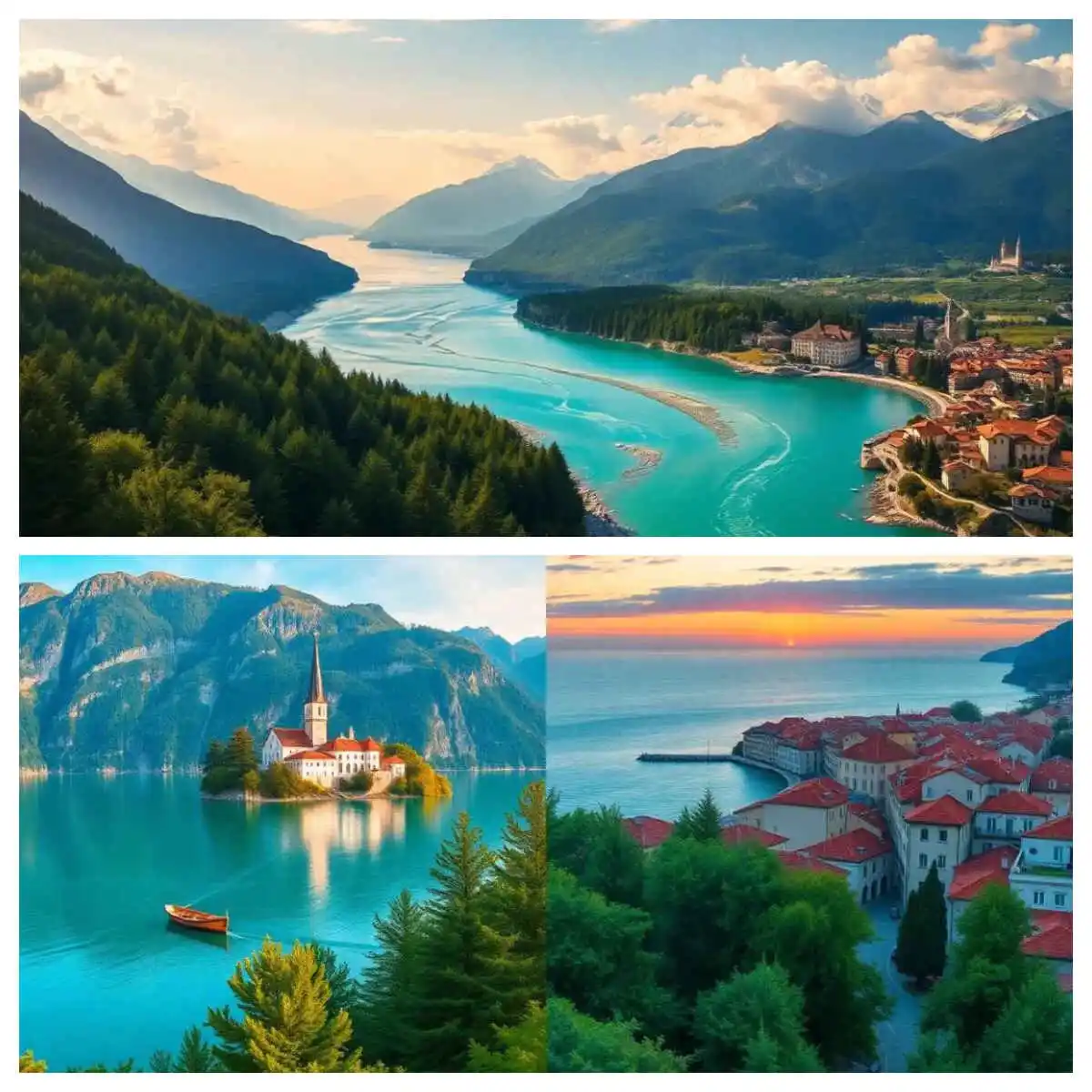
Lake Bled: No trip to Slovenia is complete without visiting Lake Bled. It is the country’s most iconic postcard image: a glacial lake of impossible turquoise-blue, surrounded by thick forests and backed by the sheer cliff of the Julian Alps. In the center of the lake sits a tiny island housing the Church of the Assumption of Mary. The traditional way to visit the island is by riding in a pletna, a traditional wooden rowboat piloted by a standing oarsman. Once there, you climb 99 stone steps to ring the church’s wishing bell. Overlooking the lake from a dramatic cliff is Bled Castle, offering panoramic views and a museum detailing the region’s history. And of course, one must indulge in a slice of Bled Cream Cake (Kremšnita), a velvety vanilla custard and cream pastry that is practically a religion in these parts.
Triglav National Park and the Soča Valley: Named after Mount Triglav, the nation’s highest peak (and a symbol on the flag), this is Slovenia’s only national park. It is a pristine wilderness of towering peaks, alpine meadows, and deep gorges. The crown jewel of the park, and perhaps the entire country, is the Soča River. Often described as the most beautiful river in Europe, the Soča is an astonishing shade of emerald green, flowing through a dramatic, steep-sided valley. It is a paradise for outdoor enthusiasts, offering world-class whitewater rafting, kayaking, canyoning, and fly-fishing. The valley is also steeped in World War I history, marked by the haunting remnants of the Isonzo Front, famously depicted in Ernest Hemingway’s A Farewell to Arms.
Postojna Cave and Predjama Castle: The Karst region of Slovenia hides a subterranean wonderland. Postojna Cave is a massive, 24-kilometer-long network of underground passages, galleries, and halls, adorned with spectacular stalactites and stalagmites. You explore part of it via an open-air electric train, a thrilling experience in itself. The cave is also home to the mysterious “olm,” a blind, amphibious creature known as the “human fish” that lives entirely in the dark underground waters. Just a short drive away is Predjama Castle, one of the most spectacular castles in the world. It is built directly into the mouth of a massive cave halfway up a 123-meter-high cliff. It looks like something out of a fantasy novel and is famous for the legend of the knight Erazem Lueger, who used a secret cave passage to besiege his enemies.
Piran and the Coast: For a completely different vibe, head to the coast. Piran is a stunning Venetian-influenced town characterized by narrow winding alleys, pastel-colored buildings, and a beautiful main square, Tartini Square, which opens up directly to the sea. You can climb the Campanile bell tower for views that stretch across the Gulf of Trieste all the way to Italy. The pace of life here is noticeably slower, defined by espresso sipping, fresh sea breezes, and the smell of salt water.
Getting Around: Local Transportation
Navigating Slovenia is remarkably straightforward, though understanding the nuances of the local transportation network will greatly enhance your trip.
Trains: Slovenia has a decent rail network operated by Slovenske železnice (SŽ). The trains are clean, safe, and generally reliable, though they are not always the fastest option due to the mountainous terrain requiring winding routes. The train ride from Ljubljana to the coast (Koper) is particularly scenic. However, train frequencies to some smaller tourist hubs, like Lake Bled, can be limited compared to bus services.
Buses: The backbone of domestic public transportation is the bus network. Operators like Arriva and other regional companies connect almost every town and village in the country. Buses are modern, comfortable, and run frequently, making them the preferred method of travel for most locals and tourists heading to places like Bled, Bohinj, and Postojna. You can usually buy tickets directly from the driver, though booking in advance online during peak summer months is advisable.
Driving: Renting a car is arguably the best way to experience Slovenia, especially if you want to explore the remote mountain villages, the hidden waterfalls, and the extensive wine regions at your own pace. The roads are in excellent condition, well-signposted, and rarely congested outside of the Ljubljana rush hour. The country has an impressive network of motorways (avtoceste) that connect major cities, though you must purchase a vignette (a toll sticker) to use them, available at gas stations and border crossings.
Urban Transport in Ljubljana: Ljubljana’s city center has been largely car-free for over a decade, making it an absolute joy to explore on foot. For longer distances within the city, there is an excellent network of city buses, and a highly popular bike-sharing system called BicikeLJ. Perhaps the most unique mode of transport is the “Kavalir”—a fleet of small, electric, free-standing vehicles that roam the pedestrian zones, available to shuttle elderly residents, tourists with heavy luggage, or simply anyone who needs a lift across the flat city center.
A Culinary Adventure: Local Cuisine and Eat Outs
Slovenian cuisine is a delicious reflection of its geographical position at the crossroads of four culinary worlds: Alpine, Mediterranean, Pannonian, and Balkan. It is hearty, seasonal, and deeply rooted in the rhythms of the farm-to-table movement—long before that became a global trend.
Traditional Dishes: You cannot leave Slovenia without trying Štruklji. This is a quintessential Slovenian dish consisting of rolled dough that can be either boiled or baked, filled with a variety of ingredients, most commonly tarragon, cottage cheese, walnuts, or apples. Another must-try is Kranjska klobasa (Carniolan sausage), a savory, mildly smoked pork sausage that is so ingrained in the national identity that its recipe is protected by EU geographical indication. It is typically served with sauerkraut and a side of mustard.
In the coastal region, the cuisine shifts dramatically to Mediterranean flavors. Seafood reigns supreme here. Škampi na žaru (grilled prawns) caught fresh from the Adriatic, simply prepared with garlic, parsley, and olive oil, is a revelation. In the Primorska region near the Italian border, you will find Fujol s pršutom (bean soup with prosciutto), a hearty, flavorful dish perfect for cold mountain evenings. And if you find yourself in the town of Idrija, you must try Idrijski žlikrofi, tiny, handmade dumplings filled with potato, onion, and smoked bacon, again protected by EU status.
Sweets: We have already mentioned the famous Bled Cream Cake, but another beloved sweet is Potica. Potica is a traditional rolled pastry, usually served during holidays, but available year-round. It features a yeasted dough rolled incredibly thin and spread with a generous layer of filling—walnut being the most classic, though poppy seed, tarragon, and even chocolate versions exist. Getting a slice of perfectly risen, not-too-sweet potica with a cup of coffee is a true Slovenian ritual.
Dining Experiences and Wine: Dining in Slovenia ranges from cozy gostišča (traditional inns) serving rustic, home-cooked meals to high-end Michelin-starred restaurants pushing the boundaries of modern European gastronomy.
But to truly experience the local food culture, you must seek out an Osmica. This is a traditional, centuries-old Slovenian tradition, particularly prevalent in the Karst region. By law, local wine growers and farmers are allowed to open their homes and cellars to the public for eight days (hence “osmica”) to sell their surplus wine, homemade cured meats, cheeses, and bread directly to consumers, tax-free. Finding an osmica (often marked by branches tied to a roadside fence or a handmade wooden sign) is like stumbling upon a secret, joyous neighborhood party. You sit at long wooden tables in a rustic cellar, drinking Teran (a robust, iron-rich red wine unique to the region) or Malvazija (a crisp white), snacking on prosciutto and sheep’s cheese, and chatting with the locals. It is an unpolished, utterly authentic, and unforgettable culinary experience.
Other Essential Information for Travelers
When to Visit: Slovenia is a year-round destination. The peak tourist season is July and August, when the weather is warmest, perfect for swimming in Lake Bled and lounging on the coast. However, this is also when the popular sights are most crowded. Spring (April to June) and Autumn (September to October) are arguably the best times to visit. The weather is mild, the landscapes are either blooming or turning vibrant shades of gold and red, and the crowds thin out. Winter transforms the country into a snowy wonderland, ideal for skiing in resorts like Kranjska Gora or enjoying the magical Christmas markets in Ljubljana.
Currency and Money: Slovenia uses the Euro (€). Credit and debit cards (Visa, Mastercard) are widely accepted in almost all restaurants, hotels, and shops. However, it is always wise to carry a small amount of cash, especially when visiting rural markets, small family-run guesthouses, or purchasing items at an osmica.
Language: The official language is Slovenian. English is spoken fluently by the vast majority of the population, particularly among the younger generations and anyone working in the tourism or hospitality sectors. You will also find that many Slovenians speak Italian (especially on the coast) and German (especially in business contexts).
Safety: Slovenia is exceptionally safe. It consistently ranks among the safest countries in the world, with very low rates of violent crime. The most you likely have to worry about is petty pickpocketing in crowded tourist areas during the peak summer months, though even this is rare. The natural environment does pose some risks; if you are hiking in the Alps, weather conditions can change rapidly, so proper gear, maps, and respect for the trails are essential.
Sustainability: If you are an eco-conscious traveler, you will love Slovenia. Its capital, Ljubljana, was named the European Green Capital in 2016, and the country as a whole was declared a Green Destination of the World. The tap water is perfectly safe to drink—in fact, it comes from pristine alpine springs and is some of the best water you will ever taste. Carrying a reusable water bottle is highly encouraged. Furthermore, Slovenia is home to over 70% of all European brown bears, and the country takes wildlife conservation incredibly seriously.
Conclusion
Slovenia is a masterclass in how to do tourism right. It does not shout for attention; instead, it whispers an invitation to slow down, look closer, and appreciate the quiet majesty of the natural world and the enduring strength of a culture that has fought hard to maintain its identity. It is a place where the grandeur of the Alps meets the tranquility of the Mediterranean, where history is etched into every stone facade and cave wall, and where a meal is a celebration of the land itself.
Whether you are gazing out over the impossibly blue waters of the Soča River, wandering the labyrinthine streets of coastal Piran, or sipping wine in a dimly lit Karst cellar surrounded by new friends, Slovenia leaves an indelible mark on your soul. It is not just a place you visit; it is a place you feel. For those willing to venture off the beaten path of traditional European itineraries, the emerald gem of Europe awaits, ready to reveal its myriad of secrets.
FAQs
- Why is Slovenia called the “Emerald Gem of Europe”?
Slovenia is nicknamed the “Emerald Gem of Europe” due to its lush green landscapes, pristine lakes, and breathtaking natural beauty. Its alpine forests, crystal mountains, and emerald-green waterfalls create a vivid, jewel-like palette that captivates visitors. The country’s designation as “Europe’s Green Heart” further highlights its commitment to sustainability and natural preservation.
- What makes Slovenia a unique blend of Alpine and Mediterranean influences?
Slovenia’s geography offers a seamless mix of Alpine grandeur in the north (Julian Alps) and Mediterranean charm in the south (Istrian coast near Trieste). This duality is reflected in its cuisine, culture, and climate, where alpine sports meet olive groves and sun-soaked vine towns. The country bridges these worlds while maintaining a distinct Central European identity.
- What are the must-visit natural wonders in Slovenia?
Must-see natural attractions include Lake Bled (a picturesque lake with a floating island church), Triglav National Park (home to Julian Alps and Adam’s Peak), Postojna Cave (Europe’s largest cave), and the Soča Valley (a hiker and trail-running paradise). The Karst Plateau’s unique sinkholes and the Emerald Cave near Bled also delight nature lovers.
- What is the best time to visit Slovenia for outdoor activities?
The ideal time to visit is April–October, when temperatures are mild, and alpine trails, lakes, and caves are easily accessible. Winter autumn (September–November) offers fewer crowds and golden foliage. Winter winter if you’re not interested in skiing, as snow dominates the alpine regions during this time.
- Which Slovenian city is the most popular for travelers?
Ljubljana, Slovenia’s capital, is the most popular city due to its charming, pedestrian-friendly old town, vibrant cultural scene, and proximity to Lake Bled (1-hour drive). Known as the “Venice of the North,” it boasts medieval bridges, green spaces like Tivoli Park, and the iconic Dragon Bridge.
- How can I explore Slovenia’s Alpine and Mediterranean regions?
To explore both regions, visit Kranjska Gora (Alpine skiing and hiking) and Piran (Mediterranean beaches and Venetian-style architecture). Take a road trip from Ljubljana to the Soča Valley for alpine adventures, then head to the Istrian coast for olive oil tastings and coastal cycling charm.
- What are the top experiences for adventure seekers in Slovenia?
Adventure enthusiasts can try caving in Postajna, paragliding near Bled or Soča, kayaking on the Soca River, and via ferrata climbing in Triglav National Park. The country also excels in winter sports, with resorts like Kranjska Gora and Kodaline offering excellent slopes.
- What traditional Slovenian dishes should I try?
Must-try dishes include potico (walnut roll), štruklji (rolled pasta), kremšnita (cream cake), and potico (another version of rolled). Pair meals with local wine—try Sauvignon Blanc from Goriška Brda or Rebula. Istrian specialties like Istrian truffles and prosciutto near the coast are also highlights.
- How do I get around Slovenia?
Slovenia has an efficient road network, and car rentals are recommended for flexibility ruralous regions. Public transport, including trains and buses, connects major cities and tourists. For shorter Istria, consider trains or car rentals. Night trains (Nocturna) connect Ljubljana to destinations like Trieste.
- Is Slovenia an expensive destination?
Slovenia is relatively affordable compared to other European destinations. Accommodation in Ljubljana ranges from 80–200€ per night. Meals in mid-range restaurants average 20–30€. Entrance fees to attractions like Bled Castle or Postojna Cave start at 15€. Public transport and budget hostels keep costs low.
- What are the best cultural experiences in Slovenia?
Cultural highlights include the Ljubljana Festival (summer), Poljane Valley Folklore Festival, and visits to medieval castles like Bled or Predjama Castle. Explore traditional alpine villages in Styale and �ižan, or learn about Slovenian history at the Museum of Illusions in Ljubljana.
- What is the history behind Lake Bled’s island and church?
Bled Island’s Church of the Assumption of Mary, built in 1001, is linked to a myth about a dragon who carved a church from a pine tree to calm the lake. Locals believe the lake was once a dragon’s lair. Today, visitors take boat cruises to the island, where they can light candles or get married for a romantic experience.
- What are the top family-friendly activities in Slovenia?
Families will enjoy visiting Pred�cavina Cave (with a boat tour on a subterranean lake), the Ljubljana Zoo (home to rare species), and the Bled Castle Park (adventure playgrounds and horseback riding). Ljubljana’s interactive and Bled’s gentle activities offer relaxed picnic spots for kids.
- How does Slovenia balance tourism and sustainability?
Slovenia is a UNESCO Global Geopark and the first country to join the EU as a sustainability pioneer. Over 58% of its land is protected, promoting eco-lodges and promoting green travel via the Green Destinations initiative. Ljubljana has car-free zones, and many attractions emphasize low-impact tourism.
- What is the most significant way to reach Slovenia from major cities?
Ljubljana Brnik Airport is 20 km from the capital. Direct flights connect it to Vienna (3–4 hours), Venice (2 hours), and Budapest (4 hours). Driving from Zagreb (5–6 hours) or Graz (2.5 hours) is common. Trains to Trieste (1 hour) provide easy access to Istria’s coastal towns.
- What are the key historical landmarks in Slovenia?
Key sites include Bled Castle (perched on a cliffside since the 11th century), Predjane Castle (Slovenia’s oldest castle with guided tours), and the Ljubljana Castle (offering panoramic views). The historic town of Ptuj, Europe’s oldest capital, features a Romanesque castle and 2,000-year-old ruins.
- What are the most unique natural phenomena in Slovenia?
Don’t miss the Black Lake (Črno Jezero), where volcanic mud forms geysers and steam volcanoes. The Emerald Cave’s glowing turquoise water and the Gumbinec Forest (over 50 sinkholes) are also rare sights. The Poreč Hot Springs in Istria and the Tolmin Gorge add to the country’s geological diversity.
- Is Slovenia safe for solo travelers?
Slovenia is one of the safest countries in Europe, with low crime rates and friendly locals. Women often travel alone without issues, especially in Ljubljana, Bled, and coastal areas like Piran. However, as with any place, staying in nighttime urban areas is advisable.
- What are the best day-trip ideas from Ljubljana?
Day trips include visiting Bled and Lake Bled (1 hour), the Bled Castle Park, or Predjama Castle. For a shorter trip, hike to Vintgar Gorge or visit the Egon Bottinger House, a modernist sculpture park. Further afield, consider the Istrian towns of Piran or the Soča Valley near Kranjska Gora.
- How does Slovenian culture celebrate its identity?
Slovenia preserves its Slavic roots through folk music (e.g., kolo dances), alpine customs in �ižan villages, and the annual Poljane Valley Festival. Local artisans craft lace (Kranj lace) and pottery, while traditions like Štajerska (eastern Slovenia’s Easter customs) highlight regional diversity.
- What are the local holiday traditions in Slovenia?
Christmas in Slovenia is marked by Befana (a gift-bringing witch), roasted chestnuts, and the koliva meal (soup and porridge on Christmas Eve). On Prešeren Day (February 8), the nation celebrates its poet, France Prešeren, with recitations, parades, and the national flag raised nationwide.
- What are the lesser-known gems in Slovenia?
Hidden spots include Logarska Valley (remote mountain biking), the Bled Panoramic Trail (free guided walks), and the Škocjan Caves (UNESCO site with underground caves). The small village of �aka offers cave-templed churches, and the Poljane Valley hosts the original Goral (mountain people) culture.
- What is the most significant way to communicate in Triglav National Park?
Triglav’s hiking trails range from easy to challenging. The Hike to Ušice Lake is the most popular (2.5 hours) and offers stunning views of the Soča River. The Scarecrow Trail near Bohinj Lake is a 2-hour hike with folklore markers. Guided tours (e.g., via ferrata) are recommended for less experienced climbers.
- How is Slovenia’s wine scene?
Slovenian wines reflect their diverse terroir. Goriška Brda (靠近意大利边境) produces exceptional whites like Rebula, while Poljane Valley focuses on reds like Teran. Family-run cellars offer tastings, and many vineyards in the Istrian peninsula blend Mediterranean and Alpine influences in their blends.
- What are the best photo opportunities in Slovenia?
Capture Ljubljana’s Lumbarda Bridge or Dragon Bridge at dusk, Bled’s lake and castle reflected, Piran’s sunset views over the Adriatic, and Postojna Cave’s glowing stalactites. The Soča River’s turquoise hues and Škocjan Caves’ chasms provide dramatic backdrops for photography shots.
- What are the best local souvenirs to buy?
Shop for Bled Cake (sweet walnut roll), Kranj lace, Slovenian honey oil from Istria, and kruh (traditional bread). Wool products from �ižan villages and wooden carvings from Ptuj are also highlights. Look for local wines in the Goriška brda region or liqueurs like šluceti (elderflower schnapps).
- How do the seasons affect tourism in Slovenia?
Summer (June–Aug) is the peak for hiking, but crowded at iconic Bled. Spring (Apr–May) and autumn (Sept–October)
Disclaimer: The content on this blog is for informational purposes only. The author’s opinions are personal and not endorsed.
Efforts are made to provide accurate information, but completeness, accuracy, or reliability are not guaranteed. The author is not liable for any loss or damage resulting from the use of this blog. It is recommended to use the information on this blog at your own discretion.
