
Table of Contents
Your Skin Knows Things Your Brain Hasn’t Figured Out Yet: The Mysterious Science & Soul of Goosebumps
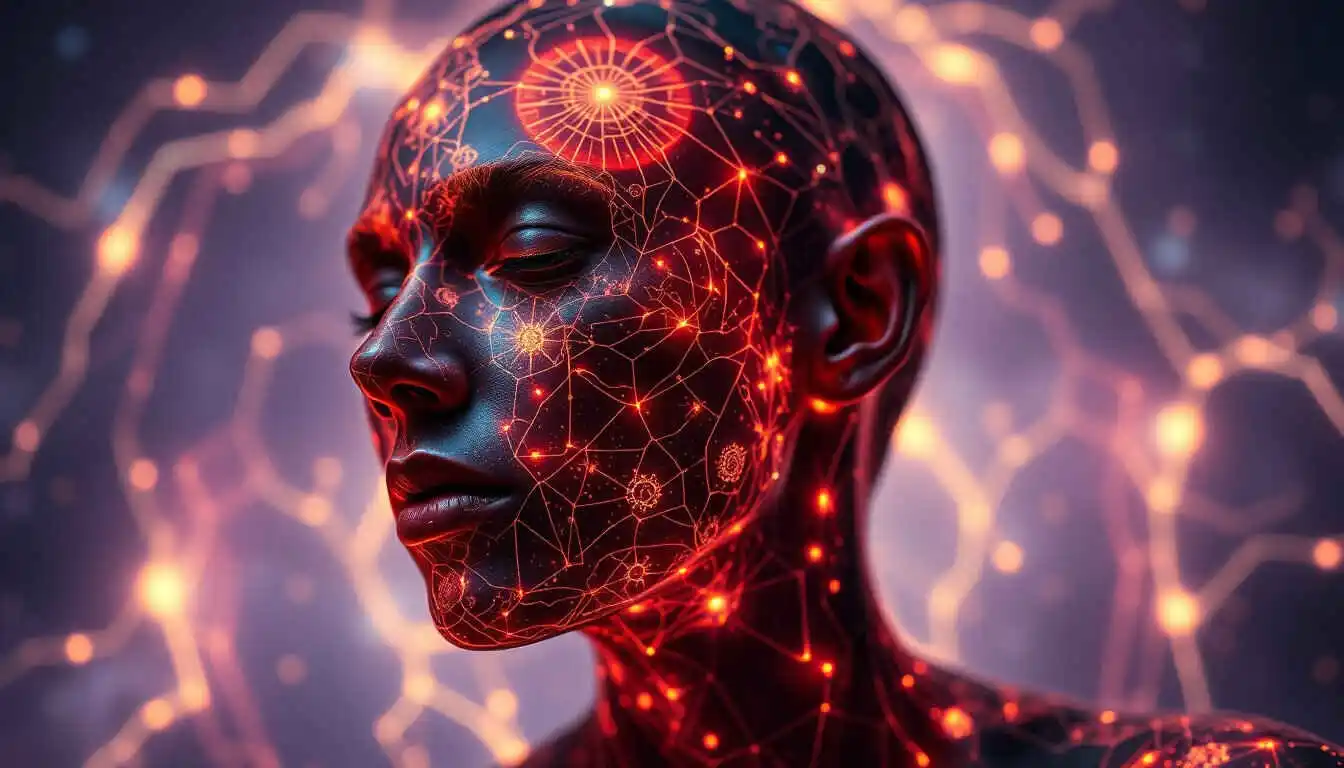
There it is again—that sudden, electric rush across your skin. The tiny hairs on your arms shoot upright like a stadium crowd rising to its feet. Your neck prickles. Your scalp tightens. Your entire body whispers something in a language older than words.
Goosebumps.
You didn’t plan them. You didn’t invite them. One moment, the skin is smooth and unremarkable; the next, it has transformed into something textured, alive, and deeply communicative. Sometimes there’s a reason — a thunderous orchestral swell, a horror movie jump scare, the bite of a January wind. But sometimes? There is absolutely no reason at all. You’re just sitting there, minding your own business, sipping your coffee, and your body decides it’s time to remind you that something enormous lives inside you.
This is the story of that something.
What Exactly Are Goosebumps?
Let’s begin with the science, because the science is actually extraordinary.

The medical term for goosebumps is piloerection — from the Latin pilus (hair) and erectus (raised). The phenomenon is also called cutis anserina, which literally translates to “goose skin,” the inspiration for the common English name. When you look at plucked poultry, the skin is covered in small, bumpy follicle protrusions. When your skin reacts, it briefly resembles exactly that.
Mechanically, the process works through tiny muscles attached to each hair follicle. These are called arrector pili muscles — miniature strips of smooth muscle tissue, each one connecting a hair root to the surrounding skin. When these muscles contract, they pull the hair shaft upright and simultaneously create a small raised bump on the skin’s surface. The effect happens almost instantaneously, coordinated across thousands of follicles simultaneously.
What’s pulling the trigger? The autonomic nervous system — the part of your nervous system that handles everything you don’t consciously control. Heart rate. Digestion. Breathing rhythm. And yes, piloerection. The signal originates in the sympathetic branch of the autonomic nervous system, which governs the famous “fight-or-flight” response. When something stimulates this branch, it releases a cascade of neurotransmitters and hormones, adrenaline chief among them, and the arrector pili muscles are among the first to respond.
Your skin is, in the most literal sense, wired into your survival system.
The Evolutionary Argument: Useful Once, Beautiful Always
Here’s where the story gets philosophically rich.
In most mammals, piloerection serves a clear, practical purpose. When a cat arches its back and its fur stands on end, it looks larger and more intimidating to a predator. When a dog’s hackles rise, the additional volume of fluffed-up fur signals threat and dominance. In cold environments, animals raise their fur to trap air close to the skin, creating an insulating layer that preserves body heat.
Humans, however, have largely lost the functional utility of piloerection. We don’t have enough body hair for it to meaningfully enhance our perceived size. We can’t trap enough air against our skin to make a thermal difference. The mechanism remains — every hair follicle, every arrector pili muscle, perfectly intact and ready to fire — but the original purpose has been rendered almost obsolete by evolution.
What we’re left with is essentially a vestigial reflex — a biological relic, like wisdom teeth or the palmaris longus muscle in the forearm. Except this particular relic has been magnificently repurposed by the complexity of the human experience.
Because while piloerection may no longer help us look bigger to bears or stay warmer in winter, it now responds to something arguably more remarkable: emotional truth.
The Cold That Causes Them
The simplest trigger for goosebumps is temperature, specifically cold. When ambient temperature drops, your body perceives the threat of heat loss. The sympathetic nervous system fires, adrenaline flows, and among the many responses — shivering, vasoconstriction of blood vessels in the skin, reduction of circulation to the extremities — the arrector pili muscles contract.
This is the oldest, most mechanistic version of goosebumps. Step outside on a frosty morning, and you’ll feel them bloom across your arms before you’ve even consciously registered that you’re cold. The body acts before the brain catches up.
It’s a beautiful example of the body’s intelligence operating beneath conscious awareness. You don’t think “I am cold, therefore I should raise my hair.” Your skin simply knows and responds.
But cold is just the beginning.
Fear and the Electric Alarm System
Fear-induced goosebumps are the closest modern descendants of the original evolutionary function. When you watch a horror film and the monster appears from nowhere, when you hear an unexpected sound in an empty house at 3 a.m., when someone approaches you aggressively in a parking lot — the sympathetic nervous system activates in full force.
Adrenaline floods the system. Your heart accelerates. Your muscles are ready for action. Your pupils dilate. And your skin erupts in goosebumps — a ghost of the ancestral warning signal, the body preparing to be as large and formidable as it once could be.
There’s something poignant about this. The piloerection response in fear is your body performing a pantomime of something it once did with full effect. The hair rises. The bump forms. And yet the wolf is not intimidated. The threat is not deterred. The goosebumps, in the context of modern fear, are almost theatrical — a biological performance of ancient bravery that no longer has the same power it once did.
And yet they still feel profound. Fear-goosebumps carry their own strange electricity. They are the body’s way of saying: this is real, this matters, pay attention.
The Music That Moves You to Your Follicles
Now we arrive at the most scientifically fascinating territory: the chills induced by music.
Researchers call this phenomenon frisson (from the French word for “shiver”), and it is genuinely extraordinary. A significant percentage of the population — estimates range from 55 to 86 percent, depending on the study — reports experiencing physical chills in response to certain musical passages. For some people, it is an occasional surprise. For others, it is a regular feature of their listening life, something they actively seek.
The music that most reliably triggers frisson tends to share certain characteristics. Sudden dynamic changes — a passage that drops to near-silence before erupting in full orchestral force. Unexpected harmonic shifts — a chord that shouldn’t logically follow but does, and devastatingly. The entrance of a solo voice or instrument breaking through a dense texture. A melody that seems to reach beyond what melody should be able to do.
Think of the opening of Beethoven’s Fifth Symphony — the famous four-note motif hammered into silence and then repeated. Think of the moment in a great gospel performance where the singer stops performing and starts testifying. Think of the string arrangement in a film score that somehow makes you feel the loss of something you’ve never even had.
Why does the brain respond to music this way? Current neuroscientific research points to the brain’s reward circuitry — the dopaminergic system that handles pleasure, motivation, and anticipation. Music that produces frisson appears to simultaneously trigger dopamine release and engage the brain’s prediction mechanisms. The chill comes from the gap between expectation and fulfillment — the musical moment that goes somewhere you didn’t expect, somewhere better than you imagined, or somewhere so perfect it almost hurts.
Brain imaging studies have shown that frisson correlates with activity in the nucleus accumbens, the ventral tegmental area, and the cerebellum — regions associated with reward processing, emotional response, and motor coordination. Your body, listening to music, is doing something neurologically similar to what it does when it receives unexpected good news or experiences physical pleasure.
You are not just enjoying the music. Your whole nervous system is participating.
Awe: The Goosebumps of Wonder
There is a third category of goosebump triggers that is perhaps the most philosophically interesting of all: awe.
Awe is an emotion researchers have only recently begun to study systematically. It is what you feel when you stand at the edge of the Grand Canyon, and your brain cannot quite process the scale of what it’s seeing. It is what astronauts describe when they look back at Earth from orbit — the famous “overview effect,” the sudden, visceral understanding that everything humans have ever done, loved, built, fought over, and dreamed about sits on that small blue marble. It is what you feel hearing a piece of music for the first time that seems to have been written specifically for your interior life. It is what happens in the presence of greatness — athletic, artistic, moral.
Awe produces goosebumps with remarkable reliability. Studies by psychologist Dacher Keltner at the University of California, Berkeley, have identified awe as one of the most physically expressive emotions humans experience. In cross-cultural research, goosebumps — along with tears, an open mouth, and stillness — are among the most universal physical signals of awe.
The interesting question is why. Why should the emotion of awe — essentially the cognitive recognition that something is vastly beyond our normal frame of reference — trigger the same ancient physical reflex as cold and fear?
One compelling theory: awe, like fear and cold, represents an encounter with something larger than the self. The arrector pili response, across all its triggers, may be fundamentally about the body’s recognition of encountering something vast, powerful, and beyond ordinary human scale. Cold is vast. A predator is powerful. A transcendent piece of music is beyond ordinary human language. An overwhelming landscape defies the self’s sense of importance.
The goosebumps, in this reading, are not just a relic. They are the body’s recognition signal — its way of marking moments when the ordinary boundaries of the self are briefly dissolved.
Social and Empathetic Chills
Humans are also capable of getting goosebumps in response to other people’s emotional experiences — a phenomenon that speaks to the profound depths of human empathy.
Watching someone else cry can trigger goosebumps. Witnessing an extraordinary act of courage or kindness. Hearing someone tell a story of survival. Watching an athlete achieve something previously thought impossible and seeing the moment on their face when they realize it too.
This empathetic piloerection is mediated by the brain’s mirror neuron system — the network of neurons that fires both when you act and when you observe someone else performing the same action. It is the neurological basis of empathy, and it is powerful enough to co-opt your body’s most ancient alarm system in the service of human connection.
When you get goosebumps watching someone else’s triumph or grief, your nervous system is doing something remarkable: it is inhabiting another person’s experience with sufficient depth that your body responds as though the experience were your own.
This is empathy made physical. This is the skin as a measure of love.
The Goosebumps That Have No Reason
And now, the strangest category of all.
You are not cold. You are not afraid. There is no music playing. No one is crying. Nothing of obvious significance is happening. And yet — there they are. A wave of goosebumps, unexplained, moving across your skin like a slow tide.
What is happening?
Several possibilities have been explored. One is the random firing of the sympathetic nervous system — a kind of neurological noise, a spontaneous activation without a clear stimulus. The nervous system is not a perfectly calibrated instrument; it occasionally generates activity that doesn’t correspond to any identifiable external cause.
Another possibility is that the stimulus exists but is below conscious awareness. You may have heard something subsonically — a frequency too low for your ears to consciously register but detectable by your body. You may have detected a subtle shift in temperature, or caught a smell too faint to identify, or noticed a micro-expression on someone’s face without your conscious mind registering it. Your body is processing far more sensory information than your conscious mind has access to, and occasionally the body responds to something the mind hasn’t noticed.
A third, more poetic possibility: the stimulus is internal. You may be on the edge of a thought, just before it crystallizes into language. You may be about to remember something important, or understand something you haven’t articulated yet, or feel something that has been waiting in the quiet periphery of your emotions for exactly the right moment to surface. The goosebumps, in this case, are not a response to the world outside. They are a response to the world inside — to the movement of something significant in your own interior landscape.
Many people who practice meditation, prayer, or contemplative arts report that goosebumps frequently accompany moments of insight, clarity, or what they might describe as spiritual recognition. The body, it seems, sometimes knows before the mind does.
What People Call It: The Language of Chills
The richness with which human language has attempted to name this experience says something important about how much it matters to us.
In English: goosebumps, gooseflesh, goose pimples, the chills, a cold shiver, skin crawling, hackles rising, the creeps, frisson.
In German: Gänsehaut — literally “goose skin.”
In Finnish: Kananlihaa — “chicken skin.”
In Spanish: Piel de gallina — “hen skin.”
In Japanese: 鳥肌 (torihada) — “bird skin.”
In French: Chair de poule — “flesh of the hen,” the root of the word frisson.
Across cultures, across languages, across centuries, human beings have been noticing this thing that their bodies do and reaching for words to describe it. The words cluster around the same image — plucked poultry, roughened skin, something avian and animal in the human body’s response to what is vast, cold, beautiful, terrifying, or true.
We have always known that our skin speaks.
Living More Attentively With Your Body’s Language
If goosebumps are, as science and philosophy both suggest, a signal worth paying attention to, then perhaps there is something to be gained from learning to listen to them more carefully.
When cold-induced goosebumps appear, the body is managing its environment with intelligence. It is a reminder of the body’s constant, largely invisible labour on your behalf.
When fear-goosebumps appear, they are worth examining. What has the body noticed? Is the danger real or perceived? Is there something in the environment that deserves conscious attention — a situation or person that your nervous system has assessed as threatening even before your mind has caught up?
When music or art gives you chills, that is information about what you love most deeply — about the aesthetic and emotional frequencies that resonate most powerfully with your particular nervous system. Many people report that the music that reliably gives them frisson is music that feels, in some hard-to-articulate way, theirs. Collecting those moments is a way of knowing yourself.
When awe-goosebumps appear, they are among the most valuable experiences you can have. Research on awe consistently shows it to be associated with increased well-being, decreased self-focus, increased feelings of connection to others and to something larger than oneself, and greater openness to new perspectives. Your goosebumps in the presence of the sublime are not just a physical curiosity — they are a health practice.
And when the inexplicable goosebumps appear, with no apparent cause, the most interesting response might be simply: pause. Notice. See if the body’s signal leads anywhere. See if there is a thought forming, a feeling surfacing, a memory rising. Trust, at least provisionally, that your body may be registering something real — something your conscious mind has not yet reached.
The Last Word
Here is the thing about goosebumps that no scientific explanation quite captures, even as the explanations are genuinely illuminating:
They feel significant.
Not the cold ones, necessarily. But the ones that arrive with music. With beauty. With fear. With awe. With unexplained certainty. Those goosebumps feel, in the moment of their occurrence, like the body is vouching for something. Like the body is saying: yes, this — this is real.
We live in an age of extraordinary skepticism, which has enormous value. But we are also creatures with millions of years of evolutionary history encoded in our nervous systems, history that predates language, predates rational thought, predates civilization. And sometimes, in the hush of a piece of music or the vastness of a landscape or the inexplicable middle of an ordinary afternoon, that ancient, pre-linguistic body breaks through and raises its small flag across your skin.
Your skin knows things your brain hasn’t figured out yet.
The question is whether you’re paying attention.
FAQs
🔬 SCIENCE & BIOLOGY
- What is the medical term for goosebumps, and what does it mean?
The medical term is piloerection, derived from the Latin pilus (hair) and erectus (raised). It is also called cutis anserina, meaning “goose skin” in Latin — a reference to the bumpy appearance of plucked poultry skin, which human skin resembles during the response.
- What actually happens inside the skin when goosebumps form?
Tiny smooth muscles called arrector pili muscles, each attached to an individual hair follicle, contract simultaneously. This contraction pulls the hair shaft upright and pushes the surrounding skin outward, creating the visible raised bump. The process is triggered by the sympathetic branch of the autonomic nervous system and happens within fractions of a second.
- Which part of the nervous system controls goosebumps?
The autonomic nervous system — specifically its sympathetic branch — controls piloerection. This is the same system responsible for the fight-or-flight response. Because it operates automatically and below conscious control, you cannot willfully choose to produce or suppress goosebumps.
- What hormone is most responsible for triggering goosebumps?
Adrenaline (epinephrine) is the primary hormone involved. When the sympathetic nervous system is activated — by cold, fear, emotion, or awe — the adrenal glands release adrenaline into the bloodstream, which signals the arrector pili muscles to contract and produce the goosebump effect.
- Are goosebumps the same in all human beings regardless of race or ethnicity?
Yes. The arrector pili muscle system and sympathetic nervous system response are universal across all humans. Every person has hair follicles equipped with arrector pili muscles, and every human nervous system is capable of producing piloerection. The triggers, frequency, and emotional sensitivity to certain stimuli may vary individually, but the underlying mechanism is shared by all.
- Can people with very little body hair still get goosebumps?
Absolutely. The goosebump mechanism depends on the arrector pili muscles and the hair follicles, not on the length or density of visible body hair. Even people with fine or minimal body hair will experience the raised bumps and the skin texture change, though it may be slightly less visible than on people with more body hair.
- Why does the skin look like plucked poultry skin during goosebumps?
When the arrector pili muscles contract and pull the hair follicles upright, the tissue surrounding each follicle is also pulled slightly inward and upward, creating a small mound of skin around the follicle base. Multiplied across thousands of follicles simultaneously, this produces the bumpy, dimpled texture. Plucked poultry skin shows its follicle bumps permanently because there is no muscle tone left to smooth them flat, so the resemblance is apt.
🧬 EVOLUTION & BIOLOGY
- Why did humans evolve the ability to get goosebumps in the first place?
Piloerection evolved in mammals primarily for two survival functions: thermoregulation (raising fur to trap insulating air close to the body in cold temperatures) and threat signalling (fluffing up to appear physically larger and more intimidating to predators or rivals). Humans retain this response as a vestigial reflex — the mechanism persists even though our body hair is now too sparse for it to serve either function effectively.
- Is piloerection unique to humans?
Not at all. Piloerection is found across a wide range of mammals and even some birds. Cats, dogs, porcupines, primates, and many other species use it for thermoregulation and threat display. What is uniquely human is the emotional repurposing of the reflex — the capacity for music, art, awe, and empathy to trigger it. No other known species gets goosebumps from a symphony.
- If goosebumps are a vestigial response in humans, why hasn’t evolution eliminated them?
Evolution removes traits that actively harm survival and reproduction, but it has no incentive to remove neutral or harmless vestigial traits. Piloerection in humans costs very little energy, causes no harm, and — interestingly — appears to have been co-opted for emotional signaling, which may have social value. Goosebumps visible on another person communicate emotional intensity, which can strengthen social bonds and shared experiences.
- Do other primates get emotional goosebumps the way humans do?
Research suggests that some great apes, particularly chimpanzees, display piloerection during social and emotional interactions — notably during displays of dominance or excitement. However, the rich emotional range of human piloerection (music, awe, empathy, spiritual experience) appears to be distinctly or at least far more extensively human, likely connected to the unique development of our emotional and social brain structures.
🎵 MUSIC, FRISSON & EMOTION
- What is frisson, and how is it different from regular goosebumps?
Frisson (from the French word for “shiver”) refers specifically to the chills and goosebumps produced by music or other aesthetic experiences. It differs from cold or fear-induced goosebumps in that it is driven by the brain’s reward and pleasure systems rather than the survival response. Frisson tends to feel intensely pleasurable — often described as a wave of euphoria running across the body — whereas cold or fear goosebumps rarely produce the same sense of delight.
- What percentage of people experience frisson from music?
Studies estimate between 55 and 86 percent of people experience frisson at some point, though the frequency and intensity vary enormously. Some people experience it regularly with certain music; others have felt it only a handful of times in their lives. A small subset of people report experiencing it so rarely that they doubt it’s real, and a small subset experience it so intensely and frequently that they actively structure their music listening to pursue it.
- What musical characteristics most reliably trigger frisson?
Several musical features are strongly associated with triggering frisson: sudden dynamic changes (from quiet to loud or vice versa), unexpected harmonic shifts (surprising chord progressions), the entrance of a new voice or solo instrument against a dense backdrop, ascending melodic lines that seem to reach for something unreachable, and moments of structural resolution after prolonged tension. The common thread is that the brain’s musical expectations are subverted or exceeded in a moment of sudden, overwhelming beauty.
- What is happening in the brain during music-induced frisson?
Neuroimaging studies show that frisson activates the brain’s dopaminergic reward circuits — the same system that responds to food, sex, and other biological rewards. Key areas include the nucleus accumbens (pleasure and reward), the ventral tegmental area (dopamine production), and the cerebellum (emotional processing of music). The chill appears to arise from the intersection of anticipation and surprise — the moment when a musical phrase goes somewhere more perfect, more unexpected, or more emotionally resonant than the brain predicted.
- Is the ability to experience frisson related to personality type?
Research suggests yes. Studies have found that people who score high in the personality trait “openness to experience” — a dimension of the Big Five personality model associated with curiosity, creativity, aesthetic sensitivity, and imaginative thinking — are significantly more likely to experience frisson. People high in openness tend to engage with music in a more intellectually and emotionally immersive way, which appears to make the brain more susceptible to the reward cascade that produces frisson.
- Can you train yourself to experience frisson more often?
There is no guaranteed method, but research and anecdotal evidence suggest that deep, attentive listening — as opposed to using music as background sound — significantly increases the likelihood of frisson. Learning music theory can also help, as it builds the brain’s capacity for musical expectation and makes the moments of surprise and resolution more cognitively vivid. Some people also report that emotional openness and willingness to surrender to a musical experience are associated with more frequent chills.
😨 FEAR, AWE & THE UNEXPLAINED
- Why does fear produce the same physical response as musical beauty?
Both fear and beauty activate the sympathetic nervous system and trigger adrenaline release, but through different emotional pathways. Fear engages the sympathetic system through the amygdala (the brain’s threat-detection center), while music and beauty engage it through reward and emotional processing circuits. The arrector pili muscles don’t discriminate between these upstream pathways — they simply respond to the autonomic signal. The result is that two vastly different emotional experiences produce the same skin response.
- What is “awe,” and why does it cause goosebumps?
Awe is the emotion experienced when encountering something that vastly exceeds your current mental framework — a landscape of overwhelming scale, a performance of breathtaking skill, an act of extraordinary moral courage, or a piece of music that seems to transcend what music should be able to do. Research by psychologist Dacher Keltner identifies awe as consistently associated with physical responses, including goosebumps, tears, stillness, and open-mouthed wonder. The link may be that awe, like fear and cold, signals an encounter with something larger and more powerful than the self — the same core condition the piloerection response originally evolved to mark.
- Is there a scientific explanation for getting goosebumps with no apparent cause?
Several explanations exist. The most straightforward is random sympathetic nervous system activation — occasional neurological “noise” without a clear stimulus. Another is that the stimulus exists below the threshold of conscious awareness — infrasound (very low-frequency sound), subtle temperature changes, faint smells, or micro-expressions observed but not consciously registered. A third possibility involves pre-conscious emotional processing: the brain may have arrived at a significant emotional or cognitive conclusion slightly before conscious awareness catches up, and the goosebumps mark that internal event rather than any external one.
- Can goosebumps be spiritually significant?
This depends on one’s belief framework, but it’s worth noting that across many spiritual and religious traditions, physical chills are interpreted as signs of divine presence, spiritual truth, or intuitive recognition. From a scientific standpoint, the body does appear to respond to deeply meaningful things — even when that meaning hasn’t been consciously articulated. Whether that constitutes spiritual significance is a question science cannot fully answer, but it is one that billions of people across history and cultures have answered with a yes.
- Why do some horror movies give you goosebumps even when you’re not scared?
Horror films use several techniques — sudden loud sounds (jump scares), subterranean sound design including infrasound, slow tension-building, and visual suggestion — that directly target the autonomic nervous system. Infrasound in particular (sound below 20 Hz, the threshold of human hearing) has been shown to produce feelings of unease, dread, and physical chills without people consciously knowing they’re hearing anything. Your nervous system is responding to things in the film you may not consciously detect.
🤝 EMPATHY & SOCIAL GOOSEBUMPS
- Why do we sometimes get goosebumps watching someone else cry or succeed?
This is empathetic piloerection, mediated by the brain’s mirror neuron system — a network of neurons that activates both when you experience something and when you observe someone else experiencing it. When you witness another person’s powerful emotional moment, your mirror neurons simulate that experience in your own neural networks with sufficient intensity to trigger your autonomic nervous system. Your body responds as though you were partially inside the other person’s experience.
- Does getting goosebumps in response to others make you more empathetic?
Research suggests a correlation rather than direct causation — people with higher baseline empathy tend to report more frequent empathetically-triggered goosebumps. The goosebumps themselves are a sign that the mirror neuron system is engaging deeply, which is associated with emotional attunement. But causation is complex: it’s not clear whether the goosebumps increase empathy or simply reflect it.
- Can watching someone else get goosebumps give you goosebumps?
Yes — this is sometimes called emotional contagion, and it is well-documented. Observing someone else’s visible emotional response, including goosebumps, tears, or expressions of awe, can trigger a similar response in the observer. It is essentially empathetic piloerection at a second remove. Audiences at live concerts sometimes describe a moment when they notice others around them having chills and then experience their own — the emotion becomes communal, spreading through the crowd like a wave.
🌍 CULTURE & LANGUAGE
- How do different languages and cultures describe goosebumps?
The remarkable consistency across cultures is that nearly every language reaches for the image of plucked bird skin: German Gänsehaut (“goose skin”), Spanish piel de gallina (“hen skin”), Finnish kananlihaa (“chicken skin”), Japanese torihada (“bird skin”), and French chair de poule (“flesh of the hen”). This cross-cultural convergence suggests that goosebumps are a universal human experience significant enough that every culture felt the need to name it — and that every culture independently noticed the resemblance to poultry.
- Have goosebumps been described or noted throughout human history?
Yes. References to skin-prickling, hair-raising, and chills in emotional or spiritual contexts appear in ancient literature, religious texts, and philosophical writings from many civilizations. The experience is clearly not a modern phenomenon. Ancient Greek, Roman, Sanskrit, and Chinese texts contain descriptions consistent with piloerection in emotional contexts, suggesting that the experience of goosebumps in response to beauty, fear, and awe is as old as recorded human consciousness.
🧠 PSYCHOLOGY & WELLBEING
- Can goosebumps tell you something important about your own psychology?
Very likely yes. The music and art that reliably give you frisson are a kind of map of your deepest aesthetic and emotional resonances — what moves you, what you love most viscerally, what frequencies your particular nervous system is most attuned to. Fear-goosebumps can reveal what your body has assessed as threatening before your conscious mind has caught up. Unexplained chills may signal important emotional or cognitive activity happening just below the surface of awareness. Paying attention to your goosebumps is, in a genuine sense, a form of self-knowledge.
- Is experiencing frequent goosebumps from music or art associated with better mental health?
Research on the emotion of awe — which frequently produces goosebumps — consistently links it to lower stress, greater feelings of connection, decreased self-focus, increased creativity, and higher overall well-being. Frisson specifically has been associated with positive affect and emotional richness. While goosebumps themselves are not a health metric, the emotional states that produce them — awe, beauty, empathy, wonder — are among the most well-documented contributors to human flourishing.
- What is the single most important thing Goosebumps can teach us?
Perhaps this: that the body is not a passive vessel for the brain’s decisions. It is an ancient, intelligent, continuously operating system with its own perceptions and responses — many of which precede and exceed conscious awareness. Goosebumps, across all their triggers, mark moments when the body has encountered something it recognizes as vast, true, dangerous, beautiful, or significant. Learning to notice them, and to ask what they are responding to, is an invitation to a richer, more attentive life — one in which the body is not just carried along by the mind but listened to as a source of profound and sometimes startling wisdom.
⚕️Medical Disclaimer:
The information provided on this website is for general educational and informational purposes only and is not intended as a substitute for professional medical advice, diagnosis, or treatment. Always seek the advice of your physician or other qualified health provider with any questions you may have regarding a medical condition. Never disregard professional medical advice or delay in seeking it because of something you have read on this website.
