
Table of Contents
Everything You Never Knew About the World’s Spikiest Mammal
A Deep-Dive Into the Surprisingly Fascinating Life of Porcupines
Introduction: Nature’s Most Misunderstood Pincushion
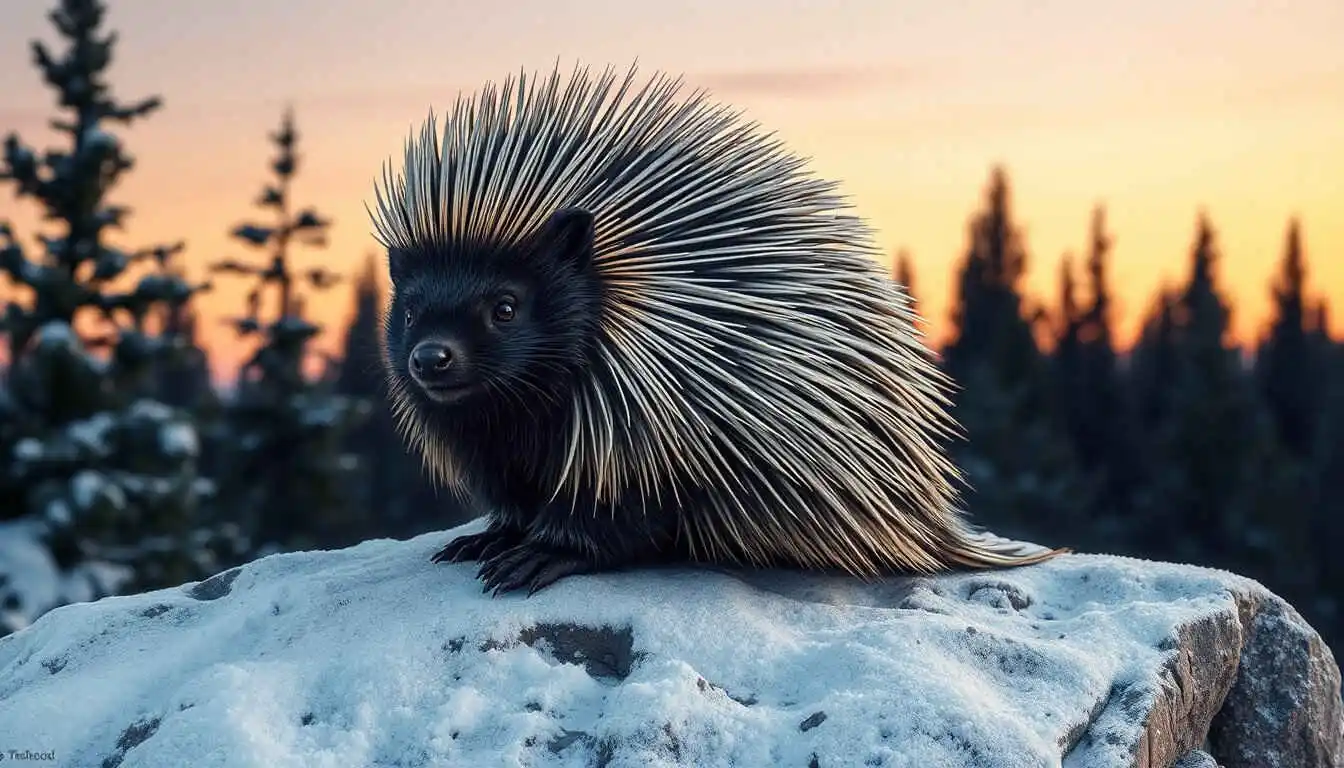
Imagine an animal so well-armored that even mountain lions think twice before attacking it. An animal that is technically a rodent but wears up to 30,000 natural needles as its daily wardrobe. An animal whose babies are born with quills already in place — albeit soft ones — and whose closest relatives include capybaras and chinchillas. Welcome to the world of the porcupine: nature’s most underrated, prickly, and utterly fascinating creature.
Despite their bristling reputation, porcupines are gentle, slow-moving herbivores that spend most of their lives quietly munching on bark, leaves, and berries. They do not shoot their quills. They cannot throw them across a room. They do not spend their days plotting revenge on unsuspecting hikers. In fact, the deeper you look into porcupine biology, behavior, and ecology, the more you realize that these spiked wanderers deserve not fear or mockery, but genuine admiration.
This blog post is your complete guide to porcupines — covering everything from their evolutionary origins and geographic range to their surprising social lives, unique mating rituals, and the remarkable science behind their legendary quills. Along the way, we address 30 of the most frequently asked questions about these animals, spell out the keywords that define their world, and offer inspiration for visualizing their beauty. By the end, you may just find yourself rooting for the porcupine.

1. The Porcupine Family Tree: Old World vs. New World
Porcupines belong to two distinct biological families: Hystricidae (Old World porcupines) found across Africa, Asia, and southern Europe, and Erethizontidae (New World porcupines) found throughout North and South America. Though they share the iconic quill defense system, these two groups actually evolved their spiky armor independently — a striking example of convergent evolution.
Old World porcupines tend to be larger, more terrestrial, and live in underground burrows. The African crested porcupine (Hystrix cristata), one of the largest rodents in the world, can weigh up to 30 kilograms. New World porcupines, by contrast, are more arboreal — adept tree climbers with prehensile tails that help them grip branches. The North American porcupine (Erethizon dorsatum) is the most familiar member of this group, ranging from Alaska down through Canada and the northern United States.
2. The Science of Quills: 30,000 Natural Needles
A porcupine’s quills are modified hairs made of keratin — the same protein found in human fingernails and hair. What makes them extraordinary is their microscopic structure. The tip of each quill is covered in hundreds of tiny backward-facing barbs, invisible to the naked eye, that act like fishhooks once embedded in skin. This means quills do not simply poke — they actively work their way deeper into tissue with every muscle contraction, making removal genuinely difficult and painful.
The North American porcupine carries approximately 30,000 quills at any given time, ranging from short, densely packed quills near the face to longer ones on the tail. Each quill can be 2 to 4 inches long, though certain Old World species grow quills exceeding 20 inches. When threatened, porcupines erect their quills by contracting small muscles beneath the skin — making them appear twice their normal size — and will back aggressively into a predator, slapping with their quill-laden tail.
Contrary to popular myth, porcupines cannot launch quills through the air like arrows. However, the quills are so loosely attached to the porcupine’s skin that they embed themselves in attackers upon contact with remarkable ease. The quill is released immediately, and a new one begins growing in its place within days.
Fascinatingly, scientists at MIT studied porcupine quills and discovered that the backward barbs do not just make removal painful — they actually make penetration easier. This counterintuitive design has inspired research into medical needles, adhesives, and wound-closure devices that mimic the quill’s geometry.
3. Diet, Habitat, and Daily Life
Porcupines are strict herbivores. Depending on the season and species, their diet includes bark, cambium (the living tissue just beneath bark), twigs, roots, leaves, berries, nuts, and aquatic vegetation. In winter, the North American porcupine subsists almost entirely on tree bark — particularly favoring hemlock, pine, fir, and beech — leaving telltale gnaw marks on trunks and branches.
This dietary habit makes porcupines both important and occasionally controversial members of their ecosystems. On one hand, their bark-stripping behavior can damage and even kill individual trees, creating forest openings that benefit other wildlife. On the other hand, they serve as prey for a wide range of predators, including fishers, wolverines, mountain lions, coyotes, great horned owls, and bobcats. The fisher (a large mustelid) is one of the porcupine’s most specialized natural enemies, having evolved the behavioral strategy of rapidly circling and biting the porcupine’s unprotected face until it collapses.
North American porcupines are largely solitary and primarily nocturnal, though they may be seen foraging in daylight during winter. They do not hibernate, remaining active year-round. They seek shelter in rock crevices, hollow logs, caves, and occasionally the dens of other animals. In warmer months, they are often found high in trees — sometimes sleeping in a fork of branches — and can descend headfirst using their specialized feet equipped with long claws and textured pads.
4. Mating: The Most Dramatic Ritual in the Rodent Kingdom
Porcupine reproduction is one of the most theatrical events in mammalian biology. Females are receptive only 8 to 12 hours per year — a remarkably narrow window — and this scarcity drives intense competition among males. During breeding season (typically October through December for North American porcupines), males will track down females, compete vigorously with rival males through vocalizations and physical combat, and perform elaborate courtship displays.
The most extraordinary element of porcupine courtship is urination. When a male locates a receptive female, he stands on his hind legs and drenches her with a powerful stream of urine from up to two metres away. If the female is interested, she tolerates this; if not, she shrieks, shakes the urine off, and drives the male away — sometimes physically attacking him. This behavior has earned porcupine courtship a reputation as one of the most bizarre romantic rituals in the animal kingdom.
After a gestation period of roughly 210 days — exceptionally long for a rodent — the female gives birth to a single offspring, called a porcupette. The porcupette is born fully developed: eyes open, quills already present (though flexible and soft at birth, hardening within hours), and capable of moving about within the first day of life. By two weeks, it begins sampling solid food; by four months, it is largely independent.
5. Communication, Intelligence, and Social Behavior
Porcupines are far more communicative than their reputation suggests. They produce a surprisingly diverse range of vocalizations, including grunts, moans, whines, shrieks, tooth-clattering, and a distinctive high-pitched wail used during mating and distress. Some researchers have noted that porcupines in captivity can learn to recognize their names and respond to individual human caretakers — suggesting a level of cognitive sophistication rarely attributed to rodents.
Though largely solitary, porcupines are not entirely antisocial. In winter, they sometimes share dens with other porcupines to conserve warmth, and mothers maintain close bonds with their porcupettes for several months. Individuals in overlapping territories may tolerate each other without overt aggression, communicating through scent markings left by specialized glands near the base of the tail.
6. Porcupines and Human Culture
Across cultures and continents, porcupines have occupied a fascinating space in folklore, art, and medicine. In many Indigenous North American traditions, porcupine quills hold deep cultural significance — used for decorative embroidery on clothing, moccasins, baskets, and ceremonial objects in a practice known as quillwork, which predates the introduction of glass beads to the continent by thousands of years. Quillwork is considered among the oldest and most refined art forms of North American Indigenous peoples.
In parts of Africa and Asia, porcupines are hunted for their meat, which is considered a delicacy, and their quills are used in traditional medicine and as decorative items. In Europe, the porcupine appeared frequently in medieval heraldry and bestiaries — usually as a symbol of defense, caution, and the wisdom of knowing when not to attack.
Today, porcupines occasionally appear in pop culture as symbols of prickliness or misunderstood introversion. Their image has been borrowed by everything from children’s books to punk album covers — always carrying that unmistakable message: I am peaceful, but I am prepared.
7. Conservation Status and Threats
Most porcupine species are currently listed as Least Concern by the IUCN, reflecting their adaptability and wide distribution. However, several species face localized threats from habitat destruction, hunting, and road mortality. The Philippine porcupine (Hystrix pumila) and the Himalayan porcupine face mounting pressure from agricultural expansion, while in parts of West Africa, bushmeat hunting has caused population declines in larger Hystrix species.
In North America, porcupines are thriving in many regions, though they are sometimes killed by ranchers and foresters who consider them pests due to their bark-stripping and their fondness for salt, which leads them to gnaw on wooden tool handles, canoe paddles, and even rubber tires for their mineral content. Vehicle collisions are a significant cause of mortality, particularly in areas where roads cut through forests.
Porcupines play a vital ecological role as prey animals, forest engineers, and seed dispersers. Protecting them means protecting the broader ecosystems — from boreal forests to tropical woodlands — in which they make their quiet, prickly homes.
Frequently Asked Questions
| Q1: Can porcupines really shoot their quills?
No. This is one of the most persistent myths about porcupines. Their quills are not projectiles and cannot be launched through the air. However, the quills detach very easily on contact, which may be the origin of this legend. |
| Q2: How many quills does a porcupine have?
A North American porcupine carries approximately 30,000 quills. Old World species can have similar or higher numbers depending on body size. |
| Q3: Do porcupine quills grow back?
Yes. Lost or shed quills regrow within days to weeks. Porcupines cycle through quills regularly throughout their lives. |
| Q4: Are porcupines dangerous to humans?
Porcupines are not aggressive toward humans and will not attack unprovoked. The danger lies in accidentally touching or cornering one, as the quills can cause serious injury. Pets are far more commonly quilled than people. |
| Q5: What do porcupines eat?
Porcupines are herbivores eating bark, cambium, leaves, buds, berries, roots, nuts, and aquatic plants. Seasonal availability heavily influences their diet. |
| Q6: Do porcupines hibernate?
No. North American porcupines remain active through winter, relying on tree bark as their primary food source during the cold months. |
| Q7: How long do porcupines live?
In the wild, North American porcupines typically live 5 to 7 years, though some reach 10 years or more. In captivity, with good care, they have been known to live up to 18 years. |
| Q8: Are porcupines good climbers?
New World porcupines are excellent climbers, using long claws and prehensile tails to navigate trees with ease. Old World porcupines are more terrestrial. |
| Q9: What is a baby porcupine called?
A baby porcupine is called a porcupette. It is born with soft, flexible quills that harden within hours of birth. |
| Q10: How do porcupines defend themselves without hurting their young?
The female porcupine has a quill-free belly, which she uses to nurse her porcupette safely. Porcupettes also have softened quills at birth to ease delivery. |
| Q11: What predators eat porcupines?
The fisher is the most specialized predator of porcupines in North America. Others include mountain lions, wolverines, coyotes, bobcats, great horned owls, and bears. |
| Q12: Can I keep a porcupine as a pet?
In some regions, it is legal to keep porcupines, but they require specialized care, large enclosures, and veterinary expertise. Most wildlife experts discourage keeping wild porcupines as pets. |
| Q13: Do porcupines make sounds?
Yes! They grunt, moan, shriek, whine, chatter their teeth, and emit a distinctive wail during courtship. They are surprisingly vocal animals. |
| Q14: Are porcupines nocturnal?
Primarily yes, though they may be active during the day in winter when energy demands are high. |
| Q15: What is the largest species of porcupine?
The African crested porcupine (Hystrix cristata) is one of the largest, weighing up to 30 kg and measuring up to 90 cm in body length. |
| Q16: How do porcupines communicate?
Through vocalizations, body posturing, quill erection, and scent marking via glands near the base of the tail. |
| Q17: Why do porcupines crave salt?
Like many herbivores, porcupines are sodium-deficient due to their plant-based diet. They seek out salt licks, sweat-soaked items, and even road salt to supplement their mineral intake. |
| Q18: Are porcupines related to hedgehogs?
No. Despite their similar defensive strategy, porcupines and hedgehogs are not closely related. Porcupines are large rodents; hedgehogs are insectivores. Their quills evolved independently. |
| Q19: How do porcupines mate safely, given their quills?
The female flattens her quills and raises her tail over her back during mating, allowing the male to approach safely from behind. |
| Q20: Do porcupines carry diseases?
Porcupines can carry parasites, but they are not significant vectors of diseases dangerous to humans. However, their embedded quills can cause serious bacterial infections if not properly removed. |
| Q21: How long is a porcupine’s gestation period?
Approximately 210 days — extraordinarily long for a rodent — which is why females typically have only one offspring per year. |
| Q22: Are porcupines endangered?
Most species are classified as Least Concern by the IUCN, though some regional populations face threats from hunting and habitat loss. |
| Q23: What role do porcupines play in their ecosystem?
They engineer forest structure through bark-stripping, serve as prey for many carnivores, and may aid in seed dispersal. They are a keystone prey species in many ecosystems. |
| Q24: Can porcupine quills be used for anything?
Yes. Indigenous peoples have used quills for decorative embroidery (quillwork) for thousands of years. Quills have also inspired biomedical research into needle and adhesive design. |
| Q25: How do you remove porcupine quills safely?
Quills should ideally be removed by a veterinarian or medical professional. Never break quills before removing, as this makes extraction harder. Grip as close to the skin as possible and pull firmly in a straight line. |
| Q26: Do porcupines swim?
Yes! Porcupines are capable swimmers. Their hollow quills provide additional buoyancy, and they readily cross rivers and ponds in search of food. |
| Q27: How smart are porcupines?
More intelligent than generally credited. Studies and anecdotal evidence from zoos and sanctuaries suggest porcupines can learn routines, recognize individuals, and exhibit problem-solving behavior. |
| Q28: Where do porcupines sleep?
They shelter in hollow logs, rock crevices, caves, dense brush, or — for arboreal species — in the forks of trees. |
| Q29: What is quillwork, and why is it significant?
Quillwork is an Indigenous North American art form using dyed porcupine quills to embroider intricate patterns on leather, bark, and fabric. It is one of the oldest art traditions on the continent, predating glass beads. |
| Q30: How can I coexist peacefully with porcupines near my property?
Store salt-containing items securely, wrap the bases of valuable trees in wire mesh, keep pets leashed at dusk and dawn, and appreciate the porcupine’s role in your local ecosystem. They are harmless if left undisturbed. |
Conclusion: Give the Porcupine the Respect It Deserves
The porcupine is one of the most biologically inventive, ecologically important, and culturally rich animals on the planet. It has survived for millions of years not through aggression or speed, but through the quiet genius of being unapproachably well-defended. Its quills have protected it from predators, inspired engineers, guided artists, and adorned the ceremonial garments of entire civilizations. Its slow, deliberate life — marked by patience, solitude, and remarkable parental devotion — is a counterpoint to the frantic pace we often associate with wild survival.
The next time you encounter a porcupine waddling through a forest, gnawing on a branch, or simply sitting in a tree watching the world go by, resist the urge to see it as a hazard. See it instead for what it is: an ancient, armored survivor that has earned its place in the world — one quill at a time.
Written with admiration for nature’s prickliest genius.
Disclaimer: The content on this blog is for informational purposes only. The author’s opinions are personal and not endorsed. Efforts are made to provide accurate information, but completeness, accuracy, or reliability are not guaranteed. The author is not liable for any loss or damage resulting from the use of this blog. It is recommended to use the information on this blog at your own discretion.
