
Table of Contents
Why the Hyena is the Smartest Predator You’ve Never Heard Of
Separating myth from reality about one of the animal kingdom’s most fascinating, complex, and unfairly maligned creatures
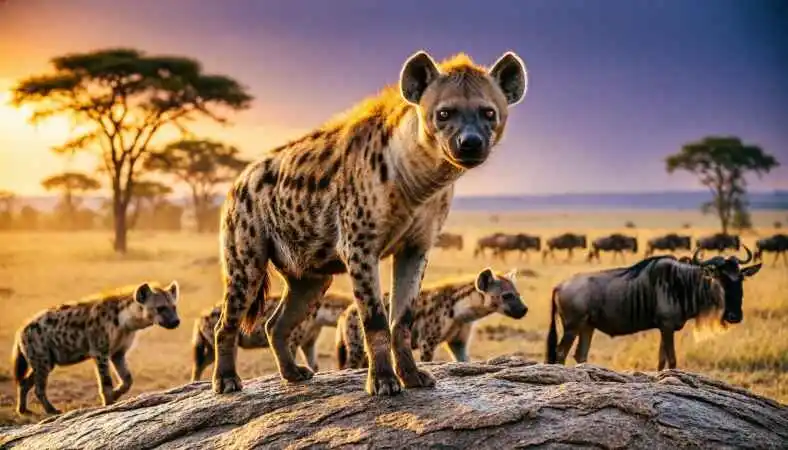
Few animals on Earth carry a heavier burden of unfair reputation than the hyena. Portrayed for centuries as cowardly scavengers, sinister laughers lurking in the shadows of lions, and symbols of treachery in folklore and film, hyenas have been cast as the villains of the animal world with remarkable consistency. Yet this portrayal is not just wrong — it is almost the precise opposite of the truth.
Hyenas are among the most successful large predators on the African continent. They are cognitively sophisticated animals whose problem-solving abilities rival those of primates. They live in complex, matriarchal societies governed by intricate social hierarchies. They are vital engineers of healthy ecosystems. And the spotted hyena, the most famous of the four species, kills the majority of its own food rather than stealing it from others, which is a truth that would upend the worldview of anyone who grew up watching a certain Disney film.
This blog post is a deep, detailed, and unapologetically passionate exploration of the hyena: its biology, its behavior, its ecological role, the threats it faces, and the extraordinary science that is reshaping our understanding of this ancient, irreplaceable animal. By the time you finish reading, you will not merely tolerate the hyena — you will be in awe of it.

Taxonomy: The Four Species of Hyena
Hyenas belong to the family Hyaenidae, which diverged from other carnivores approximately 22 million years ago during the Miocene epoch. Despite their superficial resemblance to dogs, hyenas are actually more closely related to cats, mongooses, and meerkats — belonging to the suborder Feliformia. Today, four extant species survive:
- Spotted Hyena (Crocuta crocuta)
The largest, most abundant, and most well-known hyena species. Found across sub-Saharan Africa, the spotted hyena is a highly social apex predator living in groups called clans that can number up to 80 individuals. It is the species responsible for the famous “laugh” — a vocalization that communicates excitement, submission, or social tension rather than amusement. The spotted hyena is the most studied of the four species and has shattered nearly every preconception about the hyena family.
- Striped Hyena (Hyaena hyaena)
Smaller, more solitary, and far less studied than its spotted cousin, the striped hyena ranges from North and East Africa through the Middle East and into South Asia, making it the most geographically widespread hyena. Primarily a scavenger, it plays a crucial sanitation role across its range. Striped hyenas are known to form pair bonds — an unusual characteristic among hyenas.
- Brown Hyena (Parahyaena brunnea)
Endemic to southern Africa, the brown hyena is a shy, nocturnal, largely solitary scavenger. It is the second-largest hyena species and notable for its shaggy, dark brown coat and long, pointed ears. Brown hyenas live in clans but forage alone, and females may raise cubs communally.
- Aardwolf (Proteles cristata)
The aardwolf is perhaps the most surprising member of the hyena family: a small, timid, insectivorous animal that feeds almost exclusively on termites — specifically Trinervitermes harvester termites in southern Africa and Microhodotermes in East Africa. The aardwolf does not have the bone-crushing jaws of its relatives; instead, it has small, widely spaced teeth and a long, sticky tongue perfectly adapted for lapping up thousands of termites per night. A single aardwolf can consume up to 300,000 termites in one feeding session, making it one of nature’s most efficient pest controllers.
Anatomy and Physical Adaptations
The spotted hyena is a physical paradox — an animal that looks awkward yet performs extraordinary feats of endurance, strength, and athleticism. Its front legs are longer than its hind legs, giving it the distinctive sloping back and loping gait that strikes some observers as ungainly. In reality, this body plan is an evolutionary masterpiece. The muscular forelimbs and sloping posture allow hyenas to maintain a long-distance trot of 6 km/h indefinitely, and to sprint at up to 60 km/h when pursuing prey.
The skull and jaws of the spotted hyena are among the most powerful in the carnivore world. With a bite force of approximately 1,100 PSI — comparable to that of a lion and exceeding that of most other predators — the spotted hyena can crack and consume the femur bones of a buffalo. This bone-crushing ability is not merely impressive; it is ecologically critical. The hyena’s digestive system can process and extract nutrients from bone material that other predators leave behind, including marrow. Its highly acidic stomach can dissolve bone completely, and its feces are characteristically chalky white from the calcium carbonate residue of digested bone.
The spotted hyena is also one of the most sexually unusual mammals on Earth. Female spotted hyenas are larger than males — the reverse of most mammalian species — and possess a masculinized urogenital system that is unique among mammals. The female’s clitoris is elongated into a pseudo-penis through which she urinates, copulates, and gives birth. This remarkable anatomical feature is mediated by high levels of androgens during fetal development and is thought to be linked to the hyena’s female-dominant social hierarchy, though the precise evolutionary explanation remains an active area of research.
Intelligence: The Primate of the Savanna
The scientific community has been consistently astonished by the cognitive abilities of hyenas. Studies comparing social intelligence across carnivore species have placed spotted hyenas at or above the level of chimpanzees in certain cognitive tasks — a finding that has forced a radical reappraisal of what we thought we knew about animal intelligence.
Research conducted at the Field Station for Animal Behavior Research in Berkeley, California, revealed that spotted hyenas outperform chimpanzees on cooperative problem-solving tasks that require two individuals to work together simultaneously to obtain a food reward. While chimpanzees often struggle with the cooperative coordination required, hyenas — despite having no prior training — quickly learn to work together, often without vocalizing, communicating instead through subtle body postures and eye contact.
This social intelligence is not coincidental. Hyena clan life is extraordinarily complex. A clan of spotted hyenas operates under a strict matrilineal dominance hierarchy: every female outranks every male, and even the lowest-ranking female’s offspring automatically inherit a social status above all adult males from birth. Cubs learn their social position through observation and interaction from their earliest days. Maintaining accurate mental maps of dozens of individual clan members’ ranks, relationships, alliances, and moods requires — and drives — substantial cognitive horsepower.
Hyenas also demonstrate long-term memory, recognizing the calls and identities of clan members they have not encountered for months. They use a sophisticated vocal repertoire of up to 14 distinct calls, including the famous “whoop” — a long-distance contact call that can carry for distances exceeding 5 km across the open savanna — and the “giggle,” which signals subordination or excitement rather than mirth.
The Matriarchy: How Hyena Clans Work
The social organization of a spotted hyena clan is one of the most complex and studied social structures in the non-primate animal kingdom. At the top sits the dominant female — the matriarch — followed by her female descendants in order of birth (youngest cubs of the matriarch rank just below her, above older female relatives in some lineages). All females outrank all males.
Males in hyena society occupy a difficult social position. Upon reaching sexual maturity, young males typically leave their birth clan — a behavior called natal dispersal — and join a new clan as the lowest-ranking members. They must spend years at the bottom of the hierarchy, deferring to every female and even to cubs, before they can hope to mate. Mating in spotted hyenas is initiated entirely by the female; the female’s anatomical structure means that males cannot force copulation, an evolutionary adaptation that gives females complete reproductive autonomy and effectively eliminates sexual coercion from the species.
Females raise cubs in communal dens — often old aardvark burrows — where cubs interact, play, compete for dominance, and form the social bonds that will structure their lives. Cubs are born with their eyes open, their canine teeth already erupted, and an immediate instinct to establish dominance over siblings. Spotted hyena twins of the same sex frequently engage in intense and sometimes fatal sibling competition in the first weeks of life — a phenomenon known as sibilicide — which is thought to be an adaptive mechanism for reducing competition in lean times.
Hunters, Not Just Scavengers: The Truth About Hyena Predation
Perhaps the most persistently wrong belief about spotted hyenas is that they are primarily scavengers that steal from lions. The scientific literature tells a very different story. Research by ethologist Hans Kruuk in the Serengeti and Ngorongoro Crater in the 1960s and 1970s — the landmark studies that first overturned the scavenger myth — demonstrated that hyenas kill up to 95% of the food they eat in prey-rich environments. They are apex predators in every meaningful sense.
Spotted hyenas hunt wildebeest, zebra, gazelle, buffalo calves, and many other ungulates with remarkable efficiency. Clan hunts involve coordinated pursuit strategies, with individuals targeting specific animals in a herd, cutting off escape routes, and wearing down prey over distances of several kilometers. A single hyena can run down a wildebeest alone if necessary.
Ironically, studies using GPS tracking and direct observation have shown that it is often lions — not hyenas — that steal food from the other. Lions, which are ambush predators with relatively low hunting success rates per attempt, frequently follow the sounds of a hyena kill and use their greater size to displace hyenas from their own prey. In areas where hyenas outnumber lions significantly (such as parts of the Ngorongoro Crater), hyenas have been observed mobbing and reclaiming kills from lions, with clans of hyenas successfully chasing off lone lions and even small lion groups.
Ecological Role: The Savanna’s Cleanup Crew and Beyond
Hyenas are indispensable to the health of African ecosystems. Their bone-crushing and bone-digesting abilities allow them to process carcasses completely — reducing disease transmission, recycling nutrients back into the soil, and removing material that would otherwise attract dangerous bacteria and flies.
The calcium from digested bones is deposited back into the soil through hyena latrines — communal marking and defecation sites — creating localized nutrient hotspots that support plant growth. In this way, hyenas are not merely consumers of the ecosystem but active contributors to its nutrient cycling.
Hyenas also regulate prey populations. By preferentially targeting weak, sick, injured, or old animals, they perform a culling function that improves the overall genetic health of prey herds. This selective predation is a form of natural quality control that complements the more opportunistic hunting of other predators.
Hyenas in Culture, Myth, and History
The hyena has occupied a complex and often deeply negative space in human culture across millennia. Ancient Egyptian mythology associated hyenas with treachery and the destruction of graves. In many African cultural traditions, hyenas are linked to witchcraft and bad omens, with spotted hyenas in particular believed by some communities to be ridden by witches at night. The Malagasy people of Madagascar believed that hyenas could dig up the dead, a belief possibly rooted in the hyena’s very real habit of scavenging from burial sites in food-scarce environments.
In contrast, some cultures have a more nuanced relationship with hyenas. The Borana people of Ethiopia and Kenya maintain a tradition known as the “Hyena Men of Harar” — a practice in which designated individuals feed wild spotted hyenas by hand at the gates of the ancient city of Harar, a ritual that has continued for over a century and serves as a cultural connection between the human community and the wild hyenas of the surrounding hills.
Western popular culture has been almost uniformly unkind to hyenas. The trio of villainous hyenas in Disney’s The Lion King — Shenzi, Banzai, and Ed — cemented the image of hyenas as foolish, cowardly, and malevolent in the minds of an entire generation. Biologists were not amused. The film’s portrayal drew specific criticism from researchers, including those who have devoted careers to studying these animals, for perpetuating dangerous myths that contribute to anti-hyena sentiment and justify persecution.
Conservation Status and Threats
Of the four hyena species, all face some degree of threat, though their conservation status varies:
- Spotted Hyena: Least Concern (IUCN), with an estimated population of 27,000–47,000. However, populations are declining due to habitat loss, prey depletion, and direct persecution.
- Striped Hyena: Near Threatened (IUCN), with fewer than 10,000 individuals remaining. The population is fragmented and declining across its range.
- Brown Hyena: Near Threatened (IUCN), with an estimated 4,000–10,000 individuals. Primarily threatened by persecution from farmers who believe (often incorrectly) that hyenas kill livestock.
- Aardwolf: Least Concern (IUCN), though populations in some areas are affected by pesticide use targeting the termite colonies on which they depend.
The primary threats to hyenas across all species include:
Habitat Loss: Agricultural expansion, human settlement, and infrastructure development are shrinking and fragmenting wild habitats across Africa and Asia.
Persecution: Hyenas are killed by farmers in retaliation for livestock predation (real or perceived), poisoned in predator control campaigns, and snared in bushmeat traps. In some regions, hyena body parts are harvested for traditional medicine, further driving targeted killing.
Prey Depletion: As wild ungulate populations decline due to poaching and habitat loss, hyenas face food insecurity and are pushed into greater conflict with humans and their livestock.
Trophy Hunting and Trade: In some range states, hyenas are legally hunted, and there is documented trade in hyena skins, skulls, and body parts.
Conservation efforts include community-based conservation programs that compensate farmers for livestock losses, predator-proof livestock enclosures (bomas), education campaigns to counter myths about hyenas, and protected area management. Increasingly, conservationists are recognizing that saving Africa’s megafauna requires saving the full suite of predators — including the deeply misunderstood hyena.
Why We Must Change How We See Hyenas
The rehabilitation of the hyena’s reputation is not merely a matter of scientific accuracy — it has real conservation consequences. Species that are despised are species that are allowed to be killed, poisoned, and driven to extinction without public outcry or political will to protect them. Every documentary that frames hyenas as villains, every piece of folklore that portrays them as evil, and every children’s film that casts them as comic antagonists contributes to a cultural permission structure that allows their persecution to continue unchallenged.
When we understand that hyenas are matriarchal societies of intelligent, communicative, cooperative individuals — animals with social bonds, emotional lives, and irreplaceable ecological roles — the moral calculus shifts. These are not monsters to be feared and destroyed. They are ancient, magnificent animals that have survived 22 million years on this planet, that have shaped the very ecosystems we treasure, and that deserve our respect, our protection, and our wonder.
The hyena does not laugh because it finds something funny. It calls out across the moonlit savanna in search of its clan — its family. It is time we listened differently.
FAQs
- What exactly is a hyena?
Hyenas are carnivorous mammals of the family Hyaenidae, more closely related to cats than dogs, comprising four species found across Africa and parts of Asia.
- How many species of hyena exist?
There are four living species: the spotted hyena, striped hyena, brown hyena, and aardwolf.
- Why do spotted hyenas laugh?
The “laugh” or giggle is a vocalization expressing excitement, submission, or social tension — not amusement. It is a communication tool within the clan.
- Are hyenas primarily scavengers?
Spotted hyenas kill up to 95% of their food in prey-rich environments. They are apex predators, not primarily scavengers as is commonly believed.
- Who steals from whom more — lions or hyenas?
Research shows lions frequently steal kills from hyenas more often than the reverse, especially where hyenas outnumber lions.
- Do hyenas live in groups?
Spotted and brown hyenas live in groups called clans. Striped hyenas are largely solitary, though they may form pairs. Aardwolves are mostly solitary.
- How large can a spotted hyena clan be?
Clans can range from a handful of individuals to over 80 members in prey-rich territories such as the Ngorongoro Crater.
- Are hyenas intelligent?
Yes. Spotted hyenas demonstrate problem-solving and cooperative intelligence comparable to or exceeding that of primates in certain tasks.
- Why do female spotted hyenas have pseudo-penises?
The pseudo-penis is a masculinized clitoris resulting from high prenatal androgen levels. It is linked to the species’ female-dominant social structure and gives females complete reproductive control.
- Do hyenas have a powerful bite?
Yes. The spotted hyena’s bite force of approximately 1,100 PSI allows it to crush and digest bones completely, including large femur bones.
- Can hyenas digest bone?
Yes. Their highly acidic stomachs can dissolve bone entirely. Their feces are white due to the calcium carbonate from digested bones.
- How fast can a spotted hyena run?
Spotted hyenas can sprint at up to 60 km/h and can maintain a sustained trot of 6 km/h for extraordinary distances.
- Do hyenas eat every part of a carcass?
Nearly. Their bone-crushing and digesting abilities allow them to process carcasses far more completely than most other predators.
- What does the aardwolf eat?
Aardwolves feed almost exclusively on termites, consuming up to 300,000 termites per night using a long, sticky tongue.
- Are hyenas related to dogs?
No. Despite superficial similarities, hyenas are Feliforms — more closely related to cats, mongooses, and meerkats.
- How do hyenas communicate?
Through a complex vocal repertoire of up to 14 distinct calls, including whoops, giggles, grunts, groans, and yells, plus body language and scent marking.
- What is the “whoop” call of a spotted hyena?
A long-distance contact call is used to locate clan members. It can travel more than 5 km across the open savanna.
- Are hyenas endangered?
Spotted hyenas are Least Concern but declining. Striped and brown hyenas are Near Threatened. All species face increasing pressure from habitat loss and persecution.
- How long do hyenas live?
In the wild, spotted hyenas typically live 12–25 years. In captivity, they may live beyond 25 years.
- Do hyenas have any natural predators?
Adult spotted hyenas have few natural predators. Lions are their primary competitor and occasionally kill hyenas, especially cubs. Wild dogs and leopards pose threats to cubs and smaller species.
- How do hyenas mark their territory?
Through scent marking using a paste secreted from anal glands, urine, and communal latrines (defecation sites) known as “hyena latrines.”
- What is a hyena’s gestation period?
Spotted hyenas have a gestation period of approximately 110 days, giving birth to litters of 1–3 cubs, most often twins.
- Are spotted hyena cubs born with teeth?
Yes. Spotted hyena cubs are born with open eyes and erupted canine teeth, and immediately begin competing for dominance with siblings.
- What is sibilicide in hyenas?
