
Table of Contents
From Montevideo to the Metaverse: The Ultimate Story of the FIFA World Cup
The Greatest Show on Earth Begins
Every four years, the world pauses. Offices empty, streets hush, and billions of eyes lock onto a shared screen. The FIFA World Cup is not merely a sporting tournament — it is humanity’s most unifying spectacle, a festival where borders dissolve, and raw emotion reigns. From a muddy pitch in Montevideo in 1930 to the ultramodern stadiums of Qatar in 2022, the World Cup has produced moments of transcendent brilliance and heartbreaking agony. This is its complete story.
The journey began when FIFA president Jules Rimet championed the idea of a standalone international tournament. On July 30, 1930, at the Estadio Centenario, Uruguay defeated Argentina 4–2 before a roaring crowd of 68,000 to claim the inaugural title. The gold-plated trophy bore Rimet’s name. A century later, that founding drama still echoes in every penalty shootout, every last-minute winner, every goalkeeper’s desperate dive.
Italy’s Back-to-Back Dominance (1934 & 1938)
Italy, under manager Vittorio Pozzo, became the first nation to defend the World Cup title successfully. In 1934, hosting duties gave Mussolini’s Italy a political edge, but Pozzo’s tactical genius created a genuinely superior side. Giuseppe Meazza orchestrated both campaigns, leading Gli Azzurri to back-to-back victories in 1934 (2–1 vs. Czechoslovakia) and 1938 (4–2 vs. Hungary). No team has successfully repeated that back-to-back feat — except Brazil.
The 1950 tournament in Brazil gave the world the ‘Maracanazo’ — one of the most stunning upsets in sporting history. With 200,000 spectators packed into Rio’s Maracanã, Uruguay shocked Brazil 2–1 in the final round match, effectively the final. The silence that fell over the stadium has been described as a kind of collective grief. Brazil’s national football psyche bears its scar to this day.

The Pelé Era & Brazil’s Golden Trident (1958–1970)
A 17-year-old named Edson Arantes do Nascimento — Pelé — arrived in Sweden in 1958 and promptly redefined what a footballer could be. His hat-trick against France in the semifinal and two goals in the final against the hosts announced an era. Brazil’s 1958 triumph launched a dynasty: three World Cup titles in twelve years (1958, 1962, 1970), the latter considered by many historians to be the greatest team ever assembled.
The 1970 Mexican campaign gave us Pelé, Jairzinho, Rivelino, Tostão, and Gérson — a team of such artistry that even opponents applauded. Their 4–1 demolition of Italy in the final remains a masterclass. Brazil’s permanent possession of the Jules Rimet Trophy (after three victories) prompted FIFA to commission a new trophy — the iconic 18-carat gold design still awarded today.
Cold War Football: 1974–1990
Total Football and West German Efficiency
The 1974 West Germany tournament introduced the world to Johan Cruyff’s ‘Total Football’ — a fluid, position-less system where the Netherlands outplayed everyone. Yet in the final, West Germany overcame the 2–1 deficit to win 2–1. Franz Beckenbauer lifted the trophy at Munich’s Olympiastadion, beginning a decade of German dominance. Argentina’s 1978 home victory under César Luis Menotti was politically charged — the Junta’s regime exploited it for propaganda — but Mario Kempes’s brilliance was undeniable.
Italy’s 1982 triumph in Spain remains one of the most dramatic campaigns. Paolo Rossi, returning from a match-fixing ban, scored 6 goals in three consecutive knockout matches to fire Italy past Argentina, Brazil, and Poland before the final. Germany’s 1990 victory in Rome, engineered by Beckenbauer (now as manager), was pragmatic but effective. Andreas Brehme’s penalty in the 85th minute silenced Argentina.
Maradona: One Man, One Tournament (1986)
Mexico 1986 belongs to Diego Armando Maradona. Argentina’s diminutive no. 10 carried his nation to glory with a performance in the quarterfinal against England that encapsulated both his genius and his mischief. Five minutes apart: the ‘Hand of God’ goal (scored with his fist) and the ‘Goal of the Century’ (a 60-metre dribble through five defenders). Argentina defeated West Germany 3–2 in the final. Maradona collected the Golden Ball. The world still argues about him.
The Modern Era: 1994–2018
USA, France, and the Global Expansion
The 1994 World Cup in the United States shattered attendance records and introduced the world to a new football market. Brazil ended a 24-year title drought with a penalty shootout victory over Italy — the first final decided by penalties. Roberto Baggio’s missed spot-kick, head bowed in anguish, became one of sport’s most iconic images.
France 1998 brought a new star: Ronaldo (the Brazilian phenom) and Zinedine Zidane. Despite Ronaldo’s mysterious illness before the final — surrounded by conspiracy theories to this day — France dominated Brazil 3–0. Zidane headed twice. Les Bleus celebrated in Paris before millions. The tournament also introduced an expanded 32-team format, giving greater representation to Africa, Asia, and CONCACAF.
South Korea and Japan’s co-hosted 2002 tournament delivered fairy-tale stories. Ronaldo redeemed himself with two goals in the final (Brazil 2–0 Germany). Senegal reached the quarterfinals in their debut. South Korea — buoyed by a fervent Red Devils fanbase — improbably reached the semifinals, defeating Spain and Italy along the way in controversial circumstances.
Germany’s Return and Spain’s Tiki-Taka Reign
Germany 2006 was the host nation’s love affair with its own tournament. The ‘Sommermärchen’ (summer fairy tale) saw Germany reach the semifinals before exiting to Italy on a Fabio Grosso extra-time strike. Italy defeated France in the final — again on penalties, after Zidane’s notorious headbutt on Marco Materazzi earned a red card. Spain’s 2010 triumph in South Africa was built on Pep Guardiola’s Barcelona DNA: possession-based, technically brilliant. Andrés Iniesta’s extra-time winner against the Netherlands ensured Spain completed a trifecta (Euro 2008, World Cup 2010, Euro 2012). Brazil 2014 became a nightmare for the hosts — the infamous 7–1 semifinal loss to Germany, the ‘Mineirazo,’ destroyed a generation’s dreams. Germany’s fourth star was richly deserved: Mario Götze’s extra-time winner against Argentina was masterful.
Russia 2018 and the Rise of New Powers
Russia’s hosting surprised skeptics with superb infrastructure and passionate atmospheres. France won their second title, defeating Croatia 4–2 in a chaotic but memorable final. Kylian Mbappé became the second teenager (after Pelé) to score in a World Cup final. Croatia’s run — Luka Modrić inspiring a nation of just four million — was tournament of the tournament’s most romantic storyline.
Qatar 2022: Where History Was Rewritten
The 2022 FIFA World Cup in Qatar was historic before a ball was kicked: the first World Cup in the Arab world, the first in winter (November–December), and the most compact in geography. Eight ultramodern air-conditioned stadiums are clustered within 30 miles of each other. Controversy over labour rights and LGBTQ+ policies never left the headlines, yet the football demanded centre stage.
Morocco’s Atlas Lions provided the tournament’s greatest story — eliminating Belgium, Spain, and Portugal to become the first African and first Arab nation to reach a semifinal. Achraf Hakimi, Hakim Ziyech, and Youssef En-Nesyri became continental heroes. Japan and South Korea again showed Asian football’s growing potency. Saudi Arabia defeated Lionel Messi’s Argentina in the group stage in one of the all-time great shocks.
The final belonged to history. Argentina vs. France — Messi vs. Mbappé. Leading 2–0 with minutes remaining, Argentina conceded two Mbappé goals in 97 seconds to draw 2–2. Extra time produced a Messi goal answered by another Mbappé penalty — 3–3. The shootout. Gonzalo Montiel’s decisive penalty. Lionel Messi, at 35, finally held the only trophy that had eluded him. The greatest player in history had completed his collection.
Records, Legends & Statistical Milestones
The World Cup’s 92-year canvas is painted with extraordinary numbers. Miroslav Klose’s 16 career goals across four tournaments (1998–2014) stand as the record. Ronaldo Nazário (Brazil) and Just Fontaine (France, 1958 — 13 goals in a single tournament) occupy the pantheon beside him. Germany’s 8 final appearances surpass all others. Brazil’s 5 titles remain unmatched. Cafu and Lothar Matthäus each played in five World Cups.
The most-watched single match in World Cup history was the 2014 final (Germany vs. Argentina) with an estimated 1 billion viewers. The 2022 tournament in Qatar attracted a cumulative global viewership of 5 billion across all matches — representing roughly 60% of humanity. That figure will only grow in 2026.
All-Time World Cup Winners
| Nation | Years Won |
| 🇧🇷 Brazil — 5 Titles | 1958, 1962, 1970, 1994, 2002 |
| 🇩🇪 Germany — 4 Titles | 1954, 1974, 1990, 2014 |
| 🇮🇹 Italy — 4 Titles | 1934, 1938, 1982, 2006 |
| 🇦🇷 Argentina — 3 Titles | 1978, 1986, 2022 |
| 🇫🇷 France — 2 Titles | 1998, 2018 |
| 🇺🇾 Uruguay — 2 Titles | 1930, 1950 |
| 🇬🇧 England — 1 Title | 1966 |
| 🇪🇸 Spain — 1 Title | 2010 |
2026 FIFA World Cup: The 48-Team Revolution
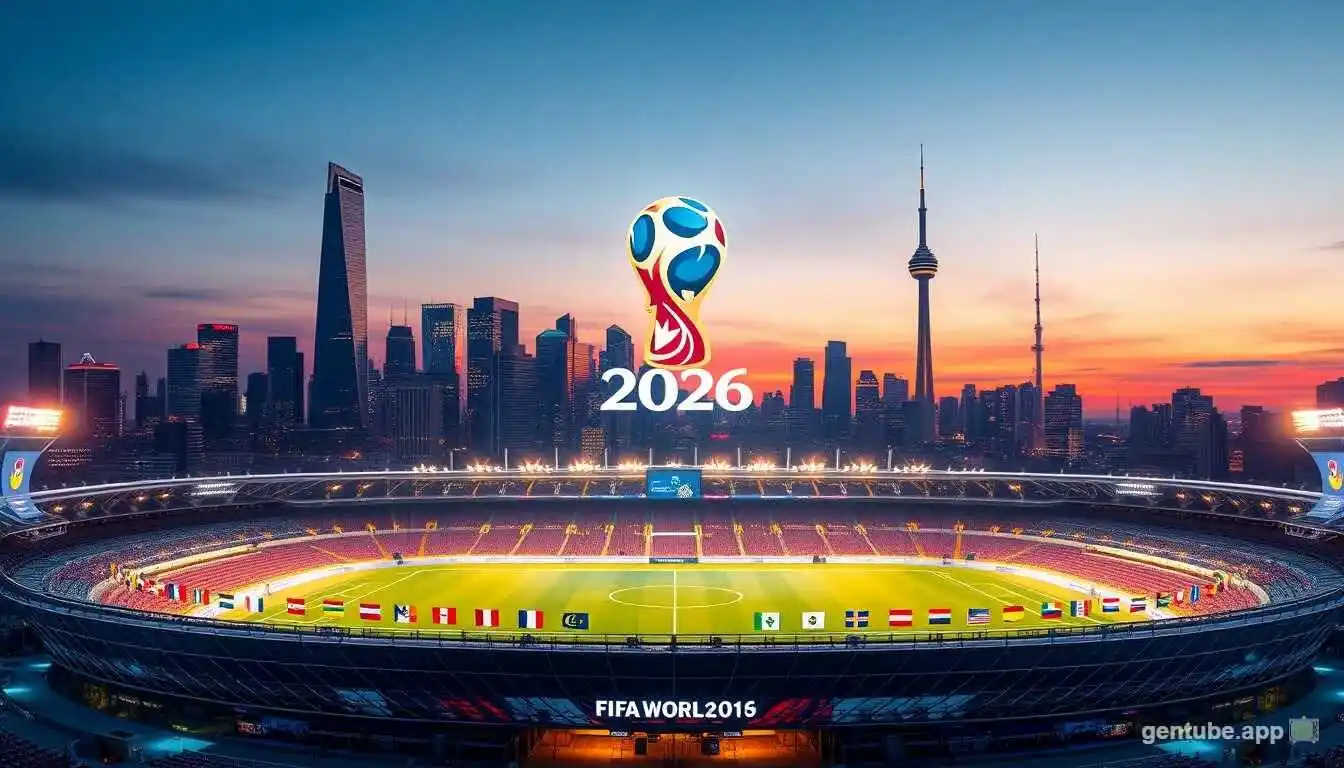
The United States, Canada, and Mexico will co-host the 2026 FIFA World Cup — the first three-nation tournament in history and the first time the expanded 48-team format is used. Matches will be played across 16 cities, including New York/New Jersey’s MetLife Stadium, Los Angeles’s SoFi Stadium, and iconic venues in Mexico City and Toronto. The new format introduces a group stage of 12 groups of four, with the top two and the eight best third-place teams advancing.
The stakes for global football have never been higher. CONCACAF nations — particularly the USA, Mexico, and Canada — will compete with the extra motivation of home advantage. African and Asian confederations receive expanded allocations. The commercial bonanza is staggering: FIFA projects revenue exceeding $11 billion.
2026 Predictions & Teams to Watch
France, powered by Kylian Mbappé at his absolute peak, enters as bookmakers’ favourites. Argentina will defend with Messi’s swansong energy powering a new generation. England’s golden generation — Bellingham, Saka, Foden — carry decades of pent-up expectation. Brazil, restructured under a new manager post-2022, will seek a sixth star. Germany’s generational rebuild under Julian Nagelsmann promises an exciting new brand. Portugal’s post-Ronaldo era begins. Spain’s La Masia continues producing prodigies. And Morocco — inspired by 2022 — will not accept being a Cinderella story twice.
Dark horses abound. Japan’s J-League alumni are returning from Europe’s top clubs. Nigeria, Egypt, and Senegal represent Africa’s growing threat. The USA — on home soil, with a maturing MLS infrastructure and a roster of European-based professionals — could genuinely challenge for the latter stages for the first time since 2002.
Frequently Asked Questions
| Question | Answer |
| When was the first FIFA World Cup held? | The inaugural FIFA World Cup was held in Uruguay in 1930, with Uruguay winning the first-ever title on home soil. |
| How many times has Brazil won the World Cup? | Brazil is the most successful nation in World Cup history, having won the tournament five times: 1958, 1962, 1970, 1994, and 2002. |
| Which country has hosted the most World Cups? | Brazil, France, Germany, Italy, and Mexico have each hosted the tournament twice, sharing the record for multiple host nations. |
| What is the biggest upset in World Cup history? | The 2022 Saudi Arabia vs. Argentina match shocked the world when Saudi Arabia defeated the heavily favored Argentina 2–1, considered one of the greatest upsets ever. |
| Who is the all-time top scorer in World Cup history? | Miroslav Klose of Germany holds the record with 16 World Cup goals, surpassing Ronaldo’s previous record of 15. |
| How many teams participate in the FIFA World Cup? | Since 1998, 32 teams have participated. Starting from the 2026 edition, the field expands to 48 nations. |
| What is the ‘Hand of God’ goal? | Diego Maradona’s infamous 1986 quarterfinal goal against England, scored illegally with his hand but allowed by the referee, is one of the most controversial moments in football history. |
| Which team has the most World Cup runner-up finishes? | Germany (including West Germany) has appeared in the most World Cup finals overall, with 8 appearances, winning 4 and losing 4. |
| When did Pelé win his first World Cup? | Pelé won his first World Cup in 1958 at just 17 years old, becoming the youngest player to win a World Cup winner’s medal. |
| What was the highest-scoring World Cup game? | Austria vs. Switzerland in 1954 ended 7–5, making it the highest-scoring match in World Cup history with 12 goals. |
| Who won the 2022 FIFA World Cup? | Argentina won the 2022 FIFA World Cup in Qatar, defeating France 4–2 on penalties after a dramatic 3–3 draw in the final. |
| What is the Golden Boot award? | The Golden Boot (Adidas Golden Boot) is awarded to the top scorer of each World Cup tournament. |
| Has the United States ever hosted the World Cup? | Yes, the USA hosted the 1994 FIFA World Cup, which was the most attended World Cup in history at the time, with Brazil winning the title. |
| What is the FIFA World Cup trophy made of? | The current FIFA World Cup Trophy, introduced in 1974, is made of 18-carat gold and weighs approximately 6.175 kg. |
| Which goalkeeper has the most clean sheets in World Cup history? | Peter Shilton of England holds the record for most appearances and clean sheets across multiple tournaments in the 1970s and 1980s. |
| What was the ‘Miracle of Bern’? | West Germany’s shocking 3–2 win over Hungary in the 1954 World Cup Final is called the ‘Miracle of Bern.’ Hungary had been unbeaten for four years. |
| How are World Cup host nations chosen? | FIFA member associations bid to host the tournament, and the FIFA Council votes on the winning bid, considering infrastructure, stadiums, and legacy plans. |
| Has Africa ever won the FIFA World Cup? | No African nation has yet won the FIFA World Cup, though Senegal (2002), Ghana (2010), and Morocco (2022) have reached the quarterfinals or beyond. |
| Who scored the fastest goal in World Cup history? | Hakan Şükür of Turkey scored just 11 seconds into the third-place play-off against South Korea in 2002, the fastest goal in World Cup history. |
| When is the next FIFA World Cup? | The 2026 FIFA World Cup will be co-hosted by the USA, Canada, and Mexico — the first time three nations have jointly hosted the tournament. |
| What is the World Cup qualifying process? | Teams must qualify through continental competitions (UEFA, CONMEBOL, CONCACAF, CAF, AFC, OFC), with each confederation allocated a set number of berths. |
| Has any team gone undefeated throughout the World Cup? | Brazil in 1970 won all six matches without defeat, often regarded as the most complete and dominant World Cup campaign ever. |
| What year did France first win the World Cup? | France won their first World Cup title in 1998 on home soil, defeating Brazil 3–0 in the final with Zinedine Zidane scoring twice. |
| Who are the youngest and oldest players to compete in the World Cup? | Norman Whiteside (Northern Ireland, 1982) is the youngest at 17 years 41 days; Roger Milla (Cameroon) played at age 42 in 1994. |
| What was the worst defeat in World Cup history? | Brazil’s 7–1 loss to Germany in the 2014 semifinal on home soil, known as the ‘Mineirazo,’ is widely considered the most shocking result in modern football. |
| How has the format of the World Cup changed over time? | It began as a 13-team round-robin in 1930, expanded to 16 teams in 1934, then 24 in 1982, 32 in 1998, and 48 from 2026 onwards. |
| What is VAR, and when was it introduced in the World Cup? | Video Assistant Referee (VAR) was first used at the 2018 FIFA World Cup in Russia to review goals, penalties, red cards, and mistaken identity. |
| Which World Cup final had extra time and penalties? | Several finals have gone to extra time; the 1994 and 2006 finals were decided by penalty shootouts, as was the 2022 final. |
| Has any nation defended the World Cup title successfully? | Only Italy (1934, 1938) and Brazil (1958, 1962) have successfully defended the title in back-to-back tournaments. |
| What makes Morocco’s 2022 World Cup run historic? | Morocco became the first African and Arab nation to reach the FIFA World Cup semifinal, defeating Spain and Portugal along the way in Qatar 2022. |
Conclusion: The World Cup Never Ends
The FIFA World Cup is more than sport — it is civilisation’s most enduring communal ritual. From Jules Rimet’s humble dream in 1930 to the billion-strong viewership of 2022, from Pelé’s teenage sorcery to Messi’s crowning glory, the tournament has reflected every shade of the human experience: triumph and tragedy, beauty and controversy, unity and division.
As 2026 approaches and the tournament expands to 48 nations, football’s global village grows larger still. New heroes will emerge. New heartbreaks will be written. New records will fall. But the essence remains unchanged: eleven players, one ball, one goal — and the whole world watching, breathing as one.
⚽ Final Thought: The World Cup doesn’t just crown champions. It creates memories that outlast generations, stories told by grandparents to grandchildren, moments that define not just football — but the era in which we lived.
Disclaimer: The content on this blog is for informational purposes only. The author’s opinions are personal and not endorsed. Efforts are made to provide accurate information, but completeness, accuracy, or reliability are not guaranteed. The author is not liable for any loss or damage resulting from the use of this blog. It is recommended to use the information on this blog at your own discretion.
Published by CloudTechBull | cloudtechbull.com | Football & Beyond
