
Table of Contents
Unsung Heroes & Heartbreaks : Football Series
The Day the Maracanã Fell Silent: The Maracanazo, Brazil’s National Wound, and Why 1950 Still Haunts a Nation
Introduction: The Loudest Silence in History
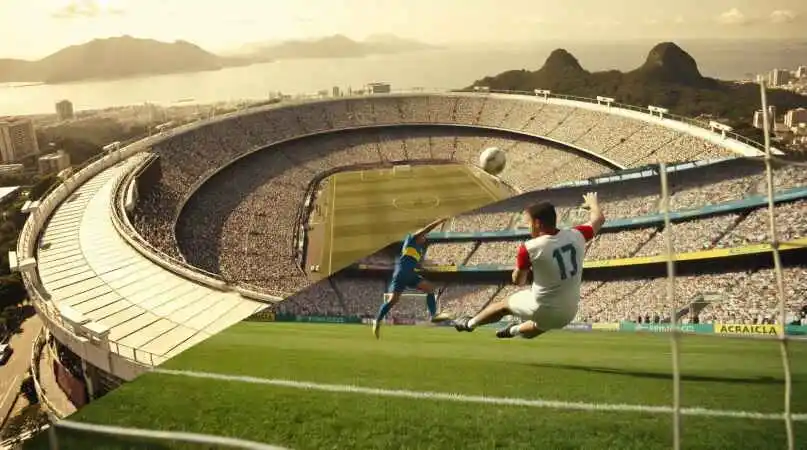
On the afternoon of July 16, 1950, approximately 200,000 people gathered in the Maracanã stadium in Rio de Janeiro to witness what they were certain would be Brazil’s coronation as world champions. The stadium, the largest ever built for a football match, had been constructed specifically to host this moment of national destiny. The newspapers had already written their congratulatory headlines. The champagne was cooling in the dressing room. The PA announcer had prepared his presentation speech.
What happened instead remains the most devastating result in football history — not merely in terms of the sporting upset itself, but in terms of what it meant, what it cost, and how deeply it penetrated the national psyche of an entire country.
Uruguay won 2-1. And in the seconds after Alcides Ghiggia’s decisive goal crossed the line in the 79th minute, the Maracanã fell into a silence that eyewitnesses described in almost mystical terms — a collective intake of breath from 200,000 throats that seemed to hollow out the very air. It was the sound of a nation having its heart broken in real time.
Seven decades later, the Maracanazo — as Brazilians came to call it, the Maracanã blow — still resonates through Brazilian football and Brazilian culture with an intensity that defies rational explanation. This is the story of why.

The Context: A Nation Building Its Own Stage for Destiny
The story of the Maracanazo cannot be understood without first understanding what Brazil had built — literally and metaphorically — in the years leading up to 1950. The Maracanã stadium itself was a statement of national ambition almost comically grand. Construction began in 1948, and the stadium opened specifically for the 1950 World Cup, with a capacity that dwarfed anything previously built in the world.
Brazil’s bid to host the first post-war World Cup was part of a broader national project of modernization and self-assertion. The country was transforming, industrializing, and urbanizing at a pace. Football, already deeply embedded in Brazilian culture across class lines, was the arena in which the nation most dramatically enacted its sense of itself. And in 1950, the footballers who would play in that vast white stadium were supposed to be the instrument of ultimate national affirmation.
The squad Brazil assembled was, by consensus, the finest they had ever produced to that point. Their attacking football, built around players of extraordinary individual quality, had swept through the tournament with breathtaking ease. In the final round-robin group, they had beaten Sweden 7-1 and Spain 6-1. They needed only a draw against Uruguay in the final game to be crowned champions.
The word draw barely featured in the national conversation. Brazil was going to win.
Uruguay: The Black Chief and the Underdogs
Uruguay arrived at the Maracanã as massive underdogs in the eyes of the world and, crucially, in the eyes of the Brazilian supporters who surrounded them. Their squad was solid rather than spectacular, capable rather than brilliant. They had drawn with Spain and beaten Sweden in the final group, but they had not electrified anyone. They were there, and they were alive, and not much more was expected.
But Uruguay had something that statistics and squad depth cannot measure: Obdulio Varela. The captain — known as the Black Chief for his imposing physical and psychological presence — was the kind of leader who seems to exist outside ordinary time, a man whose authority over a game derived not from pace or technique but from an almost supernatural composure under pressure.
In the dressing room before the final match, Varela reputedly told his teammates to look out at the Maracanã and understand something: the crowd was not their enemy. The crowd was Brazil’s problem, not Uruguay’s. The weight of expectation pressing down on 200,000 Brazilian supporters would, Varela argued, eventually become a crushing force on the Brazilian players themselves. Uruguay had nothing to lose. Brazil had everything.
He was, as events would prove, exactly right.
The Match: From Certainty to Catastrophe
Brazil opened the scoring in the 47th minute through Friaça — and the Maracanã erupted in what witnesses described as the loudest sound they had ever heard in their lives. For a few minutes, everything seemed to be proceeding according to the script. The headlines were writing themselves. The champagne was about to be opened.
Then Juan Alberto Schiaffino — Uruguay’s most technically gifted player, a midfielder of exceptional touch and vision — scored in the 66th minute to make it 1-1. A draw still suited Brazil. But something had changed in the stadium. The roar had become a murmur. The certainty had become anxiety. And Uruguay, sensing it, pressed forward.
In the 79th minute, Alcides Ghiggia received the ball on the right wing and cut inside toward goal. Barbosa, Brazil’s goalkeeper, moved to cover the expected cross. Ghiggia instead shot — low, hard, into the near post. The ball went in. Uruguay led 2-1.
The silence that followed was described by every journalist present as one of the most extraordinary things they had ever experienced. Hundreds of thousands of people, overwhelmed simultaneously, collectively unable to process what they had witnessed.
The Aftermath: Brazil’s White Shirts and the Search for Explanation
The immediate aftermath of the defeat was unlike anything football had seen before or has seen since. Brazilian newspapers published editions with black borders. The mood in Rio was reported to resemble a city in mourning rather than merely a sporting defeat. President Getúlio Vargas, who had been preparing to congratulate the victorious players, reportedly wept.
And then came the search for someone to blame.
Football’s most tragic scapegoating began almost immediately, and its primary victim was goalkeeper Moacyr Barbosa. The logic was superficially simple: he had positioned himself wrong for Ghiggia’s shot. He should have covered the near post. The goal was his fault. This analysis, reductive to the point of cruelty, became the accepted Brazilian narrative of what had happened.
Barbosa spent the next half-century living under the shadow of 1950. In one of the most quoted statements in Brazilian football history, he said: ” The maximum sentence in Brazil for a crime is 30 years. Mine has been for life. He died in 2000, his reputation never fully rehabilitated, his name still associated with the worst moment in Brazilian football history.
The Kit Change: Exorcising White from the National Consciousness
One of the most telling responses to the Maracanazo was entirely symbolic but profoundly revealing: Brazil changed its football kit. The white shirts they had worn in 1950 were abandoned, and a nationwide competition was held to design a new strip. The winning design — by 19-year-old Aldyr Garcia Schlee — was the brilliant yellow shirt with green trim that Brazil still wears today.
The decision was, on the surface, practical. White, it was argued, did not stand out well in black-and-white television broadcasts. But nobody seriously believes that was the primary motivation. White was the colour of the Maracanazo. White was the colour of humiliation. By wrapping their players in gold, Brazil was attempting — consciously or not — to sever the psychological connection between their national team and the worst day in their sporting history.
When Brazil subsequently won the World Cup in 1958, 1962, and 1970, they did so in yellow. Each victory was partly an exorcism. Each title said, implicitly: we are not those white-shirted men who froze in the Maracanã. We are something else now.
The Cultural Reverberations: Literature, Sociology, and National Identity
The Maracanazo did not remain merely a sporting event. It entered Brazilian cultural life at every level. Novelists wrote about it. Sociologists analyzed it. Psychologists studied the phenomenon of collective trauma that it represented. The Brazilian anthropologist Roberto DaMatta, writing decades later, described the 1950 defeat as a kind of national awakening — a brutal confrontation with the limits of what the country was capable of, a moment that forced Brazilians to revise the story they told themselves about who they were.
The football writer Nelson Rodrigues, perhaps Brazil’s greatest sporting journalist, saw the Maracanazo through a complex lens of social and racial politics, arguing that it revealed deep insecurities in Brazilian society’s relationship with its own identity — anxieties about race, class, and national worthiness that a football result had briefly and devastatingly brought to the surface.
Whether or not one accepts the full weight of these interpretations, it is undeniable that the Maracanazo generated a level of cultural and intellectual response far beyond what a football result would normally receive. It was treated, from the beginning, as something more than sport — as a mirror held up to the national face.
The Ghost at Every World Cup: How 1950 Haunted Brazil’s Subsequent Campaigns
Brazil’s subsequent World Cup campaigns have been consciously or unconsciously conducted against the backdrop of 1950. The 1958 tournament, which Brazil won for the first time, was emotionally understood as the beginning of the answer to the Maracanazo. The teenage Pelé, playing his first World Cup, represented a new Brazil — expressive, joyful, liberated from the ghost of that afternoon in Rio.
The 1970 World Cup victory in Mexico, widely considered the greatest team performance in the tournament’s history, was the most complete response to 1950. That team — Pelé, Jairzinho, Tostão, Rivelino, Carlos Alberto — played football of such transcendent beauty that it seemed to retroactively justify every moment of pain since 1950. They were not merely winning a World Cup. They were proving, definitively and permanently, that Brazil was the greatest footballing nation on earth.
And yet the ghost never fully departed. In 2014, when Germany dismantled Brazil 7-1 in the Belo Horizonte semi-final — an event Brazilians called the Mineirazo — the language of national trauma was immediately reached for. Commentators drew direct parallels with 1950. The wounds were different in kind but recognizable in character: the sense of the unthinkable becoming real, the silence replacing sound, the certain becoming suddenly impossible.
Ghiggia’s Quote and Uruguay’s Different Story
The same event that traumatized Brazil produced one of Uruguay’s greatest moments of national pride. Alcides Ghiggia, who scored the decisive goal that day, later reflected on what he had done with characteristic Uruguayan dryness: only three people have silenced the Maracanã — Frank Sinatra, Pope John Paul II, and me.
In Uruguay, 1950 is not a ghost. It is a celebration. The victory is commemorated, discussed with pride, and held up as evidence of the Uruguayan character — tenacious, resilient, capable of performing at their absolute best when the odds are most overwhelming. The national football team’s identity, which already carried the weight of the 1930s inaugural World Cup victory, was further cemented by 1950 as one built on defiance and collective spirit rather than individual brilliance.
This is one of sport’s most fascinating paradoxes: the same 90 minutes of football that became Brazil’s deepest wound became Uruguay’s proudest memory. The match exists in two completely different emotional universes simultaneously — a reminder that history is never singular, that the same events carry entirely different meanings depending on which side of the result you inhabit.
Conclusion: The Wound That Made Brazil
The Maracanazo was a tragedy. It was also, in the deepest sense, a transformation. The wound inflicted on July 16, 1950, forced Brazilian football to confront itself — to examine its assumptions, to change its colours, to build something more resilient and self-aware in place of the fragile certainty that had been so brutally shattered.
Without 1950, perhaps the Brazil of 1958, 1962, and 1970 would never have been built. Without the ghost of the Maracanã, perhaps Pelé’s generation does not feel the same burning desire to prove something permanent. Without the scapegoating of Barbosa, perhaps Brazilian football does not eventually develop the psychological depth and collective responsibility that characterise its greatest teams.
This is not to suggest that trauma is necessary or good. Barbosa’s tragedy remains a profound moral failure of Brazilian society. But history is not always clean, and the Maracanazo shaped Brazil in ways that its victories never could — because loss, unlike triumph, forces a people to look honestly at themselves and decide what they want to become.
The ghost still walks the corridors of the Maracanã. It always will. And somehow, in its haunting, it continues to drive Brazilian football toward the next attempt, the next title, the next chance to silence the silence.
FAQs
| What is the Maracanazo? | The Maracanazo refers to Uruguay’s shock victory over Brazil in the final decisive match of the 1950 World Cup, played at the Maracanã stadium in Rio de Janeiro before approximately 200,000 spectators. The result devastated Brazil and became one of sport’s most culturally significant events. |
| Why didn’t Brazil play a traditional final in 1950? | The 1950 World Cup used a final round-robin group of four teams instead of a knockout final. Brazil and Uruguay were the last two teams with a chance of winning, and the final game between them was effectively the deciding match. |
| What was the score in the Maracanazo? | Brazil led 1-0 at half-time, but Uruguay came back to win 2-1, with Ghiggia scoring the decisive goal in the 79th minute to produce one of football’s most shocking results. |
| Who scored Uruguay’s winning goal? | Alcides Ghiggia scored Uruguay’s decisive second goal in the 79th minute, cutting inside from the right and shooting into the near post past goalkeeper Moacyr Barbosa. It was one of the most consequential goals ever scored. |
| How big was the crowd at the Maracanazo? | Estimates vary, but approximately 173,000 to 200,000 people were present in the Maracanã, making it one of the largest crowds ever to watch a football match. The stadium had been built specifically for the tournament. |
| How did Brazil’s goalkeeper Barbosa cope with the loss? | Goalkeeper Moacyr Barbosa became a tragic scapegoat for the defeat, blamed by Brazilian society in ways that were deeply unfair. He lived with the stigma for decades, reportedly saying that the maximum sentence in Brazil for a crime was 30 years in prison, while he had been sentenced for life. |
| What was the cultural impact of the Maracanazo on Brazil? | The defeat triggered a profound national crisis. Brazil redesigned its white football kit to the now-famous yellow and green precisely because white was associated with humiliation. The event shaped Brazilian football identity, psychology, and national self-perception for generations. |
| Who was Obdulio Varela? | Obdulio Varela was Uruguay’s captain in 1950, a commanding central midfielder known as the Black Chief. His psychological strength and leadership in the dressing room and on the pitch were central to Uruguay’s ability to overcome the hostile atmosphere of the Maracanã. |
| Why did Brazil need only a draw to win the 1950 World Cup? | In the final round-robin group, Brazil had won its first two games and needed only a draw against Uruguay to take the title on goal difference. The whole country had already begun celebrating before the match was played. |
| How did Uruguay equalise in the 1950 final match? | Uruguay’s first goal was scored by Juan Alberto Schiaffino in the 66th minute — a composed finish after a flowing move that silenced the Maracanã and shifted the psychological momentum of the match. |
| What was the mood in Brazil before the 1950 final game? | Brazil’s victory was so widely anticipated that newspapers had already printed congratulatory headlines, champagne was ready in the dressing room, and the stadium announcer had reportedly prepared a trophy presentation speech. The overconfidence became part of the tragedy. |
| Is the Maracanazo mentioned in Brazilian football culture today? | The Maracanazo remains a deeply sensitive topic in Brazil. It is discussed in football analysis, sociology, and literature as a defining national trauma. Many Brazilian players have spoken about the shadow it casts over every subsequent tournament. |
| Did Brazil change its football kit after 1950? | Yes — Brazil played in white shirts in 1950. After the defeat, the Brazilian Football Confederation held a competition to design a new kit, resulting in the iconic yellow shirt with green trim that Brazil still wears today. |
| What happened to Uruguay’s 1950 World Cup team afterwards? | Many of the 1950 Uruguayan squad became national heroes at home but received less recognition internationally than their achievements merited. Ghiggia and Schiaffino went on to successful club careers in Italy. |
| When did Uruguay last win the World Cup? | Uruguay’s 1950 victory remains its last World Cup title. They had previously won the inaugural 1930 World Cup on home soil, making them one of only two-time winners. |
| What was the significance of Barbosa’s broken goalpost? | In one of football’s most poignant stories, Barbosa later burned the goalposts from the 1950 World Cup final in a backyard bonfire, reportedly to try to exorcise the demons of that day. The gesture was heartbreaking in its futility and humanity. |
| How did the Maracanazo affect Uruguay? | In Uruguay, the 1950 victory is celebrated as one of the greatest moments in the nation’s history — a David-versus-Goliath triumph that confirmed Uruguayan resilience and fighting spirit. The contrast with how the same event affected Brazil is one of football’s most striking cultural paradoxes. |
| Was Brazil genuinely the better team in 1950? | Most analysts agree that Brazil’s 1950 squad was technically superior and had been the tournament’s most impressive side. The defeat was not a reflection of sustained quality but of a catastrophic collapse of nerve and composure in a single defining match. |
| How many times has Brazil hosted the World Cup? | Brazil has hosted the World Cup twice — in 1950 and again in 2014. The 2014 tournament produced another national trauma when Germany defeated Brazil 7-1 in the semi-final, an event sometimes called the Mineirazo. |
| Did the 1950 result contribute to Brazil’s obsession with winning the World Cup? | Absolutely. Brazil’s subsequent five World Cup victories — in 1958, 1962, 1970, 1994, and 2002 — are widely understood through the lens of national redemption. Every Brazilian triumph carried within it a response to 1950. |
| Who refereed the 1950 final decisive match? | The decisive match was refereed by George Reader, an English official, whose control of the game was generally praised despite the extraordinary pressure and partisan atmosphere. |
| What did Alcides Ghiggia say about his goal? | Ghiggia famously reflected that only three people had ever silenced the Maracanã: Frank Sinatra, Pope John Paul II, and himself. It was characteristically dry and precise, and entirely accurate. |
| Is there a museum or memorial to the 1950 World Cup in Brazil? | The Maracanã itself serves as a living memorial to the entire history of Brazilian football, including 1950. The museum within the stadium features extensive coverage of the tournament and its legacy. |
| How long did the silence last after Ghiggia’s goal? | Accounts of the aftermath describe the Maracanã falling into an extraordinary, almost supernatural silence — described by witnesses as the sound of a city in shock. One journalist wrote that it was the loudest silence he had ever heard. |
| Did Barbosa ever recover his reputation? | Tragically, no. Barbosa died in 2000, still carrying the burden of the 1950 defeat. Brazil’s football establishment failed to properly rehabilitate him during his lifetime, a failure that many have since recognised as deeply unjust. |
| Was the 1950 World Cup final match televised? | Television was not yet widespread in Brazil in 1950, and the match was not broadcast live on TV domestically. Radio coverage was extensive, and the audio recordings of the broadcast remain among the most emotionally charged in Brazilian broadcasting history. |
| How did the Maracanazo affect Brazilian football tactics? | Some analysts argue that the 1950 defeat contributed to a collective psychological insistence on attacking football as the only appropriate response — an overcorrection born from the perceived passive performance in that final match. |
| What was the wider World Cup 1950 format? | The 1950 World Cup used a group stage followed by a final round-robin of four teams rather than knockout semi-finals and a final. This unusual format meant the last game of the final group effectively functioned as the championship decider. |
| How is the Maracanazo taught in Brazilian schools? | The Maracanazo features in Brazilian social studies and history education as an example of national trauma and the cultural significance of football. It is discussed not merely as a sporting event but as a moment that shaped national identity. |
| Will Brazil ever fully move on from the Maracanazo? | The five subsequent World Cup victories have healed much of the wound, but the Maracanazo retains its mythological status as an originary trauma. Football historians and sociologists suggest that certain national sporting events leave permanent marks on cultural consciousness, and 1950 is Brazil’s most indelible. |
Disclaimer: The content on this blog is for informational purposes only. The author’s opinions are personal and not endorsed. Efforts are made to provide accurate information, but completeness, accuracy, or reliability are not guaranteed. The author is not liable for any loss or damage resulting from the use of this blog. It is recommended to use the information on this blog at your own discretion.
