
Table of Contents
BEYOND THE PITCH : Football Series
How the World Cup Changed Host Nation Economies
The financial reality of hosting — infrastructure, tourism, and the white elephant problem
The Promise vs. The Price Tag
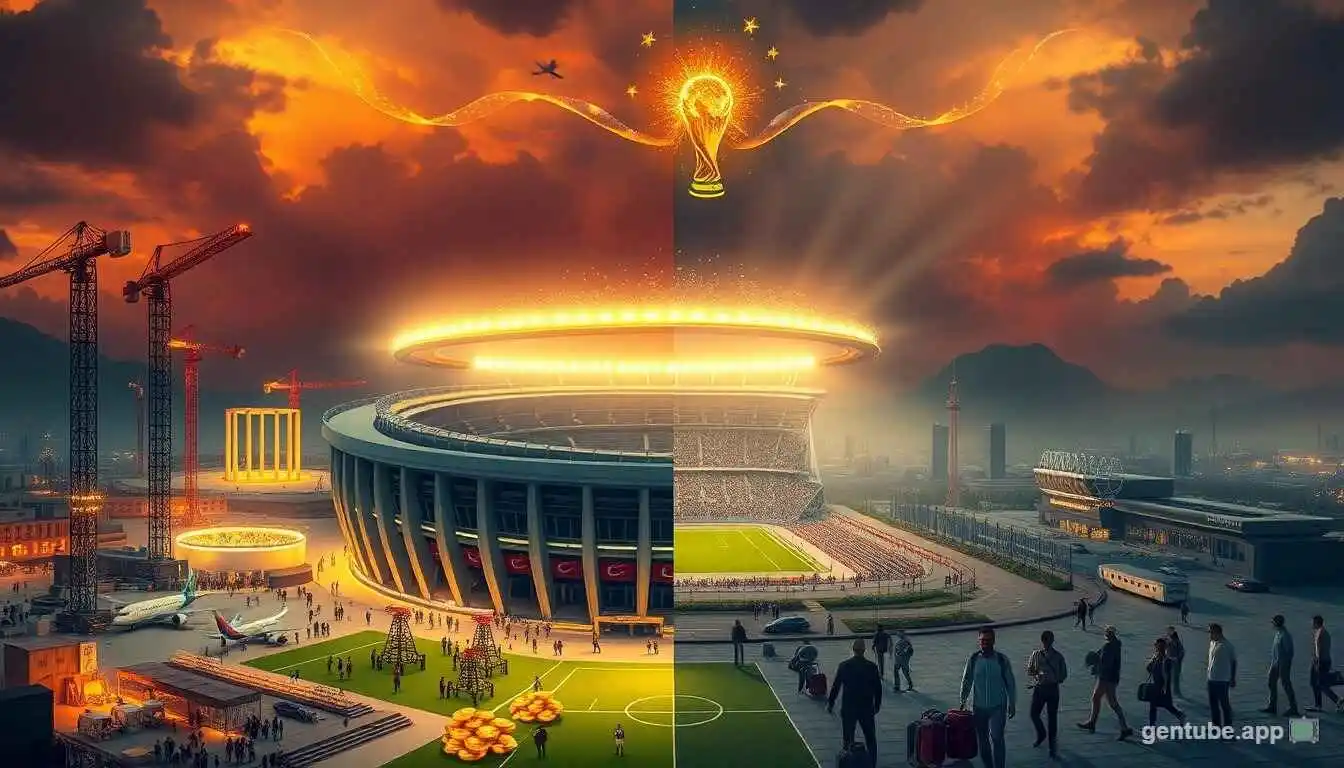
When a nation wins the right to host a FIFA World Cup, the announcement is almost always greeted with euphoria. Presidents pose with golden trophies. Infrastructure ministers announce billion-dollar construction timelines. Tourism boards predict waves of visiting fans spending freely across hotels, restaurants, and attractions. The World Cup, they say, will transform the country.
The reality, once the final whistle blows and the last flight departs, is considerably more complicated. Across the tournament’s modern history, the gap between the promises made in bid documents and the outcomes delivered on the ground has grown increasingly difficult to ignore. From Johannesburg to Manaus, from Rio de Janeiro to Doha, the financial legacy of hosting a World Cup is a story of genuine gains tangled together with spectacular miscalculations.
This post examines what actually happens when a nation bets its treasury, its infrastructure, and its global reputation on the world’s most-watched sporting event. We look at which hosts came out ahead, which were left holding enormous debts, and what the future of tournament hosting might look like if the economics ever force a reckoning.

| Beyond the Pitch | Context
The World Cup is the single most-watched sporting event in human history. The 2022 tournament in Qatar attracted a global audience estimated at over five billion viewers. The economic stakes for host nations are correspondingly enormous — and correspondingly risky. |
Building the Dream: Infrastructure Investment and Its Costs
Every World Cup requires stadiums. Modern FIFA standards demand venues of extraordinary scale, equipped with premium hospitality suites, media facilities, and safety infrastructure that far exceeds what most domestic leagues require. For nations with existing football cultures — Germany, France, England — this is manageable. For nations building from scratch, it is an existential financial commitment.
Brazil’s 2014 World Cup became the defining cautionary tale of its era. The federal government spent approximately 15 billion US dollars on the tournament, a figure that escalated from original estimates by a factor of nearly four. Twelve stadiums were built or extensively renovated. Of these, several were located in cities with no established top-flight football club to anchor ongoing usage. The Arena Amazonia in Manaus cost over 300 million dollars and hosted exactly four group-stage matches. Its subsequent utilisation rate became a symbol of what urban economists call infrastructure misalignment — building where there is no lasting demand.
Brazil’s experience was not unique. South Africa spent nearly four billion dollars on stadium construction and renovation for 2010, including the iconic Cape Town Stadium, a gleaming 55,000-seat arena that has struggled commercially ever since. Without a large local club occupying it full-time, the stadium costs the city of Cape Town tens of millions annually simply to maintain. The structural beauty of the venue is not in question. The business case is.
Qatar 2022: The Most Expensive Tournament in History
No discussion of World Cup economics is complete without Qatar 2022, a tournament so financially extraordinary that it redefined what ‘hosting costs’ could even mean. Estimates of total Qatari expenditure — including stadiums, transportation, hotels, and the construction of an entirely new city — range from 220 to 300 billion US dollars. Even the lower figure is roughly fifteen times what Brazil spent eight years earlier.
Qatar’s investment was not purely about football. The tournament was a strategic exercise in national brand-building, positioning a small Gulf state as a credible global player in sports diplomacy, tourism, and luxury infrastructure. By that metric, the investment may eventually generate returns. The Lusail Stadium — a golden vessel of a ground that hosted the final — is one of the most visually striking venues ever built. The question of what it will become in twenty years remains open.
FIFA’s own financial relationship with host nations deserves scrutiny here. The governing body takes the overwhelming majority of commercial revenues from broadcast rights, sponsorships, and licensing. Meanwhile, host nations bear the infrastructure costs, grant FIFA tax-exempt status on its local operations, and underwrite security and logistics. The economic asymmetry is stark. FIFA’s revenue from the 2022 World Cup exceeded seven billion dollars. The Qatari state absorbed the construction debt.
| Stat Spotlight
The 2022 Qatar World Cup cost an estimated $6,500 per spectator seat when total infrastructure investment is divided across stadium capacity, making it the most expensive sporting event ever hosted on a per-head basis. |
Germany 2006: What a Successful Host Looks Like
Not every host nation has stumbled. Germany’s 2006 tournament is widely regarded as the gold standard of World Cup organisation, and, unusually, the economics largely supported the goodwill. Germany was a wealthy, football-obsessed nation with twelve existing high-quality stadiums requiring only modest renovation rather than construction from scratch. Infrastructure spending was proportionate. Crowd management was expert. And the tournament delivered what economists call a ‘feel-good effect’ — a measurable lift in consumer confidence that helped boost domestic spending well beyond the tournament window.
Crucially, Germany was the ‘Summer Fairy Tale’ edition — the tournament that rehabilitated the nation’s image in the eyes of many international observers. The combination of warm weather, open fan culture, and unexpectedly warm-spirited crowds created a soft-power dividend that proved more durable than stadium revenues. German tourism numbers rose for years after the event, and the nation’s self-perception shifted palpably. These are effects that resist easy quantification but are no less real for it.
The lesson from Germany is not simply that rich countries host better World Cups. It is that alignment between existing capacity and tournament requirements is the key variable. When a nation builds to meet FIFA’s demands rather than adapting FIFA’s demands to what the nation already has, costs spiral. Germany did not build a new city. It polished what it had.
Tourism: The Promise and the Crowding-Out Effect
Tourism is perhaps the most cited economic justification for hosting a World Cup. The logic is simple: millions of football fans from around the world converge on your country for a month, spending money on accommodation, food, transport, and souvenirs. In practice, the picture is more ambiguous.
The ‘crowding-out effect’ refers to the tendency of regular tourists to avoid host nations during major events. Higher prices, overbooked hotels, disrupted transport, and general congestion persuade ordinary holidaymakers to choose other destinations. In some studies, the net tourism effect of hosting a World Cup is negligible, with the gains from football fans approximately cancelling out the losses from ordinary visitors.
South Africa’s 2010 tournament drew approximately 309,000 foreign visitors — substantially fewer than the 450,000 that organisers had projected. The country’s hotels, built and expanded for anticipated demand, found their occupancy rates declining sharply once the final whistle blew. The tourism boom never materialised on the scale promised in the bid documents. This pattern recurred in Brazil, where visitor numbers fell short of forecasts and the cost-per-tourist, when measured against total hosting expenditure, was extraordinarily high.
The White Elephant Problem
The phrase ‘white elephant’ refers to a possession whose cost of upkeep exceeds its usefulness. In World Cup economics, it describes stadiums and infrastructure built to tournament specification that cannot sustain themselves commercially once the event ends.
The phenomenon is not limited to developing nations. Even within wealthy hosts, specific venues can become financial burdens. But the problem is most acute in countries where the domestic football market cannot absorb large, expensively operated stadia. A 60,000-seat arena requires corporate hospitality revenue, high-attendance club fixtures, and diverse alternative programming to cover its operational costs. Without that baseline activity, it becomes a drain on public resources.
Qatar’s solution for several of its eight stadiums — including the modular 974 Stadium built from repurposed shipping containers — was to design for post-tournament deconstruction or donation. FIFA permitted this, and the approach may point toward a new model of sustainable hosting. Brazil and South Africa were not afforded this option, and their oversized, underused venues remain as testimony to the gap between tournament ambition and long-term planning.
The 2026 Model: Can Distributed Hosting Change the Equation?
The 2026 World Cup, to be co-hosted by the United States, Canada, and Mexico, represents the most ambitious experiment in distributed hosting in the tournament’s history. With sixteen host cities and a 48-team format, the sheer scale is unprecedented. But crucially, almost all of the venues involved are existing NFL stadiums, MLS arenas, or established football facilities that have functioning commercial lives independent of the World Cup.
This distinction matters enormously. The three nations are not building their World Cup infrastructure from scratch. They are adapting infrastructure that already earns revenue from American football, baseball, concerts, and college sports. The marginal cost of hosting is therefore far lower than in nations constructing new stadiums. Whether this translates into the first genuinely profitable World Cup for host nations in the modern era remains to be seen, but the structural conditions are more favourable than for any previous edition.
There are still risks. The logistical challenges of managing a tournament across three countries and sixteen cities are enormous. Transportation between host cities requires careful planning. And FIFA will still extract its commercial revenues regardless of what happens on the balance sheets of the participating municipalities. But 2026 at least offers a glimpse of what responsible hosting could look like.
The Hidden Human Costs
Any honest accounting of World Cup economics must include costs that do not appear on government spreadsheets. The construction of Qatar’s facilities was accompanied by credible reports of dangerous working conditions for migrant labourers, with estimates of worker deaths ranging from hundreds to over six thousand, depending on the methodology applied. These human costs sit alongside the financial ones in any complete ledger.
In Brazil, favela clearances near construction zones in Rio de Janeiro and other cities displaced thousands of residents. In South Africa, informal settlements near Cape Town were moved to make way for tournament infrastructure. The people bearing the greatest costs were often those least positioned to share in the economic benefits. This dimension of World Cup hosting receives less attention in mainstream economic analysis than GDP figures and tourism statistics, but it is part of the reality.
Conclusion: The Honest Verdict
The World Cup remains the most coveted hosting prize in sport. Nations compete ferociously for the right to be selected, investing years in bid preparation and lobbying. And the event itself delivers genuine cultural moments, infrastructure improvements, and national pride that resist easy monetary measurement.
But the honest economic verdict is sobering. For most host nations, the financial costs of hosting exceed any measurable return in GDP, tourism revenue, or long-term investment. The stadiums that endure longest in public memory are often those that have become symbols of waste rather than achievement. The gap between what is promised in a bid document and what is delivered in an audited legacy report is, almost universally, enormous.
The path toward more sustainable hosting exists — in distributed models, existing venues, and a renegotiation of FIFA’s financial relationship with hosts. Whether that path is taken depends less on economics than on politics. And in that sense, the World Cup is precisely what this series explores: a mirror held up to the world, reflecting all its ambitions, contradictions, and uncomfortable truths.
FAQS
| # | Question | Answer |
| 1 | Why do countries want to host the World Cup? | Prestige, global visibility, tourism potential, and infrastructure investment are key motivators. |
| 2 | How much did Brazil spend hosting the 2014 World Cup? | Brazil spent approximately $15 billion, far exceeding initial projections, sparking widespread protests. |
| 3 | What is a ‘white elephant’ stadium? | A purpose-built venue that becomes economically unviable after the event, costing more to maintain than it generates. |
| 4 | Did South Africa benefit economically from hosting the 2010? | Short-term tourism surged, but long-term economic gains were modest; stadiums in smaller cities struggled post-tournament. |
| 5 | Which host nation saw the greatest long-term economic benefit? | Germany (2006) is widely cited as a success due to existing infrastructure and strong domestic football culture. |
| 6 | What is the ‘FIFA effect’ on host economies? | A temporary spike in consumption, employment, and tourism during the tournament window, which often fades quickly. |
| 7 | How much does infrastructure investment typically cost a host? | Total hosting costs range from $5 billion (modest) to over $200 billion for Qatar 2022. |
| 8 | What happened to Qatar’s stadiums after 2022? | Several were downsized or repurposed; one is being dismantled and donated to developing nations. |
| 9 | Did Russia profit from hosting the 2018 World Cup? | Russia reported increased tourism and short-term GDP growth, but remote host cities saw little lasting benefit. |
| 10 | What are the hidden costs of hosting a World Cup? | Security, volunteer programmes, FIFA concessions, and opportunity costs of diverted public spending. |
| 11 | How does the World Cup affect local housing? | Hosting often triggers gentrification, displacing low-income residents near stadium construction zones. |
| 12 | Why did Norway decline to bid for the World Cup? | Norway concluded that the financial risk and FIFA requirements were incompatible with public spending priorities. |
| 13 | What is the typical tourism uplift during a World Cup? | Host nations see a 5–15% increase in visitors during the tournament, though the ‘crowding out’ effect reduces regular tourism. |
| 14 | What is the ‘crowding out’ effect in World Cup economics? | Regular tourists are avoiding the host country during the tournament due to higher prices and crowds, offsetting visitor gains. |
| 15 | How did South Korea and Japan manage 2002 costs? | Co-hosting split the infrastructure burden, though Japan still had stadiums with low ongoing utilisation. |
| 16 | Can smaller nations realistically afford to host a World Cup? | Generally, no, without substantial government subsidies or radical changes to FIFA’s hosting requirements. |
| 17 | What role does FIFA play in a host nation’s finances? | FIFA repatriates most commercial revenues while imposing significant infrastructure and tax exemption demands on hosts. |
| 18 | How does hosting affect a country’s construction industry? | It creates a boom in stadium and infrastructure contracts, though often benefiting multinational firms over local contractors. |
| 19 | What became of the Maracana stadium after 2014? | Brazil’s iconic Maracana fell into disrepair; it suffered infrastructure damage and reduced capacity after the tournament. |
| 20 | Is there a better economic model for World Cup hosting? | Economists suggest using existing stadiums, spreading across multiple nations, or imposing stricter FIFA cost-sharing agreements. |
| 21 | Did Argentina benefit economically from 1978? | The junta used the tournament for propaganda; genuine economic benefit was minimal amid severe political repression. |
| 22 | What is the legacy infrastructure debate? | The argument over whether new roads, airports, and stadiums justify their cost after the tournament ends. |
| 23 | How does the World Cup affect exchange rates? | Capital inflows temporarily strengthen host currencies, but effects are short-lived and often overstated. |
| 24 | Which city lost money hosting World Cup matches? | Manaus in Brazil is a frequently cited example, with its remote Amazon stadium hosting just four group-stage games. |
| 25 | How does FIFA’s tax exemption demand affect host governments? | Hosts must exempt FIFA and sponsors from local taxes, costing governments significant lost revenue. |
| 26 | What did economists predict vs reality for 2010 South Africa? | Pre-event forecasts of $12 billion in gains proved vastly optimistic; independent analyses showed far smaller returns. |
| 27 | Could the 2026 World Cup in the USA/Canada/Mexico be a financial success? | Its distributed hosting model across established venues offers the best chance of minimising white elephant outcomes. |
| 28 | What is ‘stadium debt’ and which host nations carry it? | Debt from stadium construction that outlives the tournament’s economic value; Brazil, South Africa, and Qatar all carry significant examples. |
| 29 | How does hosting change a country’s global image? | It typically boosts soft power and brand perception, even when financial returns are disappointing. |
| 30 | What is the most honest economic verdict on World Cup hosting? | For most hosts, the financial costs outweigh measurable economic returns, making the case for hosting largely political and cultural. |
Disclaimer: The content on this blog is for informational purposes only. The author’s opinions are personal and not endorsed. Efforts are made to provide accurate information, but completeness, accuracy, or reliability are not guaranteed. The author is not liable for any loss or damage resulting from the use of this blog. It is recommended to use the information on this blog at your own discretion.
