
Table of Contents
THE ARCHITECTURE OF GLORY | Football Series
The Vanishing Maestro: Is the Classic No. 10 Dead, Evolved, or Simply Hiding?
How High Pressing, Athletic Transitions, and the Rise of Versatile Attackers Are Rewriting the Most Romantic Role in Football
The Ghost of Football’s Most Romantic Number
The number 10 jersey carries a weight that no other number in football can match. It is the jersey of Pele, Johan Cruyff, Diego Maradona, Zidane, Ronaldinho, and Messi — a lineage of genius so concentrated that the number itself became a symbol not just of a position, but of a type of football: creative, spontaneous, technically miraculous, and gloriously individualistic. The classic number 10 was the artist in a team of craftsmen, the magician who could transform a game with a single moment of inspiration, the player who made children want to play football, and adults forget that they were adults.
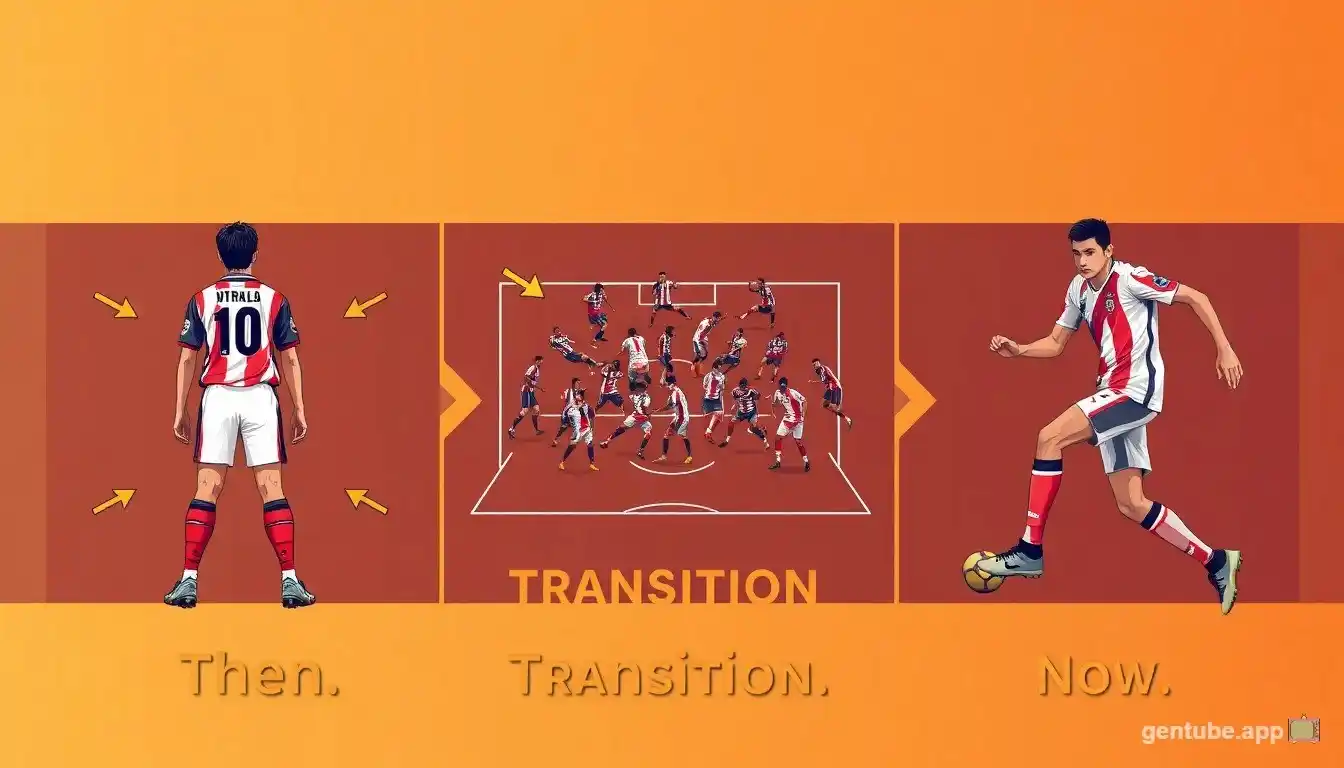
Today, the classic number 10 is endangered. Not extinct — not quite — but under a pressure so sustained and systematic that many analysts, coaches, and journalists have begun asking whether the role, as it was understood for a century, can survive the tactical revolution that modern football has undergone. The question is not merely academic. It touches on something fundamental about what we believe football is for, what we want it to look like, and whether the most beautiful individual role in the most-watched sport on earth has been permanently sacrificed on the altar of collective efficiency.
The Classic No. 10: What the Role Actually Was
Before analyzing whether the classic number 10 is dead, it is necessary to define what the role actually was at its peak. In traditional football formations — the 4-2-3-1 or 4-4-2 of the 1990s and 2000s — the attacking midfielder who wore number 10 operated in the space between the opposition’s defensive and midfield lines. This zone, called ‘the hole’ or ‘between the lines,’ was the most dangerous attacking position on the pitch because it was the hardest to defend: too deep for Centre-backs, too advanced for central midfielders.
The classic number 10 was a specialist in exploiting this space. Their primary skills were vision — the ability to read where teammates and defenders were and would be — technical excellence under pressure, creativity in tight spaces, and the ability to link midfield and attack with a final pass or dribble that opened the game. They typically did not press aggressively, did not cover extreme distances, and were granted a degree of tactical freedom unavailable to any other outfield player. They were the exception to every collective rule.

At the World Cup, this role produced football’s defining individual performances: Maradona in 1986, Zidane in 1998, and Ronaldinho in 2002. These were not systemic achievements — they were singular human performances that transcended the tactical frameworks around them. A single player, in a single tournament, making the impossible look inevitable.
Why High Pressing Changed Everything
The systematic destruction of the classic number 10’s habitat began with the rise of organized high-pressure systems in the early 2010s, and two figures were more responsible for this than any others: Jurgen Klopp and Pep Guardiola.
Klopp’s gegenpressing philosophy — developed at Borussia Dortmund and exported globally through his Champions League-winning Liverpool side — operated on a simple but devastating principle: eliminate the space between the lines. The zone in which the classic number 10 thrived depended on gaps existing between opposing defensive and midfield units. Gegenpressing eliminated those gaps through coordinated collective pressing, maintaining vertical compactness at all times. When everyone presses together, there is no space between the lines. If there is no space between the lines, there is no habitat for a classic number 10.
Guardiola’s positional play created the same effect through a different mechanism. By controlling both possession and spatial structure so precisely, his teams made the space between the lines their own property — used by multiple players simultaneously in carefully orchestrated movements — rather than allowing a single free-roaming artist to inhabit it independently. The role didn’t disappear; it was collectivized.
The Rise of the Versatile Winger
Into the vacuum left by the classic number 10’s diminishing influence, a new type of player emerged: the inverted winger. Where traditional wingers stayed wide and crossed the ball, the modern inverted winger starts on the opposite side to their stronger foot — a right-footed player on the left wing, a left-footed player on the right — and drifts inside to shoot, combine, or carry the ball into central spaces.
This position has produced the two greatest footballers of their era: Cristiano Ronaldo and Lionel Messi. Both started as wide players and evolved into central threats. Messi, most dramatically, evolved over his career from a right winger into a false nine and then into something closer to a free-roaming classic 10 — but always within a system that provided the defensive cover his creative freedom required. His evolution tracks the tactical era precisely: the pure winger role needed systematic support to survive, and Messi adapted rather than remaining rigidly attached to one position.
At international tournaments in the 2018 and 2022 World Cups, the dominant attacking players were almost exclusively versatile wide attackers or box-to-box forwards rather than classic creative midfielders: Mbappe, Neymar, Mane, Salah, Son — players who combined creativity with relentless pressing work rates and the ability to transition at high speed between defensive and attacking phases. The game had shifted its premium from vision to athleticism, or more precisely, to a combination of both that previous generations had never been required to provide.
The Box-to-Box Midfielder: New King of Modern Football
Parallel to the rise of the inverted winger, another role has assumed unprecedented tactical importance: the box-to-box midfielder. Where the classic number 10 operated in a narrow slice of the pitch between the lines, the modern box-to-box midfielder must cover the entire pitch — appearing in their own penalty area to defend corner kicks and in the opposition penalty area to arrive late for shooting opportunities, all within the same 90-minute performance.
Players like N’Golo Kante (France, Chelsea), Luka Modric (Croatia), Leon Goretzka (Germany), and Jude Bellingham (England) represent this archetype in its purest modern form. They possess technical quality comparable to classic number 10s — first touch, passing range, composure under pressure — combined with the defensive discipline and physical capacity to operate in high-pressing systems without creating the tactical imbalances a free-roaming artist would require. They are the system’s universal soldier: beautiful enough to play, hard enough to press, smart enough to do both simultaneously.
Luka Modric’s 2018 World Cup triumph with Croatia illustrates the archetype perfectly. Modric — who might, in a previous era, have been deployed as a pure creative number 10 — instead played as a central midfielder who combined creative excellence with defensive industry, covering remarkable distances, pressing aggressively, and still finding the vision to play the key passes that unlocked defenses. He won the Ballon d’Or that year, breaking Messi and Ronaldo’s decade-long duopoly — a symbolic endorsement of the new type of player football was rewarding.
Is the No. 10 Dead? The Counter-Argument
Having made the case for the classic number 10’s decline, it is important to acknowledge the counter-argument, because the evidence is not entirely one-sided. Lionel Messi won the 2022 World Cup with Argentina, operating in something very close to a classic free-roaming creative role. He did not press with the intensity of his teammates; he received the ball in the spaces between the lines and created from there, linking play and providing moments of individual brilliance that no systematic substitute could replicate. He was, in many respects, the last true number 10 winning at the highest level — and he did it at age 35.
Beyond Messi’s individual case, several elite clubs have maintained creative central midfielders or attacking midfielders as genuine tactical weapons: Kevin De Bruyne at Manchester City, Bernardo Silva at City and Portugal, Phil Foden in various roles. These players are not classic pure number 10s — they defend, press, and cover ground — but they retain the primary creative function of the role: finding space, making final passes, and unlocking packed defenses through individual vision.
The argument, then, is perhaps less that the number 10 is dead and more that the number 10 has had to evolve — accepting defensive responsibilities that previous holders of the jersey would have considered degrading — in order to remain viable in a game that has collectively raised its athletic and tactical standards. The artists have had to learn to clean up after themselves.
What This Means for World Cup Football
At recent World Cups — 2018 in Russia and 2022 in Qatar — the tactical shift away from the classic number 10 has been clearly visible in the finalists and semi-finalists. France’s 2018 winners were built on athletic brilliance and collective pressing rather than classic creative midfield play; their most effective attacking force was Kylian Mbappe — an explosive winger/Centre-forward hybrid — rather than Antoine Griezmann’s more traditional attacking midfielder role. Argentina’s 2022 triumph, while built around Messi, was surrounded by a team of exceptional athletic contributors, runners, and pressers who did the work that allowed Messi’s genius to operate.
Future World Cups will almost certainly continue this trend. As nations outside Europe and South America continue to develop athletically, physically imposing, technically capable teams from Africa and Asia will increasingly demand opponents have the defensive work rate and transitional speed that a classic number 10 cannot provide. The game is becoming simultaneously more physical and more technical, requiring elite players to be both in a way that previous generations were not.
Yet football without moments of individual magic is a diminished game — and the desire of fans globally for those moments of transcendent brilliance will, inevitably, continue to create space for creative players who can provide them. The number 10’s habitat has shrunk. Its requirements have increased. But the role’s fundamental human appeal — the artist in the system, the moment of beauty in ninety minutes of collective effort — will not disappear as long as football retains its soul.
FAQs
| # | Question | Answer |
| 1 | What is the traditional number 10 role in football? | The classic number 10 is an attacking midfielder who operates in the space between the opposition’s defensive and midfield lines, using vision, technical skill, and creativity to link play and unlock defenses. |
| 2 | Why is the classic number 10 role under threat? | High-pressure systems eliminate the space between the lines where the number 10 thrives, while modern football’s physical demands require players who press and cover ground that traditional number 10s did not. |
| 3 | What is gegenpressing? | Gegenpressing is Jurgen Klopp’s counter-pressing philosophy — winning the ball back immediately after losing it through coordinated collective pressing — which collapses the space the classic number 10 needs. |
| 4 | What is an inverted winger? | A winger who starts on the opposite side to their stronger foot — right-footed on the left, left-footed on the right — to drift inside and shoot or create, rather than staying wide to cross. |
| 5 | Who are examples of classic number 10s? | Diego Maradona (Argentina), Zinedine Zidane (France), Ronaldinho (Brazil), and the younger Lionel Messi are considered the archetypal classic number 10s in World Cup football. |
| 6 | What is a box-to-box midfielder? | A midfielder who covers the entire pitch — defending deep and attacking forward with equal dynamism — combining technical creativity with high pressing work rates and substantial distance covered. |
| 7 | How did Jurgen Klopp’s Liverpool change football tactics? | Klopp’s Liverpool popularized high-intensity gegenpressing globally — a system that won the Champions League and Premier League and influenced virtually every elite club’s defensive structure. |
| 8 | Who is Luka Modric and why did he win the Ballon d’Or? | Luka Modric is Croatia’s creative central midfielder who combined exceptional technical quality with defensive industry to lead Croatia to the 2018 World Cup final, winning the Ballon d’Or and breaking Messi/Ronaldo’s decade-long dominance. |
| 9 | How did Messi win the 2022 World Cup? | Messi operated as a free-roaming creative player supported by a team of dynamic athletic contributors — Mbappe-style forwards and energetic midfielders — who provided the defensive cover his creative freedom required. |
| 10 | What tactical position does Kylian Mbappe play? | Mbappe plays as an explosive winger-forward hybrid — capable of operating wide or centrally, combining pace, technical skill, and the pressing intensity that modern football demands from attacking players. |
| 11 | Is the number 10 truly dying in football? | Not dying — evolving. The pure classic form is endangered, but creative players who combine the number 10’s vision with defensive responsibility and athletic capacity continue to thrive at the highest level. |
| 12 | What is the false nine position? | A false nine is a centre-forward who drops deep to receive the ball in midfield rather than occupying the penalty area, creating space for runners and functioning as a creative hub — a number 10 wearing a number 9 shirt. |
| 13 | How have football’s physical demands changed the game? | Elite players now cover greater distances at higher intensities than any previous generation — pressing, recovering, and transitioning at speeds that make pure technical specialists who don’t press an increasing liability. |
| 14 | What is Pep Guardiola’s positional play philosophy? | A carefully orchestrated system where players occupy specific pitch zones to create numerical superiority and passing triangles across the entire pitch, using pressing traps and controlled ball circulation. |
| 15 | How did Zidane exemplify the classic number 10 in World Cups? | Zidane’s 1998 World Cup — including two-headed goals in the final — and 2006 tournament demonstrated the classic number 10’s ability to elevate an entire team through individual moments of technical genius. |
| 16 | What modern players are closest to the classic number 10? | Kevin De Bruyne, Bernardo Silva, Phil Foden, and — in his later career — Lionel Messi most closely combine the number 10’s creative vision with the modern work rate demands. |
| 17 | Why did Maradona in 1986 represent the classic number 10’s peak? | Maradona’s 1986 World Cup performances — including the Hand of God and Goal of the Century against England — represented individual creative supremacy so complete that no team or system could contain it. |
| 18 | What is the difference between pressing and defending? | Defending is passive — waiting for the opponent to make errors or come to you. Pressing is active — winning the ball aggressively high up the pitch before the opponent can organize. |
| 19 | How does modern youth development reflect the shift away from classic number 10s? | Modern academies emphasize pressing, transitions, and positional flexibility alongside technical skills — producing multi-functional players rather than positional specialists who cannot defend. |
| 20 | What tactical system did France use to win the 2018 World Cup? | France used an athletic 4-2-3-1 built on defensive solidity, rapid transitions through Mbappe’s pace, and collective pressing — more reliant on athleticism and organization than creative midfield play. |
| 21 | Can a classic number 10 win a World Cup today? | Messi’s 2022 success shows it remains possible with the right supporting cast — but the number 10 must operate within a collectively organized system rather than as a free agent outside it. |
| 22 | What is N’Golo Kanté’s contribution to the modern midfield? | Kante exemplifies the modern defensive midfielder elevated — his extraordinary work rate, pressing intensity, and positional reading provided the platform for France’s 2018 World Cup victory. |
| 23 | How has VAR technology affected the number 10’s role? | VAR has reduced the tolerance for tactical fouling that teams previously used to contain creative players — theoretically giving number 10s more protection, though the physical demands of pressing have still constrained them. |
| 24 | What does the future of the number 10 look like? | The future number 10 will be technically gifted and creatively excellent, but also capable of pressing, transitioning, and covering ground — the artist who can also paint walls when required. |
| 25 | Who was Ronaldinho, and why is he considered the last pure number 10? | Ronaldinho’s 2002 World Cup performances for Brazil represented an apogee of the classic number 10 — flamboyant, unpredictable, and unstoppably creative in a tactical era that still had space for pure artists. |
| 26 | How do modern data analytics affect how clubs evaluate number 10s? | Analytics now measure pressing intensity, distance covered, defensive actions, and transition speed alongside traditional creative metrics — making it harder for pure creative players to score well enough in composite valuations. |
| 27 | What is the relationship between pressing and the number 10’s decline? | Pressing eliminates the space between the lines that the number 10 exploits; as pressing has become universal, the habitat has shrunk, and the demands for defensive contribution have grown. |
| 28 | Is Jude Bellingham a new type of number 10? | Yes — Bellingham represents the modern evolution: a player with a number 10’s creative vision and technical quality combined with a number 8’s defensive work rate and physical capacity to press and recover. |
| 29 | What makes World Cup football different tactically from club football? | Shorter preparation time, opponent unfamiliarity, tournament pressure, and squad depth limitations make World Cup tactics more conservative and transition-reliant — disadvantaging pure specialists in favor of versatile performers. |
| 30 | What would Maradona or Zidane look like in modern football? | With modern physical conditioning, they would likely adapt — both possessed exceptional intelligence that would allow positional and defensive evolution; their technical genius would never become obsolete, but their role would require modification. |
Disclaimer: The content on this blog is for informational purposes only. The author’s opinions are personal and not endorsed. Efforts are made to provide accurate information, but completeness, accuracy, or reliability are not guaranteed. The author is not liable for any loss or damage resulting from the use of this blog. It is recommended to use the information on this blog at your own discretion.
