
Table of Contents
The Villain’s Justification: Why Modern Pop Culture Became Obsessed with Sympathetic Evil
How storytelling traded clean moral lines for tragic backstories — and what that trade says about us
There was a time, not so long ago, when a story’s villain needed remarkably little explanation. They wanted power, or money, or chaos, and that want was treated as sufficient motivation for an audience to root against them. The hero was good because the story said so, the villain was evil because the story said so, and the space between those two poles was mostly empty. That space has since filled in almost completely. Today’s most memorable antagonists arrive with childhood trauma, systemic grievances, moral philosophies, and monologues persuasive enough that a meaningful share of the audience quietly, sometimes not so quietly, takes their side.
This is not a small, cosmetic shift in how stories are written. It reflects a genuine change in what audiences want from morality in fiction, and by extension, in how audiences have come to think about morality itself. A villain with a fully rendered, internally coherent justification asks something different of a viewer than a mustache-twirling antagonist ever did: it asks them to hold two ideas at once — that an action is wrong, and that the person committing it is nonetheless comprehensible, even sympathetic. That is a considerably more demanding request than simple condemnation, and the fact that modern audiences have not just tolerated it but actively sought it out says something worth examining.
This piece traces how that shift happened, the specific storytelling mechanisms that produce a sympathetic villain, why the trend accelerated so sharply over the past two decades, and what the whole phenomenon might reveal about how modern culture actually thinks about right, wrong, and the space in between.

From Moral Clarity to Moral Complexity
For most of the twentieth century, mainstream popular storytelling operated on what critics sometimes call a clarity model of morality. Heroes and villains occupied clearly marked positions, and the narrative machinery of the story — music, lighting, framing, dialogue — existed largely to reinforce which side was which rather than to complicate it. This was not a failure of imagination so much as a reflection of the storytelling era’s assumptions: audiences were understood to want reassurance that good and evil were legible, stable categories, and popular fiction largely obliged.
The shift toward moral complexity did not happen all at once, and it did not happen for a single reason. Serialized television gave writers dozens or hundreds of hours to develop a character rather than the ninety minutes a film traditionally allotted, which alone made room for backstory that a shorter format could never accommodate. Prestige television in particular built its reputation on protagonists who behaved badly for coherent, examined reasons, training audiences to expect and even prefer that kind of interiority. By the time streaming platforms began producing entire seasons designed for binge-watching, the appetite for morally layered characters was already well established, and villain-focused spin-offs and origin stories became a reliable, almost inevitable next step.
What resulted is a fictional landscape where the sympathetic villain is no longer a novelty reserved for prestige dramas, but a default expectation across genres — animated films, comic book adaptations, young adult fiction, and video games alike now routinely build antagonists whose perspective the audience is invited to understand, and often to partially agree with.
It is worth noting that morally complex villains are not entirely a modern invention. Literary tradition has long included antagonists with genuine internal logic, and even classic mythology occasionally gave its monsters and tricksters motivations more layered than pure malice. What changed is not the existence of the device but its centrality: complexity that was once the exception, reserved for a story’s most prestigious or literary examples, has become close to the default expectation across mainstream, mass-market entertainment, a shift in degree significant enough that it functions as a shift in kind.
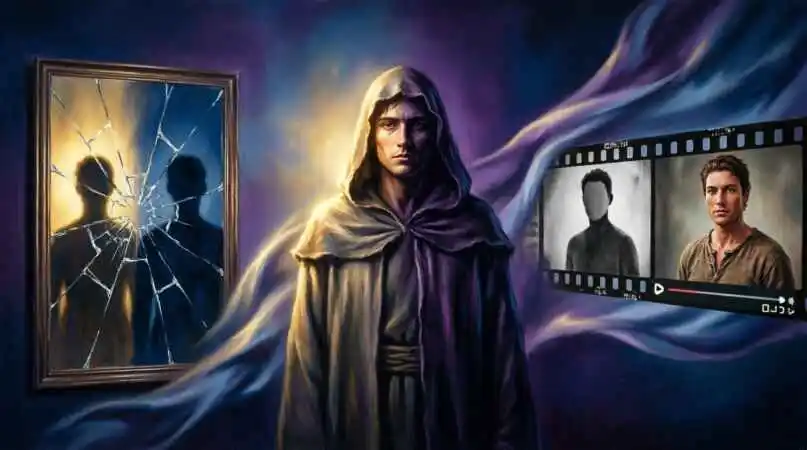
A villain with a fully rendered justification asks an audience to hold two ideas at once: that an action is wrong, and that the person committing it is nonetheless comprehensible.
Seven Storytelling Mechanisms Behind the Sympathetic Villain
The narrative devices writers use to make audiences understand, not just condemn
1. The Tragic Origin Story
Perhaps the most common device for generating sympathy is a detailed account of how a villain came to be this way: a childhood marked by loss, abandonment, or cruelty that plausibly bends a person toward darkness. This device works because it appeals to a widely shared intuition — that people are shaped by what happens to them — while carefully avoiding the harder question of whether that shaping fully excuses what a person subsequently chooses to do with it. The strongest examples of this device use the backstory to explain the villain’s psychology without ever suggesting the audience should endorse their subsequent choices, a balance that weaker executions of the same device frequently fail to strike.
2. The Systemic Critique Villain
A growing number of antagonists are framed not as individually broken people but as products of, or responses to, a flawed system — inequality, corruption, institutional failure. This version of the villain often articulates a critique of the story’s world that the narrative itself seems to partially endorse, blurring the line between antagonist and social commentator in a way that gives their actions a persuasive intellectual scaffolding even when the actions themselves remain condemned. This particular device has grown increasingly common in stories explicitly engaging with real-world social and political themes, where the villain’s critique of an unjust system frequently lands as more persuasive to audiences than the hero’s more conventional, system-preserving response.
3. The Mirror Character
Many modern villains are constructed as a distorted reflection of the hero — someone who faced a similar formative event but responded differently, or who represents what the hero could have become under slightly different circumstances. This device does double duty: it deepens the hero by giving them a dark counterpoint, and it deepens the villain by tying their choices to a comprehensible, relatable fork in the road rather than an arbitrary predisposition toward evil.
4. The Coherent Ideology
Rather than wanting destruction for its own sake, many contemporary villains pursue a genuinely reasoned worldview — one with internal logic, even if the story ultimately rejects its conclusions. Giving a villain an actual argument, rather than just a goal, invites the audience to engage with that argument intellectually, which is a fundamentally different and more demanding form of engagement than simply waiting for the villain to lose. This device is particularly powerful because it survives outside the theater or the screen — a villain’s argument can be turned over, debated, and picked apart in a way that a simple desire for domination or chaos never invites in the first place.
5. The Found-Family Antagonist
Some of the most sympathetic villains are given loyal followers, found family, or genuine relationships built on care rather than fear, humanizing them through the same relational cues a story typically reserves for its heroes. Watching a villain shown as genuinely loved by someone else complicates an audience’s ability to view them purely as an obstacle to be overcome.
6. The Redemption Arc Setup
Modern storytelling frequently frames a villain’s arc as a redemption in progress rather than a fixed moral state, inviting the audience to invest in the possibility of change. Even when that redemption never fully arrives, the narrative possibility of it recasts the villain as someone in moral motion rather than someone simply, permanently evil.
7. The Unreliable Framing Device
Some stories deliberately let a villain narrate or frame their own story, whether through voiceover, a memoir-style structure, or a extended monologue, giving their perspective disproportionate narrative real estate compared to the story’s ostensible hero. This formal choice alone can shift audience sympathy considerably, since perspective and sympathy are closely linked in how stories are experienced.
What Changed Outside the Screen
The rise of the sympathetic villain did not happen in a cultural vacuum, and several broader shifts help explain why audiences became receptive to it precisely when they did. A documented decline in public trust toward major institutions — government, media, corporations — over the past several decades has made purely institutional heroism feel less believable to many viewers, and by extension made stories skeptical of clean moral hierarchies feel more honest.
The rise of therapeutic and psychological literacy in mainstream culture also plays a meaningful role. Concepts like trauma, attachment, and generational cycles of harm have become part of everyday vocabulary in a way they were not a few decades ago, giving audiences both the language and the inclination to explain behavior through causal, psychological terms rather than through simple moral categories. A villain’s tragic backstory lands differently with an audience fluent in the idea that behavior has traceable causes than it would with an audience primarily thinking in terms of individual moral character.
Social media has amplified this shift further by giving villain-sympathetic readings of a story a visible, shareable life of their own. Character analysis videos, fan essays, and online debate threads dissecting a villain’s psychology or ‘they were right’ arguments circulate widely regardless of a story’s original intended framing, and audiences increasingly arrive at new media already primed to look for the antagonist’s internal logic rather than simply their function as an obstacle.
Where This Pattern Shows Up Across Genres
This shift is visible across a wide range of well-known examples, each illustrating a different mechanism from the list above. Walter White’s arc across Breaking Bad is frequently cited as a defining case of the coherent-ideology and tragic-circumstance approach combined: a character whose initial justification, providing for his family after a terminal diagnosis, gives the audience a sympathetic entry point even as the show methodically documents his moral disintegration, daring viewers to notice exactly when their sympathy should have expired.
Marvel’s Killmonger, from Black Panther, exemplifies the systemic critique villain particularly clearly, articulating a genuinely coherent argument about historical injustice and global inequality that the film takes seriously even while rejecting his violent methods, leaving many viewers walking away more persuaded by his stated grievances than by the hero’s response to them. Magneto, across decades of X-Men storytelling, follows a similar pattern rooted in historical trauma, using a Holocaust-survivor backstory to frame his extremism as a comprehensible, if condemned, response to genuine persecution.
Elphaba’s reframing in Wicked offers a different angle entirely: rather than adding sympathy to an existing villain, the story restructures an entire prior narrative, revealing that a character previously understood as simply evil was, from another vantage point, a scapegoat and a reformer. This kind of full narrative inversion, retelling a familiar story from the antagonist’s point of view, has become its own popular subgenre precisely because audiences have shown such strong appetite for morally recontextualized villains.
Loki’s television arc took yet another approach, using found-family dynamics and a redemption-in-progress structure simultaneously, surrounding a character introduced purely as an antagonist with genuine relationships and an evolving sense of purpose that gradually repositioned him as something closer to a flawed protagonist than a traditional villain at all.
What This Obsession Says About Modern Morality
Taken together, these storytelling trends point toward several broader shifts in how contemporary audiences relate to questions of right and wrong.
A Preference for Explanation Over Judgment
Modern audiences increasingly seem to want to understand why someone did something wrong before deciding how to feel about it, reflecting a broader cultural instinct toward psychological and contextual explanation rather than immediate moral verdict.
Discomfort With Simple Villainy
A story where evil exists purely for its own sake increasingly reads as unrealistic or even lazy to many contemporary audiences, suggesting a cultural shift toward believing that real harm almost always has a comprehensible, even if inexcusable, root cause.
Skepticism Toward Institutional Heroism
As trust in large institutions has declined, so has appetite for heroes defined primarily by upholding those institutions, making anti-establishment or morally compromised protagonists, and villains who critique those same institutions, feel more resonant.
An Appetite for Moral Participation, Not Just Moral Spectatorship
Sympathetic villains ask audiences to actively weigh competing claims rather than simply watch good triumph over evil, turning fiction into a more active moral exercise, closer to a debate than a straightforward morality tale.
A Growing Comfort With Ambiguity as a Storytelling Value in Itself
Ambiguity has increasingly become a marker of sophistication and quality in popular culture, so that stories offering clear moral resolutions can be perceived as less serious or less realistic than those that resist tidy conclusions.
The Case Against Sympathetic Villainy
Not everyone views this trend favorably, and the criticism deserves genuine consideration rather than dismissal. Some critics argue that endlessly sympathetic framing risks blurring the line between explanation and justification, particularly for younger or less critically engaged audiences who may walk away with a softened view of genuinely harmful behavior rather than a nuanced one. A tragic backstory can clarify why someone became who they are without ever suggesting their subsequent choices were acceptable, but not every story draws that distinction as carefully as it should.
There is also a concern about diminishing returns: as sympathetic villainy becomes the default rather than a deliberate storytelling choice, it risks becoming a formula rather than a genuine moral exploration, applied reflexively to any antagonist regardless of whether the story actually has something meaningful to say about their psychology. When every villain gets the tragic-backstory treatment, the device can lose the very weight and specificity that made it powerful in the first place.
Finally, some cultural critics worry that an excess of moral ambiguity in popular fiction subtly erodes a broader cultural capacity for moral clarity where it genuinely matters — that a diet of endlessly justified wrongdoing in fiction makes it harder, not easier, to hold a clear line against real-world harm when the stakes are not narrative but actual.
Final Thoughts
The sympathetic villain is not a fad so much as a genuine reflection of how contemporary audiences have come to think about wrongdoing: less as an isolated character flaw and more as the downstream result of circumstance, trauma, and belief systems that, however flawed, make sense from the inside. That shift asks more of both storytellers and audiences than the clean moral binaries of earlier popular fiction ever did, and the best examples of the trend use that added complexity to genuinely illuminate something true about how harm actually happens in the world, rather than simply to make an antagonist more marketable.
The risk, as with any dominant storytelling trend, is that the device outlives the thoughtfulness that originally justified it, becoming a reflexive formula rather than a considered choice. The stories that will likely be remembered longest from this era are probably not the ones that gave every villain a tragic monologue, but the ones that used moral complexity deliberately — earning the audience’s sympathy for a villain while still asking hard, unresolved questions about where sympathy should end and accountability should begin.
In that sense, the sympathetic villain functions as something of a cultural mirror in its own right. The fact that so many audiences now actively seek out, debate, and sometimes defend fictional wrongdoers says less about a decline in moral seriousness than it might first appear, and more about a genuine cultural shift toward wanting to understand harm rather than simply condemn it from a safe distance. Whether that shift ultimately makes for better storytelling, or a more thoughtful culture, likely depends less on the trend itself than on whether writers and audiences alike keep holding onto the harder half of the equation: understanding a wrong without ever mistaking that understanding for permission.
FAQs
| # | Question | Answer |
| 1 | Why has pop culture shifted toward sympathetic villains? | Serialized storytelling formats, declining trust in institutions, greater psychological literacy, and social media’s amplification of character analysis have all contributed to this shift. |
| 2 | What is a tragic origin story in villain writing? | A narrative device that explains a villain’s actions through a difficult or traumatic past, making their behavior comprehensible without necessarily excusing it. |
| 3 | What is a mirror character in storytelling? | A villain constructed as a distorted reflection of the hero, often having faced a similar formative event but responding differently. |
| 4 | Does giving a villain sympathy mean excusing their actions? | Not necessarily; well-crafted sympathetic villains are meant to be understood, not automatically forgiven, though critics note this line is not always maintained clearly. |
| 5 | Why did serialized television contribute to more complex villains? | Longer formats gave writers more time to develop backstory and interiority than traditional films could accommodate. |
| 6 | What is a systemic critique villain? | An antagonist framed as a product of, or response to, a flawed societal system rather than simply an individually broken person. |
| 7 | How does social media influence perceptions of villains? | Character analysis videos and fan debates circulate independently of a story’s intended framing, priming audiences to look for a villain’s internal logic. |
| 8 | What criticism exists against sympathetic villain writing? | Some critics argue it risks blurring the line between explanation and justification, particularly for less critically engaged audiences. |
| 9 | What is a found-family antagonist? | A villain shown with genuine loyal relationships or a found family, humanizing them through relational cues typically reserved for heroes. |
| 10 | Why do modern villains often have coherent ideologies? | Giving a villain an actual argument rather than just a goal invites the audience into a more demanding, intellectually engaged form of storytelling. |
| 11 | Has trust in institutions affected villain writing? | Yes, declining trust in institutions has made villains who critique those institutions feel more resonant to contemporary audiences. |
| 12 | What is an unreliable framing device in villain storytelling? | A technique where a villain narrates or frames their own story, shifting audience sympathy through disproportionate narrative perspective. |
| 13 | Are sympathetic villains a recent trend? | The trend intensified significantly over the past two decades, though morally complex antagonists have existed in various forms throughout storytelling history. |
| 14 | What does psychological literacy have to do with villain writing? | Increased public familiarity with concepts like trauma and generational harm gives audiences language to explain villain behavior causally rather than purely morally. |
| 15 | Do redemption arcs make villains more sympathetic? | Yes, framing a villain’s arc as a redemption in progress recasts them as someone in moral motion rather than permanently evil. |
| 16 | Is moral ambiguity considered a mark of quality storytelling today? | Often yes; ambiguity has become associated with sophistication, while clear moral resolutions can be perceived as less realistic or less serious. |
| 17 | What risk comes from overusing sympathetic villain tropes? | It can become a reflexive formula applied to any antagonist, losing the specificity and weight that made the device meaningful in the first place. |
| 18 | How do streaming platforms relate to this trend? | Binge-focused formats and villain-centered spin-offs built on already-established appetite for morally layered antagonists from prestige television. |
| 19 | What does this trend suggest about modern morality? | It suggests a cultural preference for explanation over immediate judgment, and increased comfort engaging with moral ambiguity rather than simple verdicts. |
| 20 | Can a sympathetic villain still be clearly wrong? | Yes, the strongest examples maintain that a villain’s actions are wrong while still making their perspective comprehensible. |
| 21 | Why do some critics worry about excessive villain sympathy? | They worry it may subtly erode audiences’ capacity for moral clarity in real-world situations where the stakes are not fictional. |
| 22 | What role does trauma play in modern villain writing? | It is frequently used to explain a villain’s psychological development, reflecting broader cultural fluency with trauma-informed thinking. |
| 23 | Are sympathetic villains found across all genres now? | Yes, the trend spans animated films, comic adaptations, young adult fiction, and video games, not just prestige drama. |
| 24 | What is the difference between explanation and justification in storytelling? | Explanation clarifies why a character acted a certain way; justification implies the action was acceptable, a distinction not all stories maintain carefully. |
| 25 | Do audiences actively debate villain morality online? | Yes, character analysis and ‘was the villain right’ discussions are common and widely shared across social media platforms. |
| 26 | Why might clean moral binaries feel outdated to modern audiences? | Declining institutional trust and greater comfort with ambiguity have made simple good-versus-evil framing feel less believable to many viewers. |
| 27 | What is the mirror character’s narrative function? | It deepens both hero and villain by tying the villain’s choices to a relatable fork in the road the hero could have taken differently. |
| 28 | Does giving villains ideology make them more dangerous or more sympathetic? | It often makes them more intellectually engaging, since the audience is invited to evaluate their argument rather than simply await their defeat. |
| 29 | What kind of villain writing tends to be remembered longest? | Stories that use moral complexity deliberately, earning sympathy for a villain while still preserving real accountability, tend to have the most lasting impact. |
| 30 | Is the sympathetic villain trend likely to continue? | Given the underlying cultural and structural factors driving it, the trend shows no clear signs of reversing, though its execution will likely keep evolving. |
Disclaimer: The content on this blog is for informational purposes only. The author’s opinions are personal and not endorsed. Efforts are made to provide accurate information, but completeness, accuracy, or reliability are not guaranteed. The author is not liable for any loss or damage resulting from the use of this blog. It is recommended to use the information on this blog at your own discretion.
