
Table of Contents

Inside the island of temples, terraces, and timeless tides
Welcome to the Island of the Gods
Few places on Earth carry a reputation as evocative as Bali. Mention the name and an entire sensory world unfurls: the hush of incense drifting through temple courtyards, the percussive clatter of gamelan music, the impossible green of rice terraces cut into volcanic hillsides, and waves rolling endlessly toward black-sand and white-sand shores alike. Bali is not simply a destination; it is an atmosphere, a rhythm of life that has drawn pilgrims, artists, surfers, and wanderers for generations and shows no sign of losing its magnetic pull.
Tucked within the vast Indonesian archipelago, this single island manages to compress an astonishing range of experiences into roughly 5,780 square kilometers. Within a single week, a traveler might watch the sunrise from the rim of an active volcano, wander through a centuries-old water temple, paddle out into a world-class surf break, and end the evening at a candlelit beach club overlooking the Indian Ocean. That density of experience, layered atop one of the most distinctive cultures in Southeast Asia, is precisely what has elevated Bali from a regional secret to a globally recognized tropical paradise.
This guide unpacks what makes Bali genuinely special: the landscapes that photograph as well in person as they do online, the spiritual traditions that still shape daily life, the culinary identity that goes far beyond the average tourist plate, and the practical knowledge that turns a good trip into an unforgettable one.
Why Bali Captivates Travelers Year After Year
Bali’s appeal is rarely about any single attraction. It is the way contrasts sit comfortably beside one another. Within a short drive, dense jungle gives way to dramatic coastline, ancient temple complexes neighbor sleek infinity pools, and quiet rice-farming villages exist a stone’s throw from buzzing surf towns. This blend allows the island to satisfy radically different traveler profiles, from barefoot backpackers chasing sunsets to honeymooners booking private villa retreats.
Equally important is the cultural depth that underpins the postcard scenery. Balinese Hinduism, a distinctive fusion of Hindu philosophy, animism, and ancestor reverence, infuses nearly every aspect of island life. Offerings of flowers and rice appear daily on doorsteps and street corners. Temple ceremonies, known as odalan, punctuate the calendar with processions, music, and elaborate dress. Visitors quickly notice that Bali is not performing culture for tourists; it is simply living it, and travelers are invited to witness that authenticity respectfully.
- Diverse landscapes: volcanic peaks, rainforest, rice terraces, and coastline within a compact area
- Living spiritual culture expressed through daily rituals, temples, and festivals
- World-class wellness, surf, and culinary scenes catering to every budget
- Warm hospitality rooted in the Balinese concept of Tri Hita Karana, harmony between people, nature, and the divine
Mapping the Island: Bali’s Signature Regions
Understanding Bali means understanding that it is not one experience but several distinct ones stitched together. Each region carries its own identity, pace, and reason for being on an itinerary.
Ubud: The Cultural and Spiritual Heart
Set among rolling rice fields in the island’s central highlands, Ubud is widely regarded as Bali’s soul. It is home to the Sacred Monkey Forest Sanctuary, the Ubud Royal Palace, and a thriving arts community that has attracted painters, dancers, and craftspeople for nearly a century. Yoga studios and wellness retreats line its quieter lanes, while the Ubud Art Market offers textiles, woodcarvings, and silver jewelry crafted by local artisans. Just outside town, the Tegallalang and Jatiluwih rice terraces showcase the centuries-old subak irrigation system, a UNESCO-recognized cooperative water management tradition that has shaped Balinese agriculture for a thousand years.
Seminyak and Canggu: Beach Clubs and Coastal Cool
Where Ubud offers introspection, Seminyak and Canggu deliver energy. Seminyak’s beachfront is lined with stylish resorts, boutique shopping, and sunset beach clubs that have become destinations in their own right. Canggu, once a sleepy surf village, has evolved into a hub for digital nomads and creatives, with black-sand beaches, third-wave coffee shops, and a coworking culture that rivals major global cities. Both areas reward travelers who want strong infrastructure alongside laid-back beach energy.
Uluwatu: Clifftop Drama and Surf Legend
On the southern tip of the Bukit Peninsula, Uluwatu trades soft sand for dramatic limestone cliffs that plunge into turquoise water. The Uluwatu Temple perches at the cliff’s edge, hosting a nightly Kecak fire dance performance against the backdrop of the setting sun. Below, surf breaks like Padang Padang and Uluwatu itself draw experienced surfers from around the world, while clifftop bars offer some of the most photographed sunset views in Indonesia.
Nusa Penida and the Surrounding Islands
A short boat ride from Bali’s mainland, Nusa Penida has become an essential day trip or overnight stay for its otherworldly coastline. Kelingking Beach, with its T-rex-shaped cliff formation, has become one of the most recognizable images of Indonesian tourism, while Angel’s Billabong and Broken Beach reveal natural rock pools carved by centuries of ocean erosion. The waters around Nusa Penida and neighboring Nusa Lembongan also offer some of the best snorkeling and diving in the region, including seasonal encounters with manta rays.
Mount Batur and the Highlands
For travelers seeking adventure beyond the coast, the volcanic highlands around Mount Batur and Lake Batur offer an entirely different Bali. Pre-dawn treks to the volcano’s summit reward early risers with sweeping sunrise views over the caldera, often accompanied by a simple breakfast cooked using the mountain’s natural steam vents. Nearby, the cooler climate around Munduk supports waterfalls, coffee plantations, and quieter, less-visited villages.
Temples, Traditions, and the Spiritual Pulse of Bali
With more than 20,000 temples scattered across the island, Bali has earned its nickname as the Island of a Thousand Temples. Each carries its own significance, architecture, and ceremonial calendar, but a handful stand out for their cultural weight and visual drama.
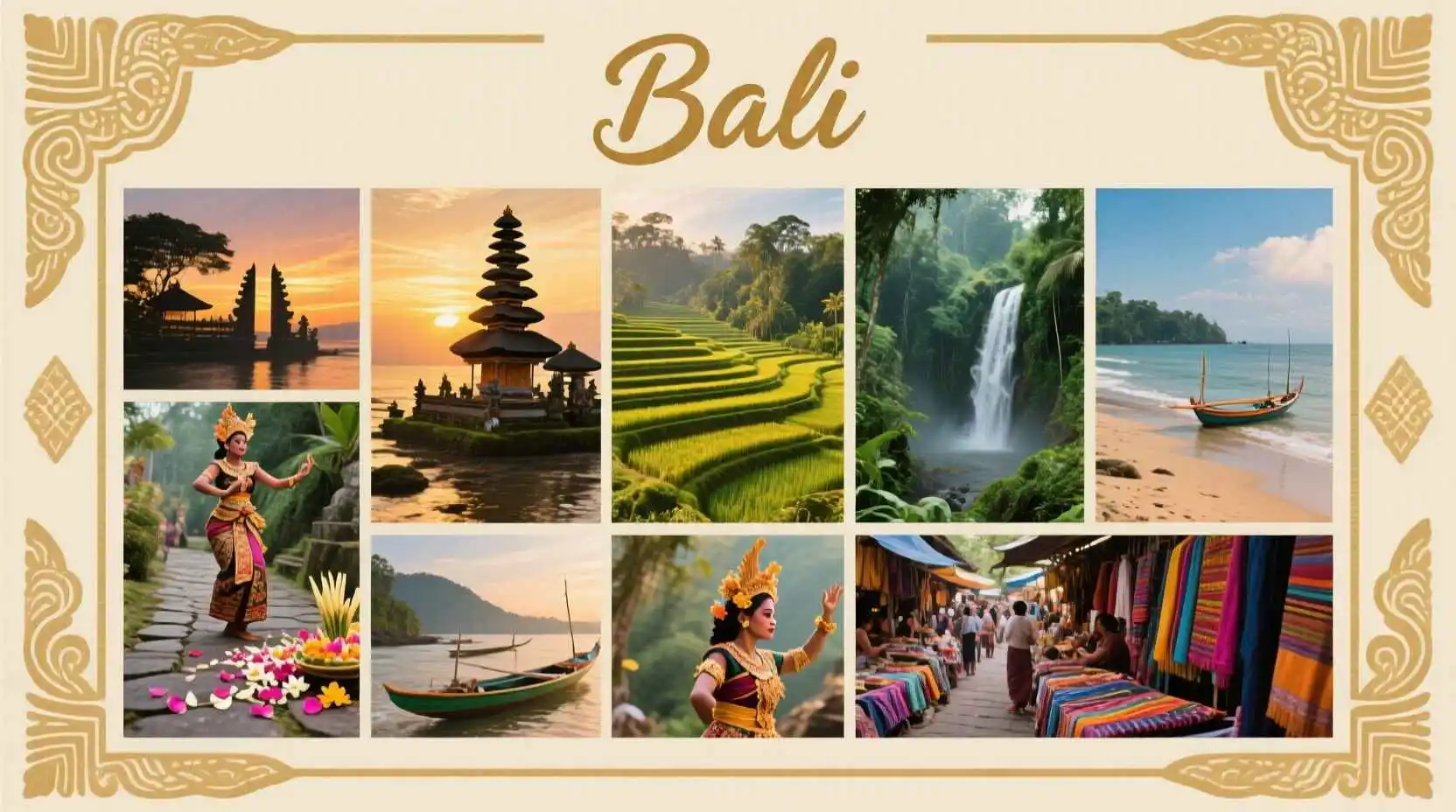
Tanah Lot, perched on a rock formation just offshore, is perhaps Bali’s most photographed temple, especially at sunset when its silhouette stands against an orange sky. Besakih, known as the Mother Temple, sits on the slopes of Mount Agung and serves as the holiest and largest temple complex on the island, comprising more than twenty individual temples arranged across terraced levels. Tirta Empul, meanwhile, is renowned for its holy spring water, where both locals and visitors participate in a ritual purification bathing ceremony believed to cleanse the spirit as well as the body.
Beyond individual temples, Bali’s ceremonial calendar offers a window into the island’s living spirituality. Nyepi, the Balinese New Year, is marked by a remarkable Day of Silence during which the entire island, including the international airport, comes to a standstill for 24 hours of reflection. Galungan and Kuningan celebrate the triumph of dharma over adharma, filling streets with towering bamboo poles called penjor and family processions to ancestral temples. Travelers who happen to visit during these periods witness a side of Bali that no resort itinerary can replicate.
A Culinary Journey Through Bali
Balinese food culture draws on rich spice pastes, fresh tropical produce, and techniques passed through generations of family-run warungs, the small local eateries that remain the backbone of everyday dining. Bali’s signature dish, babi guling, features whole roasted pig seasoned with a fragrant base genep spice blend, traditionally served at ceremonies and now widely available at dedicated babi guling stalls. Sate lilit, minced fish or chicken satay wrapped around lemongrass stalks, and lawar, a mix of vegetables, coconut, and minced meat, round out the island’s most iconic plates.
Beyond traditional fare, Bali’s tourism boom has fueled an explosion of international and health-conscious dining, particularly in Ubud and Canggu. Smoothie bowls, plant-based cafes, and farm-to-table restaurants now sit comfortably alongside generations-old warungs, giving the island one of Southeast Asia’s most diverse food scenes. Coffee culture deserves particular mention, with Balinese kopi luwak and highland-grown arabica beans drawing dedicated coffee tourism to plantations around Kintamani and Munduk.
When to Visit: Reading Bali’s Seasons
Bali sits close to the equator, meaning temperatures stay warm year-round, generally between 26 and 33 degrees Celsius. The real variable for trip planning is rainfall. The dry season, running roughly from April through October, brings the most reliable sunshine and is the most popular window for travel, peaking around July, August, and the December holidays. The wet season, from November through March, brings short but intense afternoon downpours, particularly in January and February, though mornings are often clear and prices and crowds noticeably ease.
Shoulder months, particularly April, May, June, and September, tend to offer the best balance of good weather, manageable crowds, and reasonable pricing, making them a favorite among repeat visitors and seasoned travel planners.
Practical Tips for a Smooth Bali Trip
- Entry requirements: Many nationalities can secure a visa on arrival or e-visa for short visits, but rules change periodically, so confirm current requirements before booking flights.
- Getting around: Scooters offer the most flexibility for confident riders, while private drivers and ride-hailing apps remain the easiest option for most travelers, especially given Bali’s notorious traffic in the south.
- Money matters: The Indonesian Rupiah is used island-wide; cards are accepted in cities and resorts, but cash remains essential in markets, smaller warungs, and rural areas.
- Respectful dress: A sarong and sash are required at most temples, and many sites provide rentals on-site if you arrive without your own.
- Water safety: Stick to bottled or filtered water, and be mindful of strong currents and rip tides at popular surf beaches.
- Connectivity: Local SIM cards and eSIMs are inexpensive and widely available, and most cafes, hotels, and coworking spaces offer reliable Wi-Fi, particularly in Canggu and Ubud.
Sustainable Travel in a Beloved Destination
Bali’s popularity has not come without consequences. Rapid tourism growth has placed pressure on water resources, waste management systems, and traditional rice-farming land increasingly converted for development. In response, a growing network of eco-conscious accommodations, refill stations, and community-led conservation projects has emerged across the island, particularly around Ubud and the Bukit Peninsula.
Travelers can support these efforts in small but meaningful ways: choosing accommodations with credible sustainability practices, refusing single-use plastics where possible, respecting marine protected areas around Nusa Penida and the Gili Islands, and supporting local artisans and family-run warungs rather than exclusively international chains. These choices help ensure that the landscapes and traditions drawing visitors to Bali today remain intact for generations of travelers still to come.
Bali, Revisited: A Paradise Worth Protecting
Bali’s enduring magnetism comes from a rare combination: scenery dramatic enough to anchor a lifetime of travel photographs, a culture deep enough to reward repeated visits, and an island compact enough to make all of it accessible within a single trip. Whether the draw is the meditative quiet of an Ubud rice terrace, the adrenaline of a Uluwatu surf break, the spiritual weight of a temple ceremony, or simply a sunset cocktail overlooking the Indian Ocean, Bali consistently delivers on its reputation as one of the world’s great tropical paradises.
What ultimately sets Bali apart is not any single landmark but the way the island holds its identity even as millions of visitors pass through each year. The offerings still appear on doorsteps each morning. The gamelan still plays at temple ceremonies. The rice terraces are still tended by hand. For travelers willing to look beyond the beach clubs and infinity pools, that living culture is, in the end, Bali’s true bliss.
FAQs
|
# |
Question |
Answer |
|
1 |
What is Bali famous for? |
Bali is famous for its lush rice terraces, ancient Hindu temples, world-class surf breaks, vibrant arts scene, and a warm, spiritually rooted culture unlike anywhere else in Indonesia. |
|
2 |
What is the best time to visit Bali? |
The dry season from April to October offers the most consistent sunshine and is ideal for beach days, hiking, and temple visits. |
|
3 |
Is Bali expensive to visit? |
Bali is generally budget-friendly compared to Western destinations, with affordable guesthouses, warungs, and local transport, though luxury villas and resorts can command premium prices. |
|
4 |
How many days do you need in Bali? |
Most travelers find 7 to 10 days enough to explore a mix of beach towns, cultural sites, and the highlands, though two weeks allows for a more relaxed pace. |
|
5 |
Is Bali safe for solo travelers? |
Bali is widely considered safe for solo travelers, including women, with a well-established tourism infrastructure, though usual travel precautions still apply. |
|
6 |
What language is spoken in Bali? |
Balinese and Indonesian are the official languages, but English is widely spoken in tourist areas, hotels, and restaurants. |
|
7 |
Do I need a visa to visit Bali? |
Many nationalities can obtain a visa on arrival or an e-visa for short stays, but requirements vary by country, so check Indonesian immigration guidelines before travel. |
|
8 |
What currency is used in Bali? |
The Indonesian Rupiah (IDR) is the official currency, and while cards are accepted in cities, cash is preferred in smaller towns and markets. |
|
9 |
Is Bali good for families? |
Yes, Bali offers family-friendly resorts, calm beaches in areas like Nusa Dua, water parks, and cultural activities suitable for children of all ages. |
|
10 |
What is the food like in Bali? |
Balinese cuisine blends fragrant spices, rice, and fresh seafood, with signature dishes like babi guling, nasi campur, and sate lilit alongside thriving international and vegan food scenes. |
|
11 |
Can you drink tap water in Bali? |
No, tap water is not safe to drink directly; bottled or filtered water is recommended throughout the island. |
|
12 |
What should I pack for Bali? |
Lightweight breathable clothing, modest temple attire, swimwear, sunscreen, insect repellent, and a reusable water bottle are essential packing items. |
|
13 |
Is Bali part of Indonesia? |
Yes, Bali is one of Indonesia’s thousands of islands, located east of Java in the Lesser Sunda Islands chain. |
|
14 |
What religion is practiced in Bali? |
The majority of Balinese practice Balinese Hinduism, a unique blend of Hindu philosophy, animism, and ancestor worship distinct from Hinduism in India. |
|
15 |
What are the must-visit temples in Bali? |
Tanah Lot, Uluwatu Temple, Besakih (the Mother Temple), and Tirta Empul are among the most iconic and frequently visited temples. |
|
16 |
Where should first-time visitors stay in Bali? |
Seminyak and Ubud are popular first-time bases, offering easy access to beaches, culture, dining, and day trips across the island. |
|
17 |
Is Ubud or Seminyak better? |
Ubud suits travelers seeking culture, nature, and wellness, while Seminyak is better for beach clubs, nightlife, and upscale dining. |
|
18 |
What is Bali’s nightlife like? |
Bali’s nightlife is concentrated in Seminyak, Canggu, and Kuta, featuring beach clubs, rooftop bars, and live music venues that cater to diverse crowds. |
|
19 |
Are there volcanoes in Bali? |
Yes, Mount Agung and Mount Batur are active volcanoes, with Batur being a popular sunrise trekking destination for visitors. |
|
20 |
Can you surf in Bali? |
Bali is one of the world’s premier surf destinations, with breaks suited to every level, from Kuta Beach for beginners to Uluwatu and Padang Padang for experienced surfers. |
|
21 |
What is the rice terrace area called? |
Tegallalang and Jatiluwih are the two most famous rice terrace regions, both showcasing the centuries-old subak irrigation system recognized by UNESCO. |
|
22 |
Is Bali good for honeymoons? |
Bali is a popular honeymoon destination thanks to its romantic clifftop resorts, private villas, candlelit beach dinners, and serene spa retreats. |
|
23 |
What animals can you see in Bali? |
Visitors can encounter long-tailed macaques in the Ubud Monkey Forest, exotic birds at Bali Bird Park, and marine life including manta rays near Nusa Penida. |
|
24 |
How do you get around Bali? |
Scooters, private drivers, and ride-hailing apps are the most common ways to get around, as public transportation options remain limited. |
|
25 |
What is Nusa Penida known for? |
Nusa Penida is known for dramatic limestone cliffs, the iconic Kelingking Beach viewpoint, and excellent snorkeling and diving spots. |
|
26 |
Is Bali eco-friendly? |
Bali has growing sustainable tourism initiatives, including eco-resorts, plastic reduction campaigns, and community-based conservation projects, though challenges around waste management remain. |
|
27 |
What festivals happen in Bali? |
Nyepi, the Day of Silence, and Galungan, celebrating the victory of good over evil, are among the island’s most significant cultural festivals. |
|
28 |
Is it appropriate to wear a sarong at temples? |
Yes, a sarong and sash are typically required for temple visits as a sign of respect, and most temples provide rentals if you do not bring your own. |
|
29 |
What is the best area for digital nomads in Bali? |
Canggu has become the island’s leading digital nomad hub, known for coworking spaces, fast Wi-Fi cafes, and a strong international community. |
|
30 |
What makes Bali different from other Indonesian islands? |
Bali’s distinct Hindu culture, artistic heritage, and decades of refined tourism infrastructure set it apart from Indonesia’s predominantly Muslim-majority islands. |
Disclaimer: The content on this blog is for informational purposes only. The author’s opinions are personal and not endorsed. Efforts are made to provide accurate information, but completeness, accuracy, or reliability are not guaranteed. The author is not liable for any loss or damage resulting from the use of this blog. It is recommended to use the information on this blog at your own discretion.
