Table of Contents
- How can consumers support farming practices that reduce aflatoxin risk?
Conscious Consumer Lifestyle Choices:
- Ask questions: Inquire about feed sourcing and testing practices when purchasing dairy
- Pay for quality: Support price premiums for producers who invest in feed safety infrastructure
- Join CSAs or cooperatives: Direct relationships with farmers enable transparency and shared risk management
- Advocate for policy: Support regulations requiring mycotoxin testing in dairy supply chains
Consumer demand drives market incentives for safer production practices.
- Can fermented feeds naturally reduce mycotoxin levels?
Proper fermentation can degrade certain mycotoxins through microbial activity:
- Silage preparation: Anaerobic fermentation of green fodder may reduce some fungal toxins
- Fermented total mixed rations (TMR): Lactic acid bacteria can modify mycotoxin structures
- Traditional fermented feeds: Practices like “fermented rice straw” in some Asian systems show promise
Critical considerations: Fermentation must be properly managed; incomplete fermentation can actually increase toxin production. Work with agricultural extension services to implement safely.

- What natural immune-boosting strategies help livestock resist aflatoxin effects?
Nutritional Immune Support:
- Adequate protein: Supports antibody and enzyme production for detoxification
- Zinc and selenium: Essential minerals for immune cell function; provided through mineral supplements or selenium-rich forages
- Omega-3 fatty acids: Flaxseed or fish oil may modulate inflammatory responses to toxin exposure
Management Practices:
- Minimize concurrent stressors: Avoid vaccinating or transporting animals during suspected toxin exposure
- Maintain parasite control: Heavy parasite loads compound immune suppression from mycotoxins
- Ensure clean water: Dehydration impairs kidney function and toxin elimination
- How do organic farming practices impact aflatoxin risk?
Potential Benefits:
- Diverse crop rotations: Reduce buildup of specific fungal pathogens in soil
- Prohibition of synthetic fungicides: Encourages development of resistant varieties and biological controls
- Emphasis on soil health: Healthy soils support plant resilience against fungal infection
Challenges to Address:
- Organic systems may rely more on stored feeds, requiring extra vigilance in storage management
- Limited approved post-harvest treatments necessitate stronger preventive practices
Organic certification alone doesn’t guarantee mycotoxin-free products; proactive management remains essential.
- Can home remedies help humans exposed to aflatoxin-contaminated dairy?
Important clarification: If human exposure is suspected, seek medical attention immediately. However, supportive lifestyle measures may complement professional care:
Dietary Support During Recovery:
- Cruciferous vegetables: Broccoli and cauliflower contain compounds that support liver detoxification enzymes
- Green tea: Polyphenols may offer antioxidant protection (discuss with healthcare provider)
- Adequate hydration: Supports kidney function and toxin elimination
- Avoid alcohol: Reduces additional liver stress during recovery
Prevention Focus: The most effective “remedy” is preventing exposure through careful food sourcing and supporting safe production practices.
- What role does biodiversity in farming systems play in reducing aflatoxin risk?
Diverse agricultural systems create natural buffers against contamination:
- Crop diversity: Rotating maize with legumes or other non-host crops disrupts fungal life cycles
- Agroforestry integration: Trees provide shade that can reduce crop stress and fungal susceptibility
- Mixed livestock systems: Different species have varying susceptibility, reducing overall herd risk
- Beneficial insect habitats: Natural pest control reduces crop damage that invites fungal infection
Biodiversity supports ecosystem resilience, which translates to more stable, safer food production.
- How can mindfulness and observation skills help farmers manage aflatoxicosis risk?
Developing keen observational practices is a powerful, low-cost prevention tool:
- Daily “walk-through” routines: Systematically observe animals, feed, and storage areas with focused attention
- Journaling changes: Recording subtle shifts in behavior, feed appearance, or environmental conditions builds pattern recognition
- Seasonal awareness: Noting how weather patterns affect feed conditions develops predictive intuition
- Collaborative observation: Training all farm staff to recognize and report concerns creates multiple safety nets
Mindful farming transforms routine tasks into proactive risk management opportunities.
- Are there natural ways to test feed for mold contamination at home?
While laboratory testing remains the gold standard, some observational methods provide preliminary screening:
- Visual inspection: Look for visible mold (green, black, white fuzzy growth), discoloration, or caking
- Odor assessment: Musty, earthy, or sour smells often indicate fungal activity
- Moisture testing: Simple squeeze tests (feed should not release water when compressed) or affordable moisture meters
- Black light screening: Some molds fluoresce under UV light, though this is not specific to toxin-producing species
Critical limitation: These methods cannot detect invisible mycotoxins. Use them to identify suspect feed for laboratory confirmation, not as definitive safety checks.
- How does water quality management affect aflatoxin risk in livestock?
Contaminated water can compound feed-related risks:
- Mold in water troughs: Stagnant water develops biofilms that may harbor fungi; clean troughs regularly
- Runoff contamination: Ensure feed storage areas don’t drain into water sources
- Adequate hydration: Well-hydrated animals maintain better kidney function for toxin elimination
Natural water management practices:
- Use raised, covered waterers to prevent contamination
- Add natural antimicrobials like diluted apple cider vinegar (consult veterinarian for appropriate use)
- Rotate water sources if multiple are available to prevent biofilm buildup
- Can grazing management reduce livestock exposure to mycotoxins?
Strategic grazing offers natural prevention benefits:
- Pasture diversity: Mixed-species pastures reduce reliance on single, potentially contaminated feed sources
- Rotational grazing: Prevents overgrazing that stresses plants and increases fungal susceptibility
- Avoiding high-risk areas: Keep animals away from low-lying, flood-prone zones where mold thrives
- Seasonal adjustments: During high-risk periods (humid seasons), supplement grazing with tested stored feeds
Grazing systems that mimic natural ecosystems support both animal health and feed safety.
- What lifestyle changes help communities collectively reduce aflatoxin risks?
Community-Level Natural Approaches:
- Shared storage facilities: Cooperatively built, properly designed storage reduces individual farmer costs for safe infrastructure
- Knowledge-sharing networks: Regular farmer meetings to discuss observations, prevention tips, and outbreak alerts
- Bulk testing cooperatives: Pooling resources for laboratory feed testing makes quality control affordable
- Local seed exchanges: Sharing crop varieties with natural fungal resistance builds regional resilience
Collective action amplifies the impact of individual prevention efforts.
- How can traditional knowledge complement modern aflatoxin management?
Indigenous practices offer valuable insights when integrated with scientific understanding:
- Ethnoveterinary remedies: Documented traditional treatments (like specific herbal preparations) can be studied for efficacy and safety
- Seasonal indicators: Traditional calendars based on ecological cues may predict high-risk periods for fungal growth
- Local crop varieties: Landrace crops often possess natural resistance traits worth preserving and studying
- Cultural food practices: Traditional fermentation or processing methods may reduce toxin levels
Respectful collaboration between traditional knowledge holders and researchers creates more robust, culturally appropriate solutions.
- What natural post-harvest practices reduce mycotoxin formation in feed crops?
Field-to-Storage Natural Strategies:
- Timely harvest: Cutting crops at optimal maturity reduces field exposure to fungal infection
- Field drying techniques: Proper stacking or spreading to maximize air circulation before storage
- Botanical protectants: Light application of neem oil or other plant extracts may inhibit fungal growth during drying
- Clean harvesting equipment: Removing crop residues from machinery prevents cross-contamination
These practices address contamination at its source, before toxins form.
- How does soil health management indirectly affect aflatoxin risk?
Healthy soils produce resilient plants less susceptible to fungal infection:
- Organic matter building: Compost and cover crops improve soil structure and microbial diversity
- Balanced nutrition: Adequate (not excessive) fertility supports plant defense mechanisms
- Minimal tillage: Preserves soil structure and beneficial fungal networks that compete with pathogens
- Crop rotation diversity: Breaks pest and disease cycles that stress plants
Soil health is foundational to a prevention-focused approach to mycotoxin management.
- Can aromatherapy or essential oils help manage aflatoxicosis risk?
Cautious Consideration: Some essential oils show antifungal properties in laboratory studies:
- Oregano, thyme, cinnamon oils: Contain compounds with demonstrated activity against Aspergillus species
- Application methods: Potential use in storage areas (not directly on feed) or as part of integrated pest management
Critical cautions:
- Essential oils can be toxic to animals if misused; never apply directly to feed without veterinary guidance
- Efficacy in real-world farm conditions is less established than in lab studies
- Quality and concentration vary widely among commercial products
Research is ongoing; consult veterinary toxicology experts before experimental use.
- What lifestyle practices help humans recover from suspected low-level aflatoxin exposure?
Supportive Lifestyle Measures (alongside medical care):
- Liver-supportive nutrition: Emphasize cruciferous vegetables, berries, green tea, and adequate protein
- Hydration focus: Support kidney function with consistent, clean water intake
- Stress reduction: Chronic stress impairs detoxification; practices like meditation, adequate sleep, and gentle exercise support recovery
- Avoid additional toxins: Limit alcohol, unnecessary medications, and exposure to other environmental toxins during recovery
Prevention emphasis: These measures support general health but cannot reverse significant toxin damage. Prevention through food safety remains paramount.
- How can urban consumers support rural aflatoxin prevention efforts?
Conscious Consumer Lifestyle Actions:
- Educate yourself: Learn about regional aflatoxin risks and seasonal patterns
- Ask retailers: Inquire about mycotoxin testing policies for dairy and grain products
- Support advocacy: Back organizations working on food safety policy and farmer education
- Reduce food waste: Proper home storage of purchased products prevents secondary mold growth that compounds risks
Urban consumers hold market power that can drive systemic improvements in food safety practices.
- What is the most important natural principle for preventing aflatoxicosis impacts on humans?
The Prevention Cascade Principle: The most effective natural strategy is preventing contamination at its source through holistic, systems-based management. This means:
- Healthy soil → resilient crops → reduced fungal infection risk
- Proper harvest and drying → low-moisture feed → inhibited mold growth
- Safe storage practices → preserved feed quality → prevented toxin formation
- Vigilant monitoring → early detection → rapid intervention
- Diverse, balanced animal nutrition → robust detoxification → reduced toxin transmission
- Transparent supply chains → informed consumer choices → market incentives for safety
This cascade recognizes that human health protection begins long before food reaches the table—it starts with how we care for soil, crops, animals, and ecosystems. Embracing this interconnected, preventive mindset is the most powerful “natural remedy” available.
Quick Reference: Natural Prevention Checklist
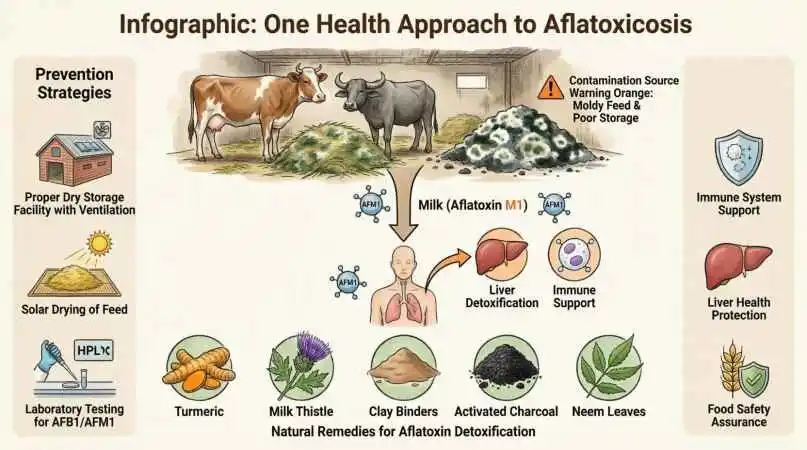
Dry feed to ≤13% moisture using solar methods before storage
Store feed on raised platforms in ventilated, covered areas
Inspect feed visually and by odor before each use.
Incorporate natural binders (clays, yeast) as preventive supplements.
Support liver health with antioxidant-rich feeds (turmeric, green fodder)
Maintain diverse, resilient farming systems to reduce contamination pressure.
Build community networks for shared knowledge and resources.
Practice mindful observation to detect early warning signs.
Source dairy from transparent producers with testing protocols
Advocate for policies that support preventive, systems-based food safety
Remember: In managing aflatoxicosis risks, natural approaches work best when integrated into comprehensive, prevention-focused systems—not as isolated fixes. The health of soil, plants, animals, and humans is interconnected; protecting one supports all.
Medical Disclaimer:
The information provided on this website is for general educational and informational purposes only and is not intended as a substitute for professional medical advice, diagnosis, or treatment. Always seek the advice of your physician or other qualified health provider with any questions you may have regarding a medical condition. Never disregard professional medical advice or delay in seeking it because of something you have read on this website.
