
Table of Contents
 The Enigmatic Return: Baba Rudranath Agori and the Whispers at Kumbh Mela
The Kumbh Mela, a colossal convergence of faith, spirituality, and humanity, is renowned for its breathtaking displays of devotion and asceticism. Millions of pilgrims from across the globe gather at the confluence of sacred rivers, seeking purification, enlightenment, and a deeper connection with the divine. It is within this vibrant tapestry of beliefs and traditions that whispers of extraordinary events often emerge, blurring the lines between the earthly and the ethereal. Among the most intriguing of these narratives is the legend of Baba Rudranath Agori, a revered figure in the esoteric Aghori tradition, who is believed by some to have returned from the realm beyond death to grace the sacred grounds of Kumbh Mela.
The story of Baba Rudranath’s alleged reappearance is not merely a tale of resurrection in the literal sense, but rather a manifestation of the profound spiritual beliefs embedded within Aghorism and the awe-inspiring atmosphere that permeates Kumbh Mela. To understand the significance of this legend, it is essential to delve into the world of the Aghoris and the unique spiritual landscape of Kumbh Mela.
The Aghori Path: Embracing Impermanence and the Divine in All
The Aghori tradition is an ancient and ascetic lineage within Hinduism, often misunderstood and shrouded in mystery. Aghoris are known for their unconventional practices, which deliberately challenge societal norms and perceptions of purity and pollution. They seek transcendence by embracing what is typically considered taboo – death rituals, cremation grounds, and substances often deemed impure.
At the heart of Aghorism lies the belief in the unity of all things and the inherent divinity in everything, without exception. They see no distinction between the sacred and profane, the beautiful and the grotesque. This radical acceptance is their path to liberation, aiming to break down dualities and realize the divine consciousness that pervades all existence.

Baba Rudranath Agori is venerated within this tradition as a significant figure, a powerful ascetic who embodied the core principles of Aghorism. While historical details about his life might be scarce and interwoven with legend, his spiritual presence and influence are deeply felt within the Aghori community. He is remembered for his intense devotion, his mastery over tantric practices, and his profound understanding of the Aghori philosophy.
The Tale of Reappearance: A Convergence of Faith and Legend
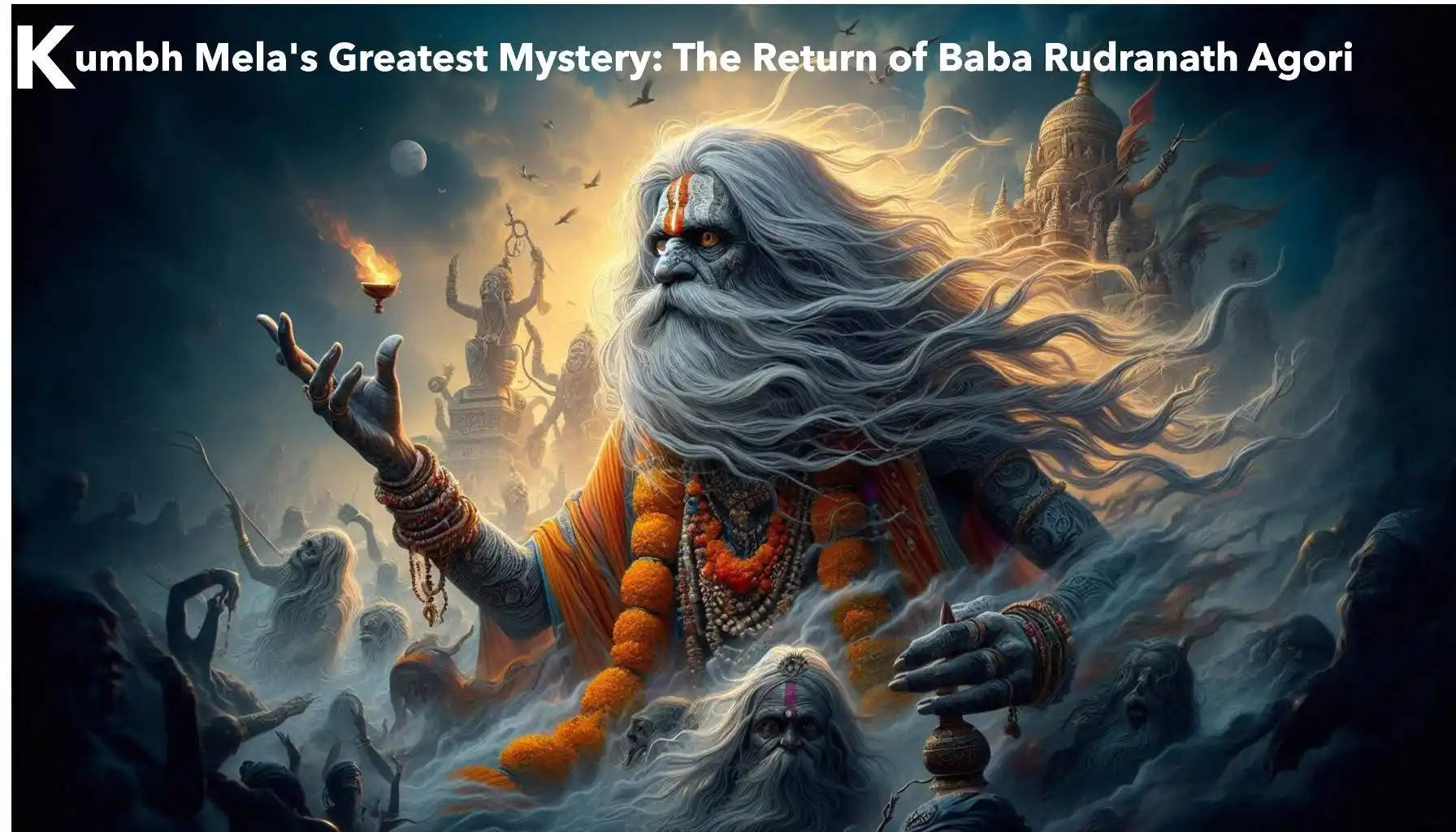
The story surrounding Baba Rudranath’s return from death is not presented as a clinical resurrection, but rather as a manifestation of his enduring spiritual power and his connection to the earthly and spiritual realms. According to accounts passed down through oral tradition and within certain Aghori circles, Baba Rudranath was believed to have passed away years, or even decades, before one particular Kumbh Mela. However, during this specific Kumbh, whispers began to circulate among devotees and fellow ascetics. It was said that a powerful Aghori sadhu, bearing a striking resemblance to Baba Rudranath and exhibiting his profound spiritual aura, had been sighted participating in the rituals and ceremonies.
These accounts often emphasize the almost spectral quality of his appearance. Some describe him as appearing and disappearing unexpectedly, moving with an otherworldly grace, and possessing an aura of immense spiritual energy. The stories do not portray him as physically resurrected and living among the people, but rather as a visitation, a manifestation of his spirit or subtle body, choosing to grace the sacred Kumbh Mela with his presence.
This narrative should be understood within the context of spiritual beliefs common in India, particularly regarding enlightened beings and their ability to transcend the limitations of physical death. It is believed that highly realized souls, like Baba Rudranath, may retain a connection to the material world even after shedding their physical bodies and can manifest in subtle forms, often for the benefit of devotees or to participate in significant spiritual events.
Kumbh Mela: A Stage for the Extraordinary
Kumbh Mela itself provides a fertile ground for such extraordinary narratives to flourish. The sheer scale and intensity of spiritual devotion at Kumbh Mela create an atmosphere where the boundaries between the ordinary and the extraordinary seem to blur. The presence of countless sadhus, saints, and spiritual seekers, engaged in intense practices and meditations, elevates the collective spiritual energy to an almost palpable level.
It is within this charged environment that stories of miracles, divine interventions, and appearances of enlightened beings are readily embraced and passed down. Kumbh Mela is not just a religious gathering; it is a celebration of faith, a reaffirmation of spiritual truths, and a space where the unseen realms are believed to come closer to the manifested world.
As the renowned scholar Diana L. Eck eloquently stated in her book India: A Sacred Geography:
“India is a land of stories, and its sacred landscape is a landscape inscribed with stories. Every temple, every river, every mountain, every village has its own tale, its own significance in the vast and imaginative narrative of Hindu tradition.”
This quote beautifully captures the essence of India’s spiritual landscape, where stories, legends, and faith intertwine to create a rich tapestry of beliefs. The narrative of Baba Rudranath’s Kumbh Mela visit fits perfectly within this tradition, becoming another thread in the vast and imaginative narrative of spiritual India.
Interpreting the Legend: Faith, Symbolism, and Spiritual Presence
It is crucial to approach the legend of Baba Rudranath’s return not as a verifiable historical event, but as a powerful symbolic narrative. The focus is not on proving a literal resurrection but on understanding the deeper spiritual messages embedded within the story.
One interpretation emphasizes the enduring presence of enlightened beings. Even after their physical departure, their spiritual influence continues to be felt. The story of Baba Rudranath’s appearance at Kumbh Mela might be a way for devotees to express their faith in the unbroken lineage of spiritual masters and their continued guidance, even from beyond the veil of death.
Another interpretation highlights the power of faith and devotion. The collective belief in Baba Rudranath’s spiritual potency, coupled with the intensely spiritual atmosphere of Kumbh Mela, could create a shared experience, a collective vision, or a symbolic manifestation that is interpreted as his actual presence. In this sense, faith becomes a powerful force in shaping spiritual reality.
Furthermore, the story aligns with the Aghori philosophy of transcending death and embracing impermanence. Baba Rudranath’s supposed reappearance can be seen as a symbolic representation of the Aghori belief that death is not an end but a transition, and that the spirit is not bound by the limitations of the physical body.
Key Takeaways:
- Legend and Faith: The story of Baba Rudranath’s return is primarily a legend rooted in faith and devotion, rather than a historically verifiable event.
- Symbolic Significance: The narrative carries symbolic weight, representing the enduring presence of spiritual masters, the power of faith, and the Aghori philosophy of transcending death.
- Kumbh Mela Context: The extraordinary atmosphere of Kumbh Mela provides a conducive environment for such narratives to emerge and be embraced.
- Aghori Tradition: The story is deeply connected to the Aghori tradition and its beliefs about life, death, and the spiritual realm.
Was Baba Rudranath Agori actually resurrected from the dead at Kumbh Mela?
The story is best understood as a legend and spiritual narrative, rather than a literal resurrection in a scientific sense. It reflects beliefs about the enduring spiritual presence of enlightened beings and the power of faith.
Is there any concrete evidence of Baba Rudranath’s reappearance?
Evidence for such events in a traditional, empirical sense is typically limited and relies on anecdotal accounts, oral traditions, and faith-based interpretations. The focus is on the spiritual significance of the narrative rather than provable facts.
What is the significance of this story within the Aghori tradition?
The story reinforces the Aghori belief in the transcendence of death and the continued presence of spiritual masters. It also highlights the Aghori emphasis on embracing all aspects of existence, including death, as part of the divine play.
Why does Kumbh Mela play a role in this legend?
Kumbh Mela’s intense spiritual atmosphere, scale, and the collective devotion of millions create a space where extraordinary phenomena are more readily believed and seen as plausible. It is a place where the boundaries between the mundane and the miraculous often blur.
Should this story be taken literally?
Whether to take the story literally is a matter of personal faith and interpretation. From an informational perspective, it is crucial to understand it within the context of spiritual narratives, symbolic meaning, and the cultural beliefs prevalent in India.
The Legend of Baba Rudranath Agori
- Q1: Who is Baba Rudranath Agori?
- A: He is a revered and powerful ascetic within the esoteric Aghori tradition, known for his intense devotion, mastery over tantric practices, and profound understanding of Aghori philosophy.
- Q2: What is the central mystery surrounding Baba Rudranath Agori at Kumbh Mela?
- A: The mystery revolves around the legend that he returned from the realm beyond death to grace the sacred grounds of the Kumbh Mela, despite having passed away years or decades prior.
- Q3: Was Baba Rudranath Agori literally resurrected from the dead?
- A: No, the story is not presented as a clinical or literal resurrection. It is understood as a manifestation of his enduring spiritual power and a visitation of his subtle body or spirit.
- Q4: How did Baba Rudranath Agori reportedly appear at the Kumbh Mela?
- A: Accounts describe him appearing with an almost spectral quality, moving with otherworldly grace, and possessing an immense spiritual aura, sometimes appearing and disappearing unexpectedly.
- Q5: Is there any concrete empirical evidence of his reappearance?
- A: There is no traditional empirical evidence. The accounts rely on oral traditions, anecdotal evidence, and faith-based interpretations within certain Aghori circles.
- Q6: How is Baba Rudranath Agori remembered within the Aghori community?
- A: He is venerated as a significant figure who embodied the core principles of Aghorism, leaving a deeply felt spiritual presence and influence within the community.
- Q7: What kind of spiritual activities was he reportedly participating in during his reappearance?
- A: He was said to be sighted participating in the sacred rituals and ceremonies of the Kumbh Mela, blessing the event with his profound spiritual aura.
Understanding the Aghori Tradition
- Q8: What is the Aghori tradition within Hinduism?
- A: It is an ancient and ascetic lineage within Hinduism known for its unconventional practices that deliberately challenge societal norms regarding purity and pollution.
- Q9: Why are Aghori practices often misunderstood by society?
- A: They are shrouded in mystery because they embrace what is typically considered taboo, such as death rituals, cremation grounds, and substances deemed impure by mainstream society.
- Q10: What is the core philosophy of Aghorism?
- A: The heart of Aghorism is the belief in the unity of all things and the inherent divinity in everything, seeing no distinction between the sacred and the profane.
- Q11: How do Aghoris view the concepts of purity and pollution?
- A: Aghoris transcend these dualities through radical acceptance, believing that everything is inherently divine and using taboo elements as a path to liberation.
- Q12: What role do cremation grounds play in the Aghori path?
- A: Cremation grounds are used as a spiritual tool to embrace impermanence, confront death, and realize the divine consciousness that pervades all existence.
- Q13: What is the ultimate goal of an Aghori ascetic?
- A: Their goal is liberation (transcendence) by breaking down dualities and realizing the divine consciousness that connects all of existence.
- Q14: How does the Aghori tradition view the relationship between the beautiful and the grotesque?
- A: They see no distinction between the two, accepting both as part of the divine play and using this radical acceptance to achieve spiritual transcendence.
The Significance of Kumbh Mela
- Q15: What is the Kumbh Mela?
- A: It is a colossal convergence of faith, spirituality, and humanity where millions of pilgrims gather at the confluence of sacred rivers seeking purification and enlightenment.
- Q16: Why is Kumbh Mela considered a fertile ground for extraordinary narratives?
- A: The sheer scale, intensity of spiritual devotion, and the presence of countless sadhus create an atmosphere where the boundaries between the ordinary and extraordinary seem to blur.
- Q17: How does the atmosphere of Kumbh Mela affect the perception of miracles?
- A: The collective spiritual energy is elevated to a palpable level, making stories of miracles, divine interventions, and appearances of enlightened beings readily embraced by devotees.
- Q18: What makes the spiritual energy at Kumbh Mela so unique?
- A: It is a celebration of faith and a reaffirmation of spiritual truths, creating a space where the unseen realms are believed to come closer to the manifested world.
- Q19: How do millions of pilgrims and sadhus contribute to the Kumbh Mela experience?
- A: Their intense practices, meditations, and collective devotion elevate the collective spiritual energy, creating a charged environment for spiritual experiences.
- Q20: What did scholar Diana L. Eck say about India’s sacred landscape?
- A: She stated that India is a land of stories, and its sacred landscape is inscribed with tales where every temple, river, and mountain has its own significance in the vast narrative of Hindu tradition.
Interpreting the Mystery and Spiritual Meaning
- Q21: How should the story of Baba Rudranath’s return be interpreted?
- A: It should be approached as a powerful symbolic narrative and a reflection of spiritual beliefs, rather than a verifiable historical or clinical event.
- Q22: What does the legend symbolize regarding enlightened beings?
- A: It symbolizes the enduring presence of spiritual masters, suggesting that their spiritual influence continues to guide devotees even after they shed their physical bodies.
- Q23: How does the story reflect the Aghori philosophy of death?
- A: It represents the Aghori belief that death is not an end but a transition, and that the spirit is not bound by the limitations of the physical body.
- Q24: What role does collective faith play in the manifestation of Baba Rudranath’s spirit?
- A: The collective belief in his spiritual potency, combined with the intense atmosphere of Kumbh Mela, can create a shared experience or symbolic manifestation interpreted as his presence.
- Q25: Is the reappearance considered a physical visitation or a subtle manifestation?
- A: It is considered a visitation or manifestation of his spirit or subtle body, rather than a physical resurrection where he lives among the people.
- Q26: How does the legend reinforce the concept of an unbroken spiritual lineage?
- A: By expressing faith that spiritual masters continue to guide their followers from beyond the veil of death, the story highlights the unbroken connection between gurus and devotees.
Faith, Symbolism, and Cultural Context
- Q27: Should the legend of Baba Rudranath Agori be taken literally?
- A: Whether to take it literally is a matter of personal faith. Informationally, it is best understood within the context of spiritual narratives, symbolic meaning, and Indian cultural beliefs.
- Q28: How does this story fit into the broader narrative of Hindu tradition?
- A: It fits perfectly into India’s vast and imaginative narrative where stories, legends, and faith intertwine to create a rich tapestry of spiritual beliefs.
- Q29: What is the main takeaway for spiritual seekers from this legend?
- A: It reminds seekers of the enduring presence of enlightened beings, the mysteries beyond everyday perception, and the boundless capacity of human faith to experience the extraordinary.
- Q30: Why do stories of divine interventions flourish at events like the Kumbh Mela?
- A: Because the intense devotion and charged spiritual environment create a space where the unseen realms feel closer, making the miraculous seem plausible and deeply meaningful to devotees.
In Conclusion
The legend of Baba Rudranath Agori’s visit to Kumbh Mela after death is a captivating tale that speaks volumes about the power of faith, the enigmatic nature of the Aghori tradition, and the transformative atmosphere of Kumbh Mela. It is a story that resonates deeply within spiritual circles, reminding us of the enduring presence of enlightened beings, the mysteries that lie beyond our everyday perception, and the boundless capacity of human faith to envision and experience the extraordinary. Whether viewed as a literal event or a powerful symbolic narrative, the story of Baba Rudranath’s return continues to intrigue and inspire those who seek to understand the deeper dimensions of spirituality and the enduring mysteries of life and death.
Disclaimer:
The content on this blog is for informational purposes only. Author’s opinions are personal and not endorsed. Efforts are made to provide accurate information, but completeness, accuracy, or reliability are not guaranteed. Author is not liable for any loss or damage resulting from the use of this blog. It is recommended to use information on this blog at your own terms.
