
Table of Contents
The Country That Fits an Entire Continent Into One Map
Rainforest to Sahel in a single country — inside the beaches, volcanoes, wildlife, and culture that make Cameroon one of Africa’s most underrated destinations
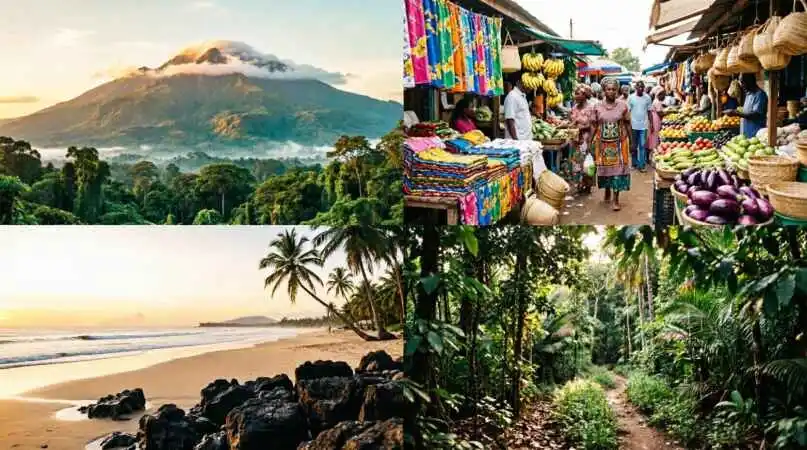
There is a reason travelers and geographers alike have nicknamed Cameroon Africa in Miniature. Within a single country’s borders, the landscape shifts from Atlantic beaches lined with black volcanic sand, through dense equatorial rainforest thick with gorillas and forest elephants, up the slopes of an active volcano taller than anything else in West or Central Africa, across rolling highland plateaus dotted with crater lakes, and finally into dry savanna edging toward the Sahel in the far north. Few countries anywhere offer this much ecological and cultural range without ever requiring a traveler to cross an international border.
That diversity is not just a geographic curiosity; it is the entire case for visiting. A traveler can wake up to fishing boats on the Atlantic coast, spend an afternoon trekking through rainforest canopy alive with birdsong, and a few days later stand in the cool air of a highland town surrounded by tea plantations and volcanic crater lakes, all within the same modest-sized country. Add in more than two hundred ethnic groups, a bilingual French-and-English colonial legacy that gives the country a genuinely distinct cultural texture, and a cuisine built on bold, comforting flavors, and Cameroon starts to look less like an overlooked destination and more like one of the most quietly ambitious trips available on the African continent. It is a country that rewards curiosity rather than a checklist mentality, offering something closer to a compact tour of an entire continent’s natural range than a single-theme vacation built around one beach, one mountain, or one safari circuit.
This guide walks through what a trip to Cameroon actually involves: the practical groundwork of visas, safety, and logistics, the major regions and what each one offers, the wildlife and natural landmarks worth building an itinerary around, the food and culture that give the country its character, and the honest trade-offs travelers should weigh before booking a flight to Douala or Yaounde.

Before You Go: Visas, Safety, and the Practical Groundwork
Most foreign visitors need a visa to enter Cameroon, typically arranged in advance through a Cameroonian embassy or consulate, and requirements can shift, so checking current rules close to a planned travel date is essential rather than optional. Alongside visa paperwork, travelers are generally advised to consult a travel health professional well ahead of departure, since recommendations often include a yellow fever vaccination, which in many cases is also a formal entry requirement, along with other standard travel vaccines appropriate for the region.
Malaria risk exists across most of the country, and travelers are typically advised to take antimalarial precautions seriously alongside practical measures like mosquito nets, repellent, and covering exposed skin during peak mosquito activity hours. None of this should be treated as an afterthought; the difference between a smooth trip and a genuinely difficult one often comes down to this kind of unglamorous preparation completed weeks before departure rather than scrambled together at the airport.
Safety considerations in Cameroon vary meaningfully by region. Some northern and border areas carry heightened risk due to periodic instability, and government travel advisories from a traveler’s home country are the most reliable, current source for understanding which regions warrant caution versus which remain comfortably open to tourism. Most travelers focus itineraries on the more stable southern, coastal, and western highland regions, which is also where the bulk of Cameroon’s best-known natural and cultural attractions happen to be concentrated, making the safety-conscious itinerary and the highlight-reel itinerary largely overlapping in practice.
Douala, Cameroon’s largest city and main economic hub, hosts the busiest international airport and functions as the most common entry point, while Yaounde, the political capital, offers a calmer atmosphere and serves as a natural base for travelers heading toward the country’s interior or south. Deciding which city anchors a trip often comes down to which regions a traveler plans to prioritize, since road and travel connections radiate somewhat differently from each. Currency is another practical detail worth settling before arrival: Cameroon uses the Central African CFA franc, a currency shared with several neighboring Central African countries and pegged to the euro, and while major hotels and some businesses in larger cities accept cards, cash remains the more reliable option across much of the country, particularly outside Douala and Yaounde.
“A traveler can wake up on the Atlantic coast, spend the afternoon in rainforest canopy, and a few days later stand among volcanic crater lakes in the cool highland air — all within one modest-sized country.”
Mount Cameroon: Climbing West Africa’s Highest Peak
No natural landmark defines Cameroon’s adventure travel reputation quite like Mount Cameroon, an active volcano and the highest peak in West and Central Africa, rising dramatically near the coastal town of Limbe. The mountain is a genuinely popular multi-day trekking destination, with most routes taking between two and four days round trip depending on the chosen path and the group’s pace, moving climbers through dense rainforest at the base, up through a zone of increasingly sparse vegetation, and finally onto a volcanic upper landscape that feels almost otherworldly compared to the lush terrain below.
The trek does not require technical climbing skill, but it does demand reasonable fitness, proper guides, and respect for a mountain whose weather and volcanic terrain can shift quickly. Most trekkers arrange the climb through licensed local guide services based in Buea, the town that sits at the mountain’s base and doubles as the practical staging ground for any serious attempt, offering porters, permits, and route knowledge that meaningfully improve both safety and the overall experience.
Reaching the summit rewards climbers with sweeping views across the surrounding rainforest canopy toward the Atlantic coast on clear days, along with a genuine sense of accomplishment that few other single activities in the country can match. Even travelers who choose not to attempt the full summit trek often find shorter routes on the mountain’s lower slopes worthwhile, offering a taste of the terrain and views without the multi-day commitment. The mountain also hosts an annual foot race up and down its slopes, drawing elite runners from around the world, a reminder that Mount Cameroon holds real significance in the local community well beyond its appeal to international trekkers alone.
The Coast: Limbe, Kribi, and Black Sand Beaches
Cameroon’s Atlantic coastline offers a genuinely different pace from the mountain interior, anchored by two standout towns: Limbe and Kribi. Limbe combines beaches, striking black volcanic sand formations, and easy access to Mount Cameroon’s lower slopes, along with one of the oldest botanical gardens in Africa, a peaceful stop showcasing an impressive range of tropical plant species collected over more than a century. The town’s relaxed fishing-village atmosphere, paired with dramatic coastal scenery where dark volcanic rock meets the Atlantic, makes it a natural stop for travelers looking to unwind after a mountain trek or wildlife excursion.
Kribi, further south along the coast, is known for a gentler stretch of golden sand beaches, calmer waters more suited to swimming, and a laid-back resort-town feel that contrasts with Limbe’s more rugged volcanic coastline. Kribi is also close to the Lobe Waterfalls, one of the rare places in the world where a waterfall drops directly into the ocean, creating a distinctive photo opportunity and a genuinely memorable short excursion from town.
Together, these coastal towns give travelers a chance to balance Cameroon’s more demanding inland adventures with genuine relaxation, fresh grilled seafood, and some of the most photogenic beach scenery in Central Africa, all without needing to leave the country’s borders or sacrifice the cultural texture that makes inland Cameroon so distinctive.
Rainforest, Gorillas, and the Wildlife Worth Traveling For
Cameroon’s southern and eastern regions hold some of Central Africa’s most significant remaining rainforest, and with it, wildlife that draws dedicated nature travelers from around the world. Forest elephants, gorillas, and chimpanzees inhabit protected areas including Dja Faunal Reserve, a UNESCO World Heritage site recognized for its exceptional biodiversity and largely undisturbed rainforest ecosystem, alongside Korup National Park, another rainforest stronghold known for its dense canopy and rich array of primate and bird species.
In the country’s north, the landscape and wildlife shift entirely. Waza National Park offers savanna scenery closer in character to East Africa’s classic safari landscapes, with elephants, giraffes, lions, and numerous antelope species roaming open grassland under a very different sky than the humid rainforest south. Visiting both ends of this spectrum within one country is part of what makes Cameroon’s wildlife appeal so distinctive; few destinations let travelers move between rainforest primate tracking and open savanna safari without boarding an international flight in between.
Because much of this wildlife exists in remote or ecologically sensitive areas, guided access is strongly recommended and, in many protected areas, effectively required. Local guides bring essential knowledge of terrain, animal behavior, and conservation context, and responsible tour operators typically funnel a meaningful share of visitor fees back into local community and conservation programs, making thoughtful wildlife tourism in Cameroon a genuine contributor to protecting these ecosystems rather than simply a spectator activity. Travelers should set realistic expectations for wildlife viewing in dense rainforest settings, where sightings often require patience, quiet, and a degree of luck compared to the more open sightlines of savanna safari environments further north, but the reward of encountering a wild gorilla family or a troop of chimpanzees in genuinely undisturbed forest tends to leave a far deeper impression than a more predictable open-plain sighting.
“Few destinations let travelers move between rainforest primate tracking and open savanna safari without ever boarding an international flight in between.”
The Highlands: Ring Road, Crater Lakes, and Traditional Chiefdoms
Cameroon’s Northwest region, often explored along a scenic loop known informally as the Ring Road, offers a cooler, greener side of the country built around volcanic highland scenery. Rolling hills, tea plantations, dramatic crater lakes formed by ancient volcanic activity, and waterfalls tucked into the landscape make this region a favorite among travelers seeking Cameroon’s natural beauty without the humidity of the coast or the intensity of a rainforest trek.
The Ring Road region is equally notable for its cultural depth, home to traditional chiefdoms, known locally as fondoms, where longstanding governance structures, royal palaces, and cultural traditions remain an active part of community life rather than a museum-piece relic of the past. Travelers who visit with a knowledgeable local guide often gain meaningful insight into these traditions, sometimes including access to palace grounds, local markets, and craft traditions distinct to the Bamileke and other highland ethnic groups.
The combination of cool climate, dramatic volcanic scenery, and living cultural tradition makes the highlands one of the most rewarding, if less internationally famous, regions to include in a Cameroon itinerary, particularly for travelers who have already covered the coast and want a genuinely different landscape and pace before concluding their trip.
Food, Language, and the Cultural Texture of Everyday Cameroon
Cameroonian cuisine reflects the same diversity found in the country’s landscapes, built around hearty staples like plantain, cassava, and rice, typically paired with rich, flavorful stews, grilled fish fresh from the coast, and sauces built on local spices and vegetables. Dishes vary meaningfully by region and ethnic tradition, giving food-focused travelers a genuine reason to sample widely rather than assume one national dish defines the entire country’s culinary identity.
Language adds another distinctive layer to a Cameroon trip. As a legacy of colonial history, the country maintains both French and English as official languages, dividing the nation loosely into French-speaking and English-speaking regions, alongside more than two hundred indigenous languages spoken across different communities. This bilingual character means travelers may find one official language more immediately useful depending on which regions sit on their itinerary, and picking up even a handful of phrases in the locally dominant language tends to go a long way in everyday interactions.
Markets offer perhaps the most vivid, accessible window into everyday Cameroonian culture, with stalls of vibrant fabric, fresh produce, and handcrafted goods creating a sensory introduction to daily life that few museum visits can match. Traditional music and dance performances, often tied to specific ethnic and regional traditions, provide another accessible entry point for travelers wanting a deeper cultural experience beyond scenery and wildlife alone. Tipping customs add a small but practical layer to daily interactions; it is generally appreciated but not always mandatory, and travelers commonly tip guides, drivers, and service staff modestly as a straightforward gesture of appreciation for good service throughout a trip.
Getting Around: Roads, Shared Taxis, and Hired Drivers
Transportation infrastructure in Cameroon varies considerably by region, and understanding that variation early helps set realistic expectations for how travel days will actually unfold. Routes between major cities like Douala, Yaounde, and coastal towns tend to be reasonably developed and manageable, while roads into more remote highland or rainforest areas can be considerably rougher, particularly during the rainy season when unpaved sections become muddy and travel times stretch well beyond what a map might suggest.
Shared taxis remain one of the most common ways to travel between towns for budget-conscious travelers, offering an inexpensive if sometimes crowded way to cover ground alongside local passengers. Buses connect many larger routes as well, generally at a modest cost and with reasonably predictable schedules on well-traveled corridors. For travelers prioritizing comfort, flexibility, or access to more remote regions, hiring a private driver, often arranged through a hotel, tour operator, or local guide service, tends to be the more practical choice, particularly when time is limited or an itinerary includes multiple regions in a single trip.
Domestic flights connect a handful of major cities, offering a faster alternative to long overland journeys, though schedules and availability can be less frequent and reliable than in more heavily touristed countries, so building flexibility into any itinerary that depends on domestic air travel is a wise precaution. Whichever combination of transportation a traveler ultimately relies on, padding travel days with extra time, rather than assuming best-case scenarios, tends to make the difference between a trip that feels adventurous and one that feels stressful.
Planning a Realistic Itinerary
Given Cameroon’s ecological and cultural range, a trip of roughly ten to fourteen days allows travelers to reasonably combine a few key regions, such as the coast, a highland area, and a national park, without excessive rushing between destinations that, while not enormous by continental standards, still require meaningful travel time on variably developed roads. Attempting to combine every region described in this guide into a single short trip typically produces a rushed, exhausting itinerary rather than a genuinely enjoyable one.
A common and well-balanced structure begins in Douala or Yaounde, moves toward the coast for Mount Cameroon and beach time around Limbe or Kribi, and then either heads north toward Waza National Park for savanna wildlife or west into the Ring Road highlands for crater lakes and traditional chiefdoms, depending on traveler interest and available time. Building in buffer days for travel between regions, given variable road conditions in parts of the country, tends to produce a far less stressful experience than an itinerary packed tightly end to end.
Recommended packing essentials reflect this range of environments: lightweight, breathable clothing for the humid coast and rainforest, rain protection for unpredictable tropical weather, warmer layers for cooler highland evenings, sturdy footwear suited to trekking terrain, and reliable insect repellent given malaria risk throughout most of the country. Travelers who arrive prepared for this range of conditions, rather than packing for a single climate, tend to enjoy the shifts between regions rather than being caught off guard by them.
Why Cameroon Deserves a Spot on the List
Cameroon does not market itself with the same polish or global recognition as some of Africa’s more heavily promoted safari and beach destinations, and that relative obscurity is precisely part of its appeal. Travelers who make the trip often describe an experience defined by genuine variety within a single itinerary, a rare chance to move between rainforest, savanna, coast, and highland culture without the logistical complexity of crossing multiple international borders.
That variety does come with real trade-offs worth acknowledging honestly: infrastructure varies considerably by region, some areas require caution or avoidance depending on current conditions, and a trip through Cameroon generally rewards travelers willing to embrace a slower, more improvisational pace than a highly polished, pre-packaged tourist circuit might offer elsewhere. For travelers who value that kind of authentic, less-filtered experience, and who take the practical preparation seriously, Cameroon offers something genuinely rare: an entire continent’s worth of landscape and culture, compressed into one remarkable country, waiting for a traveler willing to look past the more famous names on Africa’s tourist map.
| FAQs |
| Q1. Why is Cameroon nicknamed ‘Africa in Miniature’?
Cameroon earns this nickname because it contains nearly every major African landscape and climate zone within one country, including beaches, rainforest, savanna, desert-fringe terrain, and volcanic mountains. |
| Q2. Do travelers need a visa to visit Cameroon?
Most foreign visitors require a visa to enter Cameroon, which can typically be arranged in advance through a Cameroonian embassy or consulate, so it’s important to check current requirements well before travel. |
| Q3. What is the best time of year to visit Cameroon?
The dry season, generally running from November to February in most regions, is widely considered the most comfortable time to visit, with easier travel conditions and clearer skies for outdoor activities. |
| Q4. Is Cameroon safe for tourists?
Safety varies significantly by region, with some northern and border areas carrying heightened risk, so travelers should check current government travel advisories and focus itineraries on more stable regions. |
| Q5. What languages are spoken in Cameroon?
Cameroon has both French and English as official languages, a legacy of its colonial history, alongside more than 200 indigenous languages spoken across different regions and ethnic groups. |
| Q6. What is Mount Cameroon and can tourists climb it?
Mount Cameroon is an active volcano and the highest peak in West and Central Africa, and it is a popular multi-day trekking destination for tourists with reasonable fitness and proper guides. |
| Q7. How many days does it take to climb Mount Cameroon?
Most trekking routes up Mount Cameroon take between two and four days round trip, depending on the chosen route and the pace of the climbing group. |
| Q8. What currency is used in Cameroon?
Cameroon uses the Central African CFA franc, a currency shared with several neighboring Central African countries and pegged to the euro. |
| Q9. Is Douala or Yaounde a better base for travelers?
Douala is Cameroon’s largest city and main economic hub with the busiest international airport, while Yaounde is the political capital with a calmer atmosphere, so the better base depends on planned activities and travel routes. |
| Q10. What wildlife can travelers see in Cameroon?
Cameroon is home to forest elephants, gorillas, chimpanzees, and a wide range of bird species, with several national parks and reserves offering wildlife viewing opportunities. |
| Q11. Which national parks are worth visiting in Cameroon?
Waza National Park in the north is known for savanna wildlife, while Korup National Park and Dja Faunal Reserve in the south protect dense rainforest ecosystems with rich biodiversity. |
| Q12. Are there good beaches in Cameroon?
Yes, the coastal area around Limbe and Kribi offers beaches with a mix of golden and black volcanic sand, backed by lush vegetation and warm Atlantic waters. |
| Q13. What is Cameroonian food like?
Cameroonian cuisine features hearty dishes built around staples like plantain, cassava, and rice, often paired with rich stews, grilled fish, and flavorful sauces incorporating local spices and vegetables. |
| Q14. Is it easy to get around Cameroon as a tourist?
Transportation infrastructure varies by region, with reasonably developed routes between major cities but rougher roads in more remote areas, so many travelers rely on a combination of shared taxis, buses, and hired drivers. |
| Q15. What vaccinations are recommended before traveling to Cameroon?
Travelers are generally advised to consult a travel health professional well in advance, as recommendations often include yellow fever vaccination, which may also be a formal entry requirement, along with other standard travel vaccines. |
| Q16. Is malaria a concern when visiting Cameroon?
Yes, malaria risk exists throughout most of Cameroon, so travelers are typically advised to take appropriate antimalarial precautions and use protective measures against mosquito bites. |
| Q17. What is the climate like in Cameroon?
Cameroon’s climate varies dramatically by region, ranging from hot and humid tropical conditions along the coast and rainforest south to drier, hotter conditions in the northern savanna and Sahel-fringe areas. |
| Q18. Can travelers visit Cameroon’s rainforest regions?
Yes, the southern and eastern rainforest regions, including areas near Dja Faunal Reserve, are accessible to travelers, often through guided tours that support conservation and local communities. |
| Q19. What cultural experiences should travelers seek out in Cameroon?
Travelers can explore vibrant local markets, traditional music and dance performances, and the distinct cultural heritage of the Bamileke, Fulani, and other ethnic groups found across different regions. |
| Q20. Is Cameroon good for a first-time trip to Africa?
Cameroon can be a rewarding destination for travelers seeking diverse landscapes in one trip, though its varied infrastructure and safety considerations mean some first-time visitors prefer traveling with a knowledgeable local guide or tour operator. |
| Q21. What is the significance of Limbe’s Botanic Garden?
Limbe’s Botanic Garden is one of the oldest botanical gardens in Africa, showcasing a wide variety of tropical plant species and offering a peaceful stop near the coastal town of Limbe. |
| Q22. Are there volcanic landscapes to explore besides Mount Cameroon?
Yes, the broader region around Mount Cameroon and nearby areas features volcanic soil, craters, and rock formations that reflect the area’s ongoing volcanic activity. |
| Q23. What should travelers know about tipping in Cameroon?
Tipping is generally appreciated but not always mandatory in Cameroon, and travelers often tip guides, drivers, and service staff modestly as a gesture of appreciation for good service. |
| Q24. Is English or French more useful for travelers in Cameroon?
It depends on the region visited, since Cameroon has distinct English-speaking and French-speaking areas, so travelers may find one language more useful depending on their specific itinerary. |
| Q25. What is the Ring Road region known for?
The Ring Road region in Cameroon’s Northwest is known for scenic highland landscapes, crater lakes, waterfalls, and traditional chiefdoms, making it popular among travelers interested in nature and culture. |
| Q26. Are guided tours recommended for exploring Cameroon?
Guided tours are often recommended, particularly for wildlife viewing, mountain trekking, and remote regions, since local guides bring valuable knowledge of terrain, wildlife, and cultural context. |
| Q27. What airport do most international travelers use to reach Cameroon?
Douala International Airport is the primary gateway for most international travelers, with Yaounde Nsimalen International Airport also serving as a major entry point. |
| Q28. Is Cameroon expensive to travel through?
Costs in Cameroon can vary widely depending on travel style, with budget travel being relatively affordable compared to many Western countries, while guided tours and premium accommodations increase overall costs. |
| Q29. What is a realistic minimum trip length to see Cameroon’s highlights?
A trip of roughly ten to fourteen days allows travelers to reasonably combine a few key regions, such as the coast, a highland area, and a national park, without excessive rushing. |
| Q30. What packing essentials are recommended for a Cameroon trip?
Recommended essentials typically include lightweight breathable clothing, rain protection, sturdy footwear for trekking, insect repellent, and any region-specific health and travel documentation. |
Disclaimer: The content on this blog is for informational purposes only. The author’s opinions are personal and not endorsed. Efforts are made to provide accurate information, but completeness, accuracy, or reliability are not guaranteed. The author is not liable for any loss or damage resulting from the use of this blog. It is recommended to use the information on this blog at your own discretion.
