
Table of Contents
Wolves of Yellowstone: How One Reintroduction Reshaped an Ecosystem
The wind in the Absaroka Range doesn’t just blow; it remembers. It carries the scent of sagebrush, the damp rot of fallen hemlock, and, if one is lucky, the sharp, musky trace of wild things. For those who spend decades walking these high-altitude trails, boots scuffed by granite, breath visible in the thin, cold air, watching seasons turn like pages in a heavy book, nothing prepares them for the feeling of standing in a valley in Wyoming, looking into eyes that have watched the world change from a hunter of fear to a master of balance.
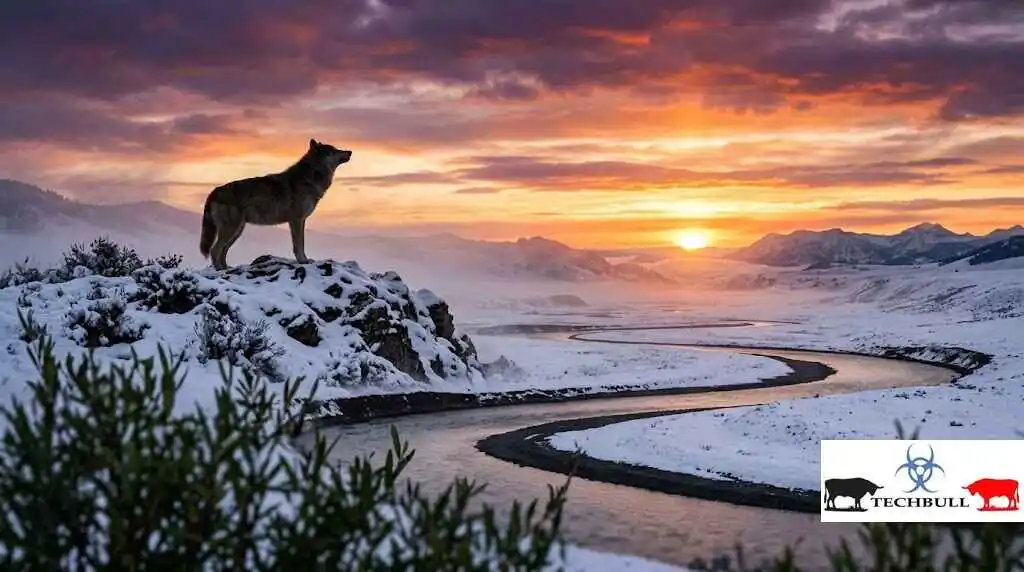
It was 1995, or so the stories go. While the original release happened before the modern era of eco-tourism exploded, the echo they left behind remains. Standing by the Lamar Valley, the “American Serengeti,” there is a palpable shift in the air. It isn’t just the absence of sound. It is a presence. The coyotes are quieter. The elk are not grazing as carelessly. The very shape of the riverbanks seems to be holding its breath. This is not just a story about animals. This is a story about how one decision, one small group of canids brought back from the brink of extinction, rewired the geography of an entire landscape. It is common to think of ecosystems as static pictures—green grass, blue water, brown earth. But they are living, breathing machines, and wolves are the gears that make them turn.
What Are the Wolves of Yellowstone?
To understand the magnitude of this event, the fairy tales must first be stripped away. These are not the big, bad wolves of Little Red Riding Hood stories. The Gray Wolf (Canis lupus) is a complex social creature, deeply embedded in the history of North America. Before European settlers arrived, wolves roamed nearly every corner of the contiguous United States. They were apex predators, meaning nothing ate them as adults. They were the top of the food chain, the regulators of the wild.
But “wild” is a fragile word. By the mid-20th century, hunting, trapping, and poisoning had wiped them out of the lower 48 states. By 1926, the last breeding pair in Yellowstone had been killed. The valley was silent in a way that felt unnatural. The elk populations exploded, unchecked by fear or predation. They ate the young willows, the aspen saplings, the birch. The rivers began to widen and erode because the banks were bare. The birds lost their homes. The beavers lost their food. The whole system was sickening, not from disease, but from imbalance.

So, what exactly are the “Wolves of Yellowstone”? They are a specific reintroduced population of Gray Wolves, descended from individuals brought in from Canada and Montana. They are not a new species. They are the same species that has lived here for millennia, returning to fill a hole in the ecological puzzle. When discussing them, the conversation is really about the restoration of a missing piece of a jigsaw puzzle that had been lying in the drawer for seventy years.
The Origins: A High-Stakes Gamble
The story begins in the 1970s. The Endangered Species Act was gaining traction. Scientists looked at Yellowstone and saw a hole in the sky where a predator should be. They proposed reintroducing wolves. It was controversial. Ranchers hated them. Hunters respected them but didn’t want competition. Politicians argued over the cost.
In January 1995, the first group of ten wolves was released. They were captured in Canada and flown into Yellowstone. Then, in 1996, a second group was added. These animals were tagged, tracked, and watched. They were named. Packs were formed. The first pack, the Yellowstone Park Pack, established their territory in the Lamar Valley. They were bold. They were hungry. And they were ready to work.
The Types of Wolf Dynamics
While they are all Gray Wolves, their behavior falls into distinct social structures that are crucial to understanding their impact.
- The Pack Structure: Wolves are not solitary hunters. They live in family units, usually led by a breeding pair known as the “alpha” male and female. The pack works together to hunt large prey, defend territory, and raise pups. This cooperation is key to their success.
- Territorial Behavior: Each pack has a defined territory. They mark it with urine and scent glands. This prevents overlap and reduces internal conflict. In Yellowstone, several packs roam the northern range, while others venture into the central and southern regions.
- Dispersal and Colonization: Young wolves eventually leave their birth pack to find new mates and establish new territories elsewhere. This “dispersal” is how wolves spread and recolonize areas. In Yellowstone, some wolves have been seen traveling hundreds of miles, connecting fragmented populations across the greater ecosystem.
The Role: Why Wolves Matter in the Ecosystem
A common question arises: “Why are wolves necessary? The ecosystem has bears, cougars, and golden eagles.” It’s a fair question. But wolves play a unique role. Bears are opportunistic. Cougars prefer smaller, agile prey like deer. Golden eagles take birds and small mammals. Wolves are different. They hunt in large groups, allowing them to take down massive animals like elk and bison. This changes the behavior of the prey in a profound way.
The Trophic Cascade This is the scientific term for the domino effect wolves create. A trophic cascade happens when a predator at the top of the food chain influences the population and behavior of species at lower levels, which in turn affects plants and even physical geography.
In Yellowstone, the wolves eat elk. But more importantly, the elk behave differently because they are being hunted. This change in behavior is just as important as the change in numbers. This is known as the “Ecology of Fear.”
Beavers and the Return of Birds When wolves return, elk stop lingering in the open valleys where they are easy targets. They move to higher, steeper terrain where they are safer from predators but harder to escape. This gives the low-lying areas, like riparian zones (areas along rivers), time to recover.
Willows and aspens grow back. With the trees come the beavers. Beavers eat willow bark. With the willows back, beavers return to build dams. These dams create ponds, which provide habitats for fish, amphibians, and waterfowl. The beaver dams also slow down water flow, reducing erosion and creating wetlands that store carbon.
Simultaneously, the return of trees brings back the birds. Woodpeckers, warblers, and songbirds return to nest in the recovering aspen and willow stands. The sound of the forest changes from a silent groan to a chorus of life.
Scavengers Get a Feast Wolves don’t eat everything they kill. They leave behind carcasses. These leftovers feed an army of scavengers. Ravens, eagles, coyotes, bears, and wolverines feast on wolf leftovers. In winter, when food is scarce, these carcasses are a lifeline for many species. The presence of wolves actually supports a wider diversity of scavenger species than their absence.
A Field Observation: The Day the River Changed To truly understand this, one must look back to a specific afternoon in late autumn, 2008. During a survey along the Firehole River, the water was clear, cold, and fast. The banks were steep, undercut by erosion. For years, the damage had been evident: the bare soil, the lack of vegetation, the widening channel.
That day, the air was crisp. While setting up camera traps, a low rumble broke the silence. It wasn’t thunder. It was the sound of a pack moving through the sagebrush. There, blending into the brush, the scene unfolded. Through binoculars, seven wolves came into view. They were moving with purpose, not chasing, but patrolling. They paused, heads up, ears twitching.
For an hour, they were observed not just hunting, but managing the land. In the distance, elk herds were visible. They were not grazing in the valley bottom. They were huddled on the ridges, wary, moving constantly. Because of the wolves’ presence, the elk were avoiding the riparian zone.
Later that afternoon, walking down to the riverbank where the elk had grazed for decades, a closer look at the soil revealed a tiny green shoot of willow pushing up through the mud. Then another. Then a cluster of aspen buds. It was small, almost invisible to the casual observer. But to a trained eye, it was monumental. This was the result of the wolves. The elk were scared to stay long enough to eat these new plants. The plants were growing. The roots were holding the soil. The river was beginning to stabilize.
Sitting there as the sun set over the Absaroka peaks, the deep, emotional connection to the invisible thread connecting those wolves to the willow shoots becomes clear. It wasn’t magic. It was biology. It was geometry. It was life, correcting itself.
Interesting Facts About Yellowstone’s Wolves
- The 328 Pack: One of the most famous packs in Yellowstone history, the 328 Pack, was named after the license plate of the truck used to transport them. They became famous for their survival during harsh winters and their role in stabilizing the elk population.
- Communication: Wolves have a complex language. They use body posture, facial expressions, vocalizations (howls, whines, growls), and scent markings to communicate. Howling serves to assemble the pack, announce location, and intimidate rivals.
- Hunting Success: Despite their reputation, wolves are not perfect hunters. Their success rate is about 20-30% in winter and lower in summer. They rely on endurance and teamwork, often exhausting their prey through prolonged pursuit.
- Monogamy: Most wolf packs are formed by a monogamous pair. They stay together for life, or until one dies. This stability is crucial for raising pups and maintaining territory.
- Scent Marking: Wolves mark their territory extensively. They use urine, feces, and gland secretions to communicate with other packs and members of their own pack. This chemical messaging is a silent conversation that happens all the time.
- Social Learning: Pups learn hunting and social skills from older wolves. They play not just for fun, but to practice skills needed for survival. The hierarchy within the pack is maintained through subtle social cues and play.
- Range Expansion: Wolves from Yellowstone have dispersed to form new packs in Idaho, Montana, and even as far as Colorado and Utah. The Yellowstone population is a source for recolonizing the greater Northern Rockies.
- Adaptability: Wolves are highly adaptable. They eat elk, bison, deer, moose, small mammals, and even fruits in the summer. They can survive in diverse environments, from dense forests to open tundra.
- Longevity: In the wild, wolves typically live 6-8 years. In captivity, they can live up to 13-14 years. The biggest threats in the wild are disease, starvation, and human conflict.
- The “Keystone” Label: Wolves are often called a “keystone species” because their impact on the ecosystem is disproportionately large relative to their abundance. Removing them causes the ecosystem to collapse; adding them restores balance.
- Human Perception: Wolves are one of the most charismatic megafauna. They evoke strong emotions, from fear to awe. This duality makes them a powerful symbol for conservation efforts worldwide.
Threats and Challenges
It wasn’t all harmonious. The return of wolves came with significant challenges.
Human Conflict The primary threat to wolves is humans. Ranchers lost livestock to wolves. Despite compensation programs, many ranchers viewed wolves as pests. Hunters saw elk numbers drop and blamed wolves, even though elk also suffered from harsh winters and poor nutrition. Political battles raged in Congress. In 1999, the wolves were removed from the Endangered Species Act list in some areas, leading to increased hunting seasons.
Habitat Fragmentation As human development expanded, wolf territories became fragmented. Roads, fences, and subdivisions created barriers. Wolves need large, connected landscapes to thrive. Isolated populations are more prone to inbreeding and local extinction.
Disease Wolves can carry diseases that affect other animals, such as canine distemper and parvovirus. These diseases can spread from domestic dogs to wild wolves. In some years, outbreaks have significantly reduced wolf numbers in Yellowstone.
Climate Change Climate change affects the prey base. Harsher winters with less snow can actually benefit elk, making them easier for wolves to hunt. But changing precipitation patterns affect vegetation, which affects elk health, which affects wolves. It’s a complex web, and climate change is pulling at the threads.
Comparison: Yellowstone Before and After Wolves To truly grasp the impact, a side-by-side comparison is essential.
| Feature | Before Wolves (Pre-1995) | After Wolves (Post-1995) |
| Elk Behavior | Grazed freely in open valleys and riparian zones. High density. | Avoided open areas. Moved to ridges. Lower density in valleys. |
| Vegetation | Willows and aspens decimated. Bare riverbanks. | Willows and aspens recovering. Dense shrubbery returning. |
| Beavers | Few beavers due to lack of food (willow). | Beavers returned, building dams and creating wetlands. |
| Bird Life | Few songbirds due to lack of trees. | Songbirds, woodpeckers, and warblers returned to restored habitats. |
| Scavengers | Limited food sources in winter. | Increased food availability from wolf kills supported ravens, eagles, bears. |
| River Geometry | Wide, shallow, eroding channels. | Narrower, deeper, more stable channels with vegetated banks. |
| Overall Biodiversity | Low. Dominated by a few species (elk, sagebrush). | High. Increased variety of plants, animals, and insects. |
5 Ways to Protect and Conserve Yellowstone’s Wolves
Having witnessed the profound impact of their return, the focus shifts to ensuring they stay.
- Support Land Trusts and Corridors: Wolves need space. Supporting organizations that buy land or easements to create wildlife corridors ensures that wolves can move between parks and forests without hitting roads or fences. Groups working on Greater Yellowstone Ecosystem connectivity are vital.
- Promote Coexistence with Ranchers: Conflict with ranchers is real. Supporting programs that provide non-lethal deterrents (like fladry, range riders, and fertility control for livestock) helps ranchers tolerate wolves. When ranchers see wolves as neighbors rather than enemies, conservation succeeds.
- Responsible Tourism: Millions visit Yellowstone every year. Tourists can disturb wolf packs if they get too close. Sticking to designated trails, driving slowly, and respecting viewing distances is crucial. Human presence can stress the animals. Choosing eco-tours that prioritize wolf welfare over close-up photos makes a difference.
- Advocate for Science-Based Policy: Wolf management is often political. Supporting politicians and agencies that make decisions based on science, not emotion, is necessary. When data says wolves are stable, they should be left alone. When data says they need help, it should be provided. Partisan battles should not disrupt conservation.
- Reduce Carbon Footprint: Climate change is a slow-moving threat to wolves. By reducing personal carbon footprints—driving less, eating lower on the food chain, supporting renewable energy—the climate stabilizes, which in turn stabilizes the prey base and the habitats wolves depend on.
The Wild is Still Here Standing in the Lamar Valley today, there is a profound sense of gratitude. The wolves are not just animals. They are teachers. They show that ecosystems are connected in ways often overlooked. They demonstrate that fear has a positive value. They prove that one small change can ripple through the entire world.
The wolves of Yellowstone are a testament to the resilience of nature. They serve as a reminder that humanity is not separate from the natural world. People are part of it. When wolves are protected, society is not just saving a species. It is saving the rivers, the birds, the beavers, the very soul of the landscape.
The ghost has returned. And in its wake, the wild breathes again.
FAQs
- When were wolves reintroduced to Yellowstone?
Wolves were reintroduced in January 1995 and again in 1996. This marked the end of a 70-year absence from the park. - Where did the reintroduced wolves come from?
The wolves were captured from Canada and northern Montana and transported to Yellowstone for release. - How many wolves are in Yellowstone today?
The number fluctuates, but there are typically between 30-100 wolves in the Greater Yellowstone Ecosystem, depending on the season and year. - Do wolves still eat elk?
Yes, elk are a primary food source for wolves in Yellowstone, especially during winter months when they are weaker or younger. - Did wolves cause the elk population to collapse?
No. While wolves do take elk, the elk population remains stable and healthy. Wolves primarily target the old, sick, and young. - How do wolves affect river shapes?
By changing elk behavior, wolves allow vegetation to grow on riverbanks. These roots stabilize the soil, reducing erosion and narrowing the rivers. - Are wolves still an endangered species?
They were removed from the Endangered Species List in some areas but remain protected under other regulations in the Greater Yellowstone Ecosystem. - What is a trophic cascade?
A trophic cascade is an ecological phenomenon where a top predator indirectly affects organisms at lower trophic levels, including plants and physical geography. - Do wolves eat beavers?
Wolves can eat beavers, but they are not a primary food source. Beavers benefit more from the vegetation recovery that wolves facilitate. - How do wolves communicate?
Wolves use howls, whines, growls, body language, and scent marking to communicate with each other. - What is the “Ecology of Fear”?
It is the concept that the presence of predators changes the behavior of prey, which can have as much impact as direct predation. - Did the reintroduction of wolves save the aspen trees?
Yes, aspen trees in riparian zones have shown significant recovery due to reduced grazing pressure from elk. - Are there any dangerous wolf attacks on humans in Yellowstone?
Human attacks are extremely rare. Wolves generally avoid humans and prefer to hunt large prey. - What happens to wolf pups in winter?
Pups are born in spring and raised by the entire pack. They stay in the den until they are old enough to venture out. - Do wolves kill more than they eat?
Yes, wolves often kill more than they can immediately eat and cache the leftovers for later consumption. - How do wolves find their prey?
Wolves use their keen sense of smell and hearing to locate prey. They also observe prey behavior from a distance. - What is the average lifespan of a Yellowstone wolf?
In the wild, wolves typically live 6-8 years, though some individuals live longer. - How many packs are there in Yellowstone?
There are usually around 12-15 active wolf packs within Yellowstone National Park boundaries. - Do wolves hunt alone?
Wolves are social animals and primarily hunt in packs, though they can hunt alone or in pairs for smaller prey. - What is the role of the “alpha” wolf?
The alpha pair is usually the breeding pair that leads the pack, making decisions about hunting, movement, and territory defense. - How do wolves defend their territory?
Wolves mark their territory with urine and feces and patrol the boundaries to deter rival packs. - Did the reintroduction of wolves affect bears?
Yes, bears benefit from wolf leftovers. Grizzly bears often scavenge from wolf kills, especially in spring. - Are coyotes affected by wolves?
Wolves compete with coyotes and often kill them. As wolf populations rise, coyote populations tend to decrease. - How do scientists track wolves?
Scientists use radio collars, GPS tags, and camera traps to monitor wolf movements and behavior. - What is the “Keystone Species” concept?
A keystone species has a disproportionately large effect on its environment relative to its abundance, like wolves in Yellowstone. - Have wolves dispersed outside Yellowstone?
Yes, wolves from Yellowstone have dispersed to Idaho, Montana, Colorado, Utah, and other nearby states. - Is hunting allowed for wolves in Yellowstone?
Hunting regulations vary. Some seasons allow hunting outside the park, but management inside the park is different. - What diseases affect Yellowstone wolves?
Wolves can suffer from distemper, parvovirus, and mange, which can impact population numbers. - How do tourists view wolves?
Wolves are a major draw for tourists. They are seen as charismatic and symbolic of the wild American West. - Why is this story important for global conservation?
The Yellowstone wolf story proves that rewilding works. It shows that ecosystems can heal when key species are restored.
Disclaimer: The content on this blog is for informational purposes only. The author’s opinions are personal and not endorsed. Efforts are made to provide accurate information, but completeness, accuracy, or reliability are not guaranteed. The author is not liable for any loss or damage resulting from the use of this blog. It is recommended to use the information on this blog at your own discretion.
