
Table of Contents
There is no proven non-surgical method to permanently eliminate lipomas. Steroid injections can reduce the size minimally. Liposuction removes fatty content but precludes histological analysis and may increase recurrence. Surgery remains the standard definitive treatment.
- What is a seroma, and how is it managed after lipoma excision?
A seroma is a collection of serous fluid that accumulates in the dead space left by removing a large mass. It is managed with aspiration (needle drainage), compression dressings, or — if placed at surgery — closed suction drainage.
- How common are lipomas in the general population?
Lipomas occur in approximately 1% of the general population, though many go undiagnosed. They are the most common benign soft tissue tumors, and most people with lipomas have a single lesion.
- What is multiple lipomatosis?
A condition in which a patient develops multiple lipomas simultaneously. Can be familial (familial multiple lipomatosis) or associated with systemic conditions such as Dercum’s disease or Madelung’s disease.

- Can lipomas recur after excision?
Superficial lipomas, when fully excised, have a low recurrence rate. Deep intramuscular or infiltrating lipomas have higher recurrence rates — up to 50–60% in some series — particularly if excision is incomplete.
- What is Dercum’s disease?
A rare disorder characterized by multiple painful fatty deposits (adipose dolorosa) in adults, often associated with obesity, fatigue, and psychiatric symptoms. Unlike typical lipomas, Dercum’s lesions are painful by definition.
- Should the patient have sought medical attention sooner?
Ideally, yes. Any new soft tissue mass persisting beyond 4–6 weeks should be evaluated clinically. While two years of slow growth is reassuring, earlier evaluation would have allowed earlier diagnosis, potentially simpler investigation, and possibly a smaller surgical wound.
- Are there non-surgical imaging features that can confidently exclude malignancy?
Classic MRI features (pure fat signal, thin capsule, no solid components) in a clinically typical presentation provide very high confidence of benignity. However, no imaging feature eliminates the need for histological confirmation in large deep masses.
- What neurovascular structures are at risk in subscapular surgery?
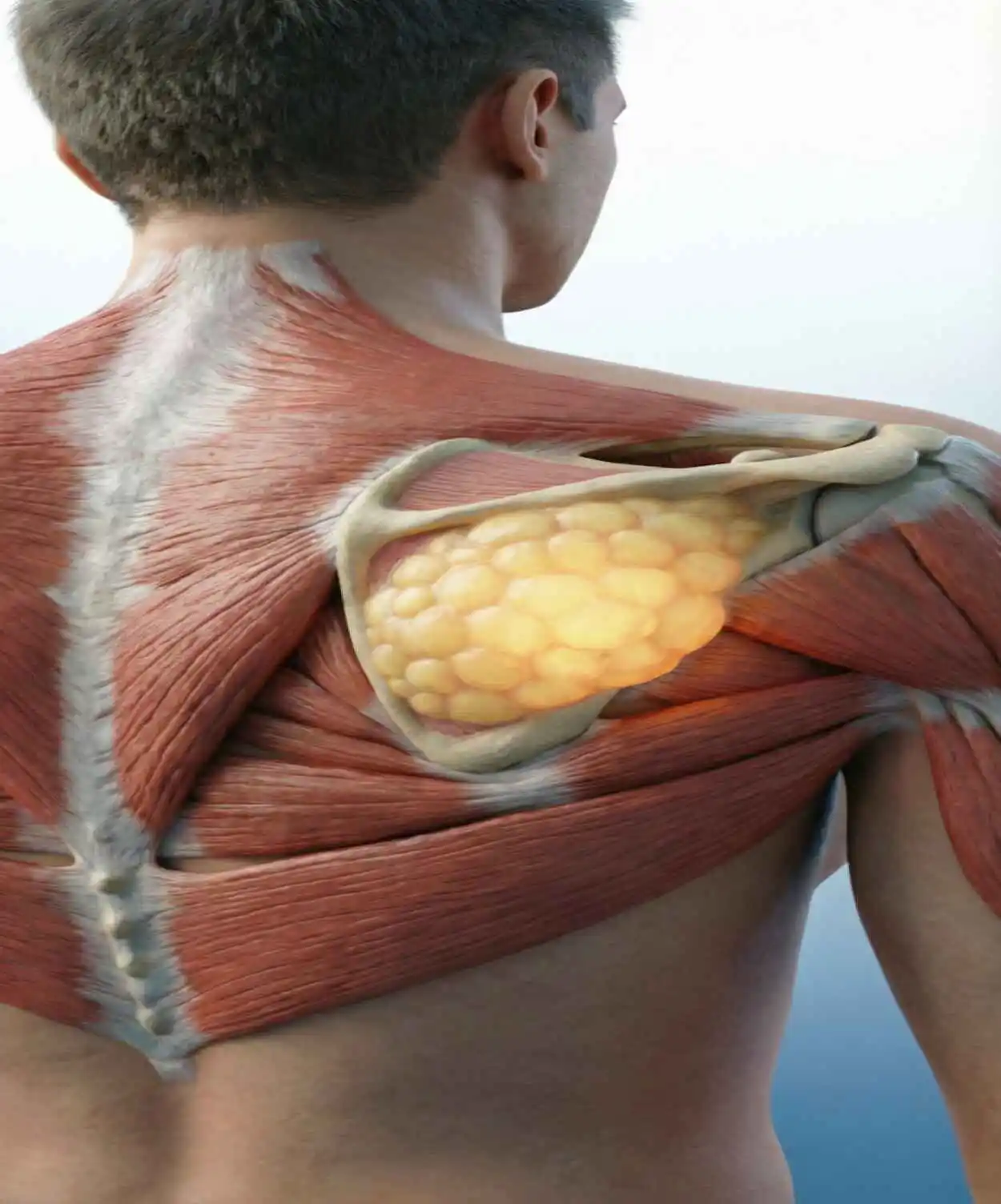
Key structures include the long thoracic nerve (damage causes serratus anterior paralysis and “winged scapula”), the thoracodorsal nerve (innervates latissimus dorsi), and the subscapular vessels. Careful anatomical dissection is essential.
- Could this mass have been detected earlier with routine screening?
There is no current recommendation for routine soft tissue mass screening in asymptomatic adults. However, any new lump noticed by a patient during self-examination should prompt clinical review rather than watchful waiting at home.
- What is the prognosis for a patient after benign lipoma excision?
Excellent. After complete excision of a confirmed benign lipoma, patients are effectively cured. Recurrence is uncommon for well-excised capsulated lesions. Follow-up is typically a short-term wound and histology review, after which the patient is discharged without further oncological surveillance.
Medical Disclaimer:
The information provided on this website is for general educational and informational purposes only and is not intended as a substitute for professional medical advice, diagnosis, or treatment. Always seek the advice of your physician or other qualified health provider with any questions you may have regarding a medical condition. Never disregard professional medical advice or delay in seeking it because of something you have read on this website.
