
Table of Contents
- Currency: The Lao Kip (LAK). While US Dollars and Thai Baht are accepted in some tourist areas, Kip is essential for daily transactions. ATMs are common in cities but can be rare in rural villages. Carry cash.
- Language: Lao is the official language. English is spoken in tourist areas, but learning a few words like “Sabaidee” (Hello) and “Khob Chai” (Thank you) goes a long way.
- Religion: Touching someone’s head is considered taboo, as the head is the most sacred part of the body. Women should not touch monks or hand items directly to them. When entering temples, remove your shoes and cover your shoulders and knees.
- Safety: Laos is generally very safe. Petty theft can occur in tourist hubs, but violent crime is rare. Be mindful of your surroundings on roads, as traffic can be unpredictable.
- Time Zone: GMT+7.
- Electricity: 230V. Plugs are usually Type A, B, C, or F (European/US styles). A universal adapter is recommended.
Conclusion
Laos is a destination that demands you slow down. It doesn’t have the beaches of Thailand or the high-octane cities of Vietnam, but it offers something arguably more valuable: tranquility and authenticity. Whether you are drifting down the Mekong at sunset, exploring the mysterious Plain of Jars, or simply sitting on a plastic stool eating spicy papaya salad with locals, Laos weaves a spell that lingers long after you’ve left. It is a country that reminds us that the best journeys are not measured in miles, but in moments of connection and peace.
Pack your bags, bring your patience, and prepare for an adventure in the heart of Southeast Asia. The Land of a Million Elephants is waiting for you.
FAQ’s
General Travel Information

- Do I need a visa to visit Laos?
Most international travelers require a visa to enter Laos, which can be obtained as a Visa on Arrival at major airports and border crossings. Alternatively, you can apply for an eVisa online through the official government portal, which is valid for a 30-day stay. Ensure your passport has at least six months of validity and at least two blank pages remaining.
- When is the best time to visit Laos?
The ideal time to visit Laos is during the dry season, which runs from November to February, when temperatures are cooler and more comfortable for trekking. From March to May, the heat intensifies significantly, making outdoor activities more strenuous. The rainy season occurs from June to October, which brings lush green landscapes but may cause travel delays due to muddy roads.
- What is the official currency, and can I use US Dollars?
The official currency is the Lao Kip (LAK), and it is used for most day-to-day transactions like street food and local transport. However, US Dollars and Thai Baht are widely accepted in major tourist hubs, hotels, and for high-value purchases. It is highly recommended to carry a mix of cash, as ATMs can sometimes be unreliable outside of the main cities.
- Is Laos an expensive destination for travelers?
Laos is generally very affordable, especially compared to Western standards, and is a favorite among budget backpackers. You can find simple guesthouses for $10–$20 per night, and a delicious local meal rarely costs more than a few dollars. While luxury options are increasing in spots like Luang Prabang, you can easily enjoy a comfortable trip on a modest daily budget.
- What are the must-see destinations in Laos?
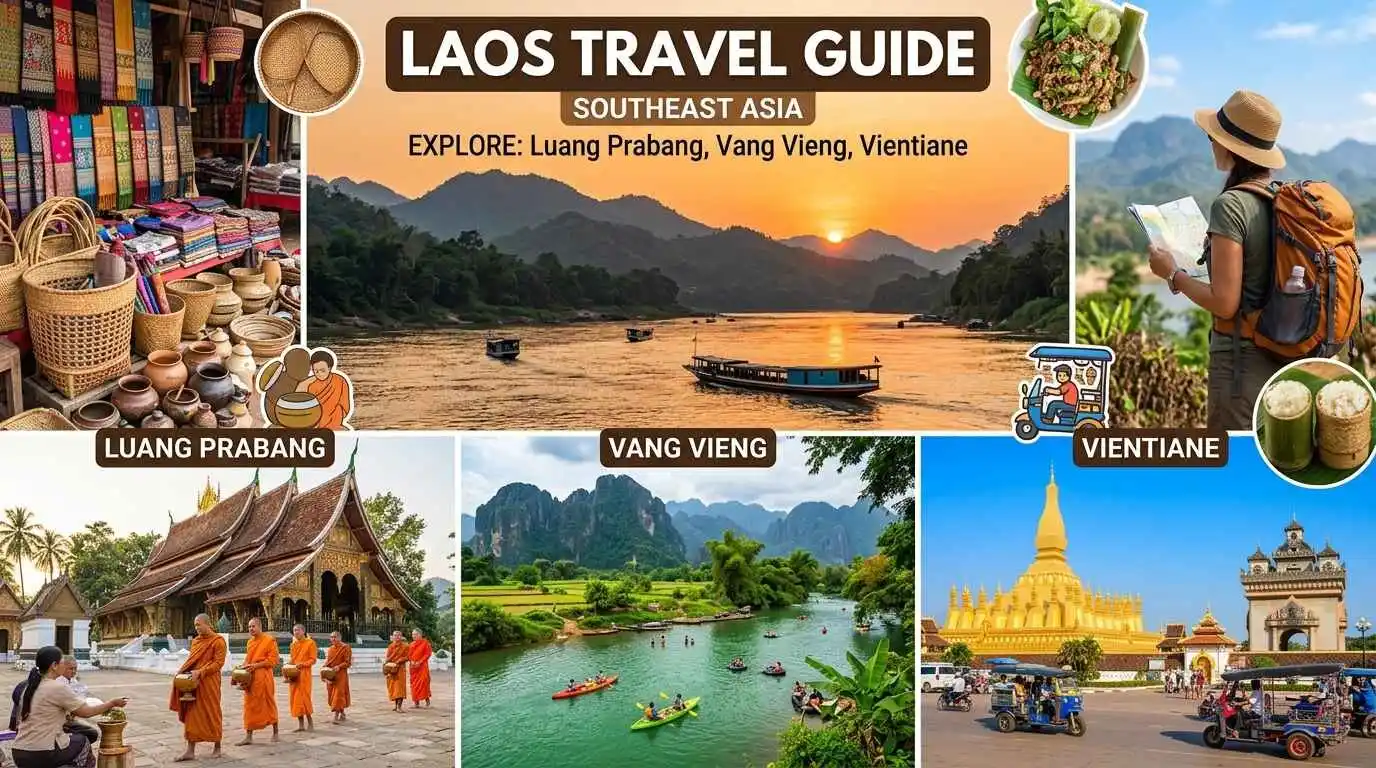
A classic itinerary should definitely include the UNESCO World Heritage town of Luang Prabang for its temples and the stunning Kuang Si Falls. Vang Vieng is essential for adventure seekers looking to kayak or explore limestone caves, while the capital, Vientiane, offers a mix of French colonial architecture and Buddhist monuments. For those with more time, the 4,000 Islands (Si Phan Don) in the south provides a serene, laid-back escape.
Culture and Etiquette
- What is the dress code for visiting temples in Laos?
When visiting Buddhist temples (Wats), it is vital to dress respectfully by covering your shoulders and knees. Both men and women should avoid sleeveless tops and short shorts; carrying a sarong is a handy way to cover up quickly. Additionally, always remember to remove your shoes and hat before entering a temple building or someone’s home.
- How should I behave during the daily Alms Giving Ceremony?
The morning Tak Bat (Alms Giving) is a sacred religious tradition, particularly in Luang Prabang, and should be observed with great respect. Visitors should keep a distance, remain quiet, and avoid using flash photography or making physical contact with the monks. If you wish to participate, do so only if it is meaningful to you, and dress appropriately while keeping your head lower than the monks.
- Is the “no” gesture used in Laos?
Yes, the “nop” is the traditional Lao greeting performed by placing your palms together in a prayer-like position at chest level and bowing slightly. While shaking hands is becoming more common in business settings, the nod remains the standard way to show respect, especially to elders or monks. It is a beautiful way to acknowledge locals and is always met with a warm smile.
Health and Safety
- Is it safe to drink the tap water in Laos?
No, tap water in Laos is not safe for consumption and should be avoided even for brushing your teeth if you have a sensitive stomach. Bottled water is cheap and readily available at every convenience store and guesthouse. Many eco-conscious hotels also offer filtered water stations where you can refill your reusable bottle to help reduce plastic waste.
- Is Laos a safe country for solo travelers?
Laos is considered one of the safest countries in Southeast Asia for solo travelers due to its peaceful culture and low crime rate. Petty theft, like bag snatching, can occur in busy areas, but violent crime against tourists is extremely rare. As long as you use common sense and respect local customs, you will likely find the Lao people to be exceptionally helpful and kind.
- Do I need vaccinations before traveling to Laos?
While no specific vaccinations are legally required for entry, doctors typically recommend being up to date on Hepatitis A, Typhoid, and Tetanus. Depending on your itinerary—especially if you are trekking in rural areas—malaria or dengue fever precautions may be necessary as mosquitoes are common. Always consult a travel clinic at least six weeks before you depart for personalized medical advice.
Transport and Connectivity
- How do I get around between cities in Laos?
The newly opened Laos-China Railway has revolutionized travel, connecting Vientiane, Vang Vieng, and Luang Prabang with high-speed trains. For other routes, “VIP buses” and minivans are the most common way to navigate the mountainous terrain. Within towns, motorized tuk-tuks are the standard mode of transport, but always remember to negotiate the fare before starting your journey.
- Is internet access widely available?
Internet access is surprisingly good in urban centers like Vientiane and Luang Prabang, with most cafes and hotels offering free Wi-Fi. However, once you head into more remote or mountainous regions, the connection can become spotty or non-existent. For constant connectivity, purchasing a local SIM card (like Unitel or Lao Telecom) is very affordable and provides Decent 4G coverage.
- Are the roads in Laos in good condition?
While the main highway (Route 13) connects the north and south, many roads in Laos remain unpaved or are prone to landslides during the rainy season. Bus journeys can be long and bumpy due to the winding mountain passes, so travelers prone to motion sickness should come prepared. For shorter distances, renting a motorbike is popular, but only recommended for experienced riders.
- Can I rent a car in Laos?
Renting a car is possible in larger cities like Vientiane, though most travelers prefer to hire a car with a local driver. Driving yourself can be challenging due to unpredictable traffic, livestock on the roads, and different driving habits. If you choose to drive, you will need an International Driving Permit and a high level of patience for the local road conditions.
Food and Activities
- What are the must-try dishes in Lao cuisine?
Lao cuisine is famous for being fresh, spicy, and fragrant, with “Laap” (a minced meat salad with herbs) being the national dish. You must also try “Khao Niew” (sticky rice), which is served in a woven basket and eaten with your hands. Another favorite is “Tam Mak Hoong” (spicy green papaya salad), which offers a perfect balance of sour, salty, and spicy flavors.
- What are the best activities for nature lovers?
Nature enthusiasts should head to the Bolaven Plateau to see world-class coffee plantations and towering waterfalls like Tad Fane. In the north, the Nam Et-Phou Louey National Park offers unique “Cloud Forest” night safaris where you can spot endangered wildlife. For a more relaxed experience, tubing or kayaking down the Nam Song River in Vang Vieng provides stunning views of the surrounding karst mountains.
- Where can I see elephants ethically in Laos?
While Laos is the “Land of a Million Elephants,” many traditional riding camps are being replaced by ethical sanctuaries. Look for projects like the Elephant Conservation Center in Sayaboury, which focuses on rehabilitation and conservation rather than entertainment. Avoid any venue that offers rides or performances, and choose experiences that allow you to observe these majestic animals in a natural environment.
- What should I buy as a souvenir from Laos?
Laos is famous for its intricate, hand-woven textiles, particularly the “Sinh” (traditional skirt), which makes for a beautiful and authentic gift. You can also find high-quality silver jewelry, hand-carved wood crafts, and locally grown coffee from the Bolaven Plateau. The night markets in Luang Prabang are the best places to find these items while supporting local artisans.
- What language is spoken in Laos, and will people understand English?
The official language is Lao, which is linguistically similar to Thai. In major tourist areas and among the younger generation, English is widely understood, especially in hotels and restaurants. Learning a few basic phrases like “Sabaidee” (Hello) and “Khop Chai” (Thank you) will go a long way in building rapport with the locals.
- What kind of power plugs are used in Laos?
Laos typically uses two-pin plugs, which can be either the flat-blade type (Type A) or the round-pin type (Type C). The standard voltage is 230V, so visitors from North America may need a voltage converter for some electronics. It is always wise to carry a universal travel adapter to ensure you can charge your devices regardless of the socket style in your guesthouse.
Disclaimer: The content on this blog is for informational purposes only. The author’s opinions are personal and not endorsed. Efforts are made to provide accurate information, but completeness, accuracy, or reliability are not guaranteed. The author is not liable for any loss or damage resulting from the use of this blog. It is recommended to use the information on this blog at your own discretion.
Keywords/Tags: Laos Travel Guide, Southeast Asia, Luang Prabang, Vang Vieng, Vientiane, Laos Tourism, Backpacking Laos, Mekong River, Lao Culture, Adventure Travel, Travel Tips.
Hashtags: #Laos #LaosTravel #SoutheastAsia #LuangPrabang #VangVieng #MekongRiver #TravelGuide #Backpacking #AdventureTravel #Wanderlust #ExploreLaos
