
Table of Contents
Bread, Cheese, Grapes, Done – The Rise of “Girl Dinner”
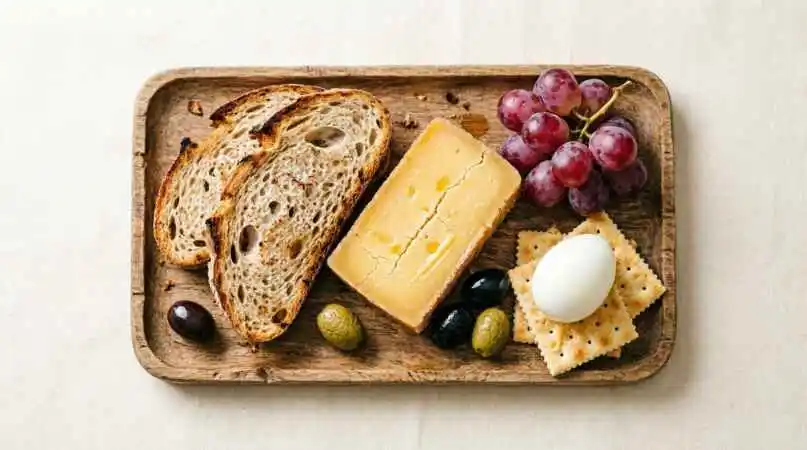
Somewhere between a charcuterie board and admitting defeat sits one of the most oddly beloved food trends of the past few years: girl dinner. A plate of crackers, some cheese, a handful of grapes, maybe a pickle if you’re feeling fancy — no stove involved, no recipe followed, no shame implied. It’s the anti-Pinterest dinner, the meal equivalent of shrugging, and it has racked up billions of views and uses across TikTok since it first appeared.
But underneath the relatable humor, a real debate has been playing out among nutrition professionals: is girl dinner a genuinely reasonable, even smart, response to modern exhaustion and cooking fatigue — or a socially acceptable costume for skipping proper meals? The honest answer, as with most viral food trends, is that it depends entirely on what’s actually on the plate, and how it’s being used. This piece traces where the trend came from, what nutrition experts actually think, and how to tell the difference between a genuinely satisfying low-effort meal and a pattern worth paying closer attention to.
Where Girl Dinner Actually Came From
The trend is widely traced back to a 2023 TikTok video from creator Olivia Maher, who filmed her evening meal — bread, cheese, grapes, and gherkins — and jokingly described it as her girl dinner, or, as she put it, a medieval peasant-style spread. The clip struck a nerve, and the format spread quickly, with the hashtag eventually racking up hundreds of millions to billions of combined views and uses across the platform.
Maher herself has since spoken about the gendered framing, describing it less as a serious statement about gender and more as a lighthearted way of giving herself permission: a small, low-stakes acknowledgment that she wasn’t performing the role of preparing a proper, effortful dinner that evening — she was, in her words, just a girl having an evening.

From Fridge Scraps to Curated Aesthetic
Like most viral food trends, girl dinner didn’t stay static. What began as an unpolished, genuinely random assortment of whatever happened to be in the fridge gradually evolved into something more deliberate: aesthetically arranged cheese boards, colorful fruit, and carefully placed crackers, often styled for maximum visual appeal rather than reflecting an actual moment of not wanting to cook.
This evolution matters, because it shifted the trend’s center of gravity. The earliest, scrappiest examples leaned toward genuine practicality — eating something, anything, without the energy for a full cooking process. The more polished later wave sometimes leaned closer to a performance of minimalism, which is part of what opened the door to broader nutritional and cultural critique.
What Nutrition Experts Actually Say
The professional response to girl dinner has been notably split, and it’s worth walking through both sides honestly rather than picking one.
The case for it being genuinely fine, even helpful
Some registered dietitians see real, practical value in the format. Intuitive eating counselor Katy Zanville has spoken favorably about the trend, noting its resemblance to mezze platters and tray dinners, and pointing out that this kind of low-effort, grazing-style meal can be genuinely helpful for people who are neurodivergent, disabled, chronically ill, or simply too exhausted to cook at the end of a long day.
Other dietitians have echoed this practicality angle, noting that the appeal largely comes down to convenience and cost — a snack-style plate takes minutes to assemble, requires little cleanup, and sidesteps the very real barrier that cooking a full meal for one person can feel disproportionately effortful.
The case for concern
On the other side, several dietitians have raised more pointed concerns, particularly about the thinnest, most calorie-sparse examples that circulate online. Nutritionist Alissa Rumsey has noted that many viral girl dinners simply don’t contain enough food, and has expressed concern that normalizing this level of under-eating, especially at scale on social media, risks reinforcing patterns of restriction and disordered eating.
Registered dietitian Tanya Freirich has made a similar observation, noting that while the trend may have started with quirky, if imperfect, food combinations, many recent examples circulating online show meals that are minimally nutritious or nearly empty of real nutritional content altogether.
If food content online — girl dinner or otherwise — regularly leaves you feeling guilty, anxious, or like you should be eating less than you actually want or need, that’s worth paying attention to. It can help to unfollow accounts that trigger that response and, if the feelings persist, to talk with a doctor or a registered dietitian. If you’re concerned you or someone you know may be struggling with disordered eating, the National Alliance for Eating Disorders helpline is a resource worth knowing about.
The Nutritional Gap Worth Knowing About: Protein
Across multiple nutrition professionals who’ve weighed in on the trend, one specific gap comes up again and again: protein. A plate of crackers, brie, grapes, and olives can look substantial and satisfying while actually providing well under 10 grams of protein — a meaningful shortfall from the roughly 25 to 40 grams many adults need at a single meal to support muscle maintenance, satiety, and overnight recovery.
The encouraging part is that closing this gap doesn’t require abandoning the format at all. Adding a hard-boiled egg, a few slices of smoked salmon or turkey, a scoop of hummus, or a handful of nuts to an existing spread can meaningfully round out the protein content without changing the essential, low-effort spirit of the meal.
A Simple Way to Think About Balance
Registered dietitians who take a more moderate view of the trend tend to converge on similar general advice: a girl dinner can be a genuinely fine meal if it includes a reasonable mix of carbohydrates, protein, fat, and fiber, and if there’s enough overall volume and variety to actually satisfy hunger, rather than leaving someone under-fed.
A carbohydrate source like bread, crackers, or fruit, for sustained energy.
A protein source like cheese, deli meat, eggs, nuts, or hummus, ideally in a meaningful enough portion to matter.
A healthy fat source, often naturally present in cheese, nuts, olives, or a drizzle of olive oil.
Some fiber and micronutrients, typically from fruit, vegetables, or whole grains, which are sometimes the first thing missing from thinner versions of the trend.
This isn’t a rigid formula so much as a simple mental checklist — a way of noticing, at a glance, whether a given spread is a genuinely complete meal or mostly empty visual appeal.
How Often Is Too Often?
Frequency, more than any single meal’s content, is where several dietitians draw their clearest line. Cleveland Clinic dietitian Julia Zumpano has framed it plainly: an occasional girl dinner, perhaps once a month or during an unusually hectic stretch, is unlikely to cause any real harm, but relying on very light versions of the format as a frequent, regular pattern is where nutritional concerns are more likely to build up over time.
This framing shifts the conversation away from judging any single plate in isolation, and toward a more useful question: is this an occasional, practical substitute for a cooked meal, or has it quietly become the default way food intake gets minimized on a regular basis?
The Cultural Layer: Permission, Gender, and Diet Culture
Part of what made girl dinner resonate so widely wasn’t really about nutrition at all — it tapped into something cultural. Commentators have framed the trend as a small act of resistance against the pressure many women in particular feel to prepare elaborate, home-cooked, from-scratch meals, especially after a full day of work. Under that reading, girl dinner offered something valuable: permission to eat something imperfect, improvised, and just for yourself, without performing the role of preparing a proper dinner.
But this same cultural reading has drawn its own pushback. Critics have pointed out that when girl dinners lean toward extremely minimal, low-calorie spreads, the trend can end up quietly reinforcing the very diet culture messaging it seems to be pushing back against, just repackaged in a more playful, socially shareable format. The gendered branding itself has also been debated, with some questioning why a casual, low-effort meal needed a specifically gendered label in the first place, given that eating this way isn’t unique to any one gender.
So, Myth or Minimalism? The Honest Verdict
The most accurate answer is genuinely: both, depending on the plate. Girl dinner isn’t inherently a nutrition myth, and it isn’t inherently genius minimalism either — it’s a format, not a fixed nutritional outcome. A thoughtfully assembled snack plate with real protein, some fiber, and enough overall volume is a completely reasonable meal, and arguably a smart, low-friction solution to the very real problem of end-of-day cooking fatigue. A sparse plate of crackers and a pickle, treated as a regular substitute for eating enough food, is a different story, and one nutrition experts are right to flag.
What makes this trend worth paying attention to isn’t the plate itself, but what it reveals: how much appetite there is, especially among people exhausted by the pressure to cook elaborate meals every night, for permission to eat something simple. That underlying need is completely valid. The task, for anyone drawn to the format, is simply making sure the plate in front of them actually reflects that permission to eat enough — not a trend-shaped way of eating less.
Frequently Asked Questions
What is “girl dinner,” exactly?
It’s an internet term for a low-effort meal made up of an assortment of snack-style foods — think bread, cheese, fruit, pickles, and crackers arranged like a mini charcuterie board — instead of a traditionally cooked, plated meal.
Where did the term “girl dinner” come from?
It’s widely credited to TikTok creator Olivia Maher, who posted a video in 2023 showing her dinner of bread, cheese, grapes, and gherkins, jokingly calling it her girl dinner or medieval peasant meal.
Why is it called “girl dinner” specifically?
Maher has explained that the label wasn’t meant to be a serious gendered claim, but more a lighthearted, low-stakes framing — a way of saying this is a casual, just-for-me meal rather than a formal, effortful dinner.
How popular did the trend actually get?
Extremely — the hashtag has been used billions of times across TikTok, with various compilations and individual videos racking up hundreds of millions of views combined.
Is girl dinner the same as a charcuterie board?
They’re closely related in format — small, varied bites arranged together — but girl dinner is generally more casual and improvised, often built from whatever’s already in the fridge rather than deliberately curated.
Did the trend spawn any spin-offs?
Yes, including “husband meal,” often framed as a heartier, higher-protein version, and “mom dinner,” typically depicted as eating leftover food from kids’ plates rather than a fresh meal.
What did the trend look like when it first started?
Early examples tended to reflect genuinely random, low-effort fridge contents — a mix of whatever was on hand, eaten without much planning or presentation.
How has the trend evolved since it started?
Many recent examples have shifted toward polished, aesthetically arranged spreads with curated cheeses and artfully placed fruit, moving further from the trend’s original, unpolished spirit of eating whatever’s around.
Is girl dinner nutritionally sound?
It depends entirely on what’s on the plate. Some versions include a reasonable mix of carbohydrates, fat, protein, and fiber, while others are largely just carbohydrates and fat with very little protein or nutritional variety.
What’s the most common nutritional gap in girl dinner plates?
Protein is the gap that comes up most often among dietitians who’ve examined the trend — a plate of crackers, cheese, and fruit can look substantial while providing well under the protein most adults need at a single meal.
How much protein do most adults need at dinner?
General guidance from registered dietitians often points to roughly 25 to 40 grams at a single meal to support muscle maintenance, satiety, and overnight recovery, though individual needs vary by body size, activity level, and health goals.
Can girl dinner still be a nutritionally balanced meal?
Yes, with some intention — adding a protein source like a hard-boiled egg, smoked salmon, hummus, or a handful of nuts to an existing snack plate can round it out significantly without changing its casual, grazing-style format.
Are dietitians generally for or against the trend?
Opinions are genuinely mixed. Some dietitians see it as a practical, relatable answer to end-of-day exhaustion and cooking fatigue, while others express concern about how thin, calorie-sparse versions of the trend are sometimes framed online.
What’s the main concern dietitians raise about the trend?
The recurring concern is that some of the most-viewed girl dinner videos show genuinely insufficient food for a full meal, and normalizing that level of under-eating, especially repeated regularly, could contribute to disordered eating patterns.
Is girl dinner considered disordered eating?
Not inherently — a casual snack-plate meal on its own isn’t a disordered eating behavior. Concerns arise specifically when the format is used consistently to restrict overall food intake, rather than as an occasional low-effort alternative to a cooked meal.
How often is it considered fine to eat a girl dinner?
Some registered dietitians have suggested that occasional girl dinners, such as roughly once a month or during unusually busy stretches, are unlikely to be a concern, while frequent reliance on very light versions could become an issue over time.
Why might this trend resonate especially strongly with women?
Several commentators have pointed to it as a reaction against the pressure to prepare elaborate, from-scratch meals, offering permission to eat something simple and imperfect without guilt, particularly after a long day.
Is there a feminist reading of the girl dinner trend?
Some cultural commentators frame it as a small act of resistance against domestic and diet-culture expectations placed on women — normalizing eating something imperfect, low-effort, or even just for oneself, without needing to perform an elaborate cooking role.
Could the trend also reinforce diet culture instead of resisting it?
Some critics argue the opposite is also true: when girl dinners are framed around very low calorie counts or minimal food, the trend can quietly echo restrictive diet culture messaging while presenting itself as playful and empowering.
Does the gendered framing of the trend bother anyone?
Yes, it’s been a genuine point of debate online, with some questioning why a casual snack plate needed a gendered label at all, given that low-effort, grazing-style meals are common across genders.
Is girl dinner good for people who dislike cooking?
It can be a practical, low-pressure option for people who find cooking exhausting, overwhelming, or simply undesirable at the end of a long day, offering permission to eat something satisfying without a full cooking process.
Is the trend useful for people with disabilities or chronic illness?
Some registered dietitians have specifically noted that snack-plate-style meals can be genuinely helpful for people who are neurodivergent, disabled, or living with chronic illness, since they lower the physical and cognitive demands of meal preparation.
What foods commonly show up in girl dinner spreads?
Common items include bread, crackers, cheese, deli meats, olives, pickles, fresh fruit, nuts, and sometimes dips like hummus or guacamole, arranged together on a single plate or board.
What are examples of more extreme, less balanced versions of the trend?
Some viral examples have featured very minimal spreads, such as plain pasta with a little cheese, a single can of corn, or just chips and dip, raising more concern from nutrition experts than the fuller charcuterie-style versions.
How can someone make their girl dinner more balanced?
Rounding out a snack plate with a clear protein source, a serving of vegetables or fruit, a whole grain option, and a healthy fat can turn an unbalanced plate into a genuinely well-rounded meal without much extra effort.
Is it a problem if girl dinner becomes someone’s only meal of the day?
Relying on a very light snack plate as someone’s sole meal of the day, especially regularly, is more likely to raise nutritional concerns than treating it as one meal within an otherwise varied, adequate overall day of eating.
What should someone do if they notice they’re using the trend to restrict food?
If a low-effort meal format starts being used specifically to eat less than the body needs, or is tied to guilt, fear, or anxiety around eating more, it’s worth talking to a doctor or a registered dietitian who specializes in eating behaviors.
How can someone tell if their relationship with a trend like this has become unhealthy?
Signs worth paying attention to include persistent hunger, preoccupation with keeping meals as small as possible, guilt around eating more food, or using the trend as a socially acceptable cover for restrictive eating patterns.
Are there healthier ways to think about “low-effort” eating in general?
Framing low-effort meals around genuine nourishment — enough volume, protein, and variety to actually satisfy hunger — rather than around minimizing food intake tends to be the healthier version of the same basic convenience-driven idea.
What’s the most balanced way to think about the girl dinner trend overall?
Most nutrition experts land somewhere in the middle: the format itself is a neutral, practical response to modern exhaustion and cooking fatigue, and whether any individual version of it is healthy or concerning comes down entirely to what’s actually on the plate, and how often it replaces a fuller meal.
Disclaimer: This content offers general health and nutrition information. It is not intended as medical advice, diagnosis, or treatment. Individual dietary needs vary. Please consult a qualified health professional with any questions about your personal health before implementing new meal plans or dietary changes. You are responsible for ensuring recipes are safe for your specific allergies and dietary needs.
