
Table of Contents
Baked Feta Pasta : The One-Pan Viral Classic Just Got a High-Protein Glow-Up
Why chicken and shrimp are the upgrade the internet’s favorite pasta trend didn’t know it needed
Few recipes have earned the right to call themselves a genuine internet institution, but baked feta pasta has done exactly that. Born on a Finnish food blog and detonated across social media in a single, world-conquering week, the original recipe was almost absurdly simple: a block of feta, a pile of cherry tomatoes, a generous pour of olive oil, roasted together until the tomatoes collapse into a jammy sauce and the feta turns soft and spreadable, then stirred through hot pasta. It became the defining one-pan recipe of its era, and years later it still resurfaces in waves, proof that some viral recipes earn their staying power rather than simply riding an algorithm.
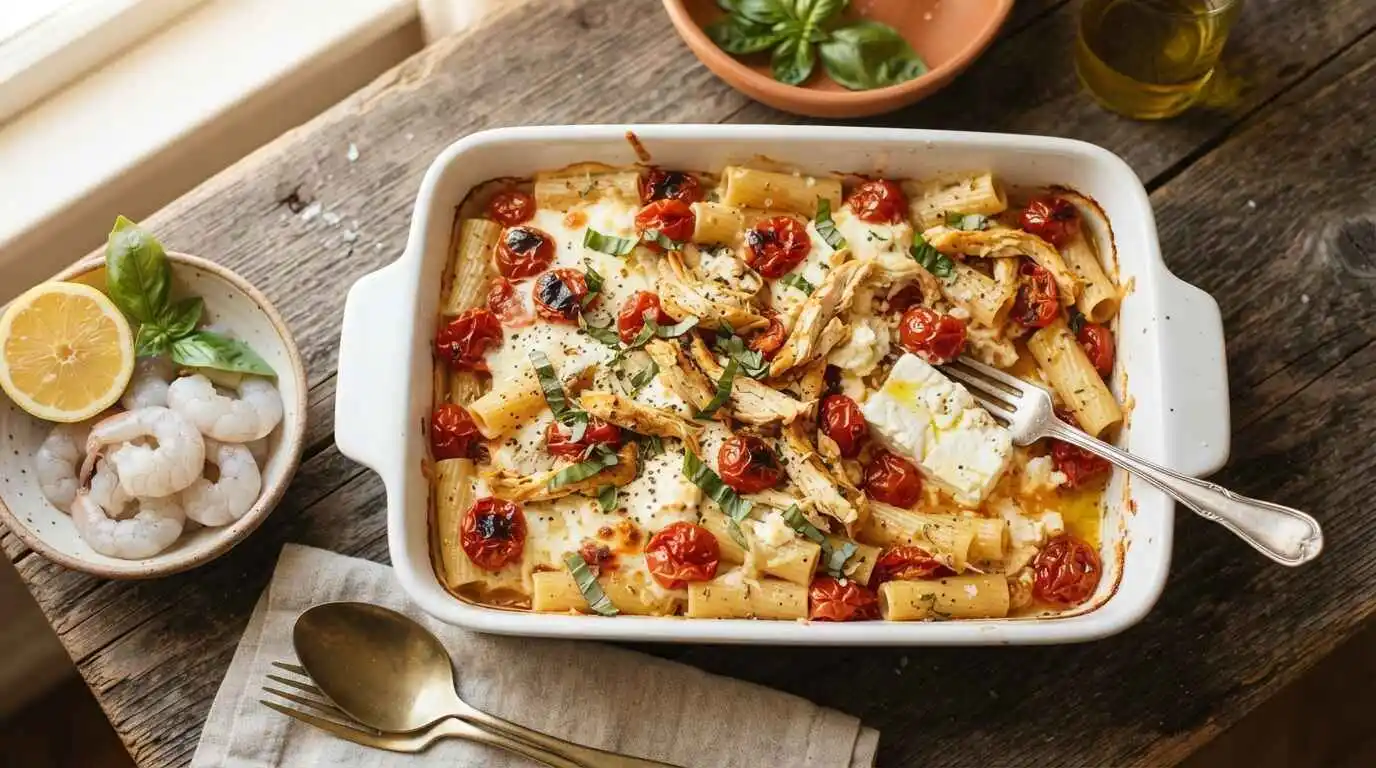
What has changed is not the core method, which remains just as effortless as it was on day one, but the audience’s expectations. The high-protein eating wave that has reshaped so much of food content over the past two years has come for baked feta pasta too, and the result is a genuinely useful upgrade rather than a forced gimmick. Adding a properly seasoned layer of chicken or shrimp directly into the same pan transforms a comforting but protein-light vegetarian side dish into a complete, balanced dinner, without adding a second pan, a second cooking step, or meaningfully more effort than the original.
This guide walks through exactly why the original recipe worked so well in the first place, the food science behind why feta melts the way it does under heat, a full step-by-step method for both the chicken and shrimp versions, timing adjustments that keep the protein from overcooking while the tomatoes still have time to properly break down, ingredient swaps and flavor directions for different diets and pantries, and the practical tips that separate a version that tastes like a restaurant dish from one that just tastes like roasted cheese and pasta.

Why the Original Recipe Went Viral in the First Place
Baked feta pasta’s appeal was never really about novelty ingredients, since feta, cherry tomatoes, olive oil, and pasta were already familiar to most home cooks. The appeal was structural: an unusually small number of steps produced a result that looked and tasted far more sophisticated than the effort involved. A single baking dish goes into the oven with essentially no prep beyond arranging ingredients and drizzling oil, and forty minutes later, minimal active effort has produced a rich, creamy, tomato-forward sauce that would normally require standing at a stove stirring a roux or reducing cream.
The one-pan format mattered just as much as the flavor. Recipes that promise a complete meal with minimal cleanup have an obvious advantage in a social media environment built around short-form video, since the entire arc, raw ingredients to finished dish, fits naturally into a sixty-second clip without needing to cut away to multiple pans or complicated technique. Baked feta pasta was, in retrospect, almost perfectly engineered for the format before that format had even fully matured.
It also benefited from being genuinely forgiving. Precise measurements barely matter, the bake time has a wide margin for error before anything actually goes wrong, and the finished sauce comes together with a simple stir rather than requiring any real culinary skill. That combination of low skill floor and high perceived payoff is a pattern that shows up again and again in the recipes that manage to cross over from niche interest to mainstream viral success.
The Food Science: Why Feta Melts the Way It Does
Feta behaves differently under heat than many other cheeses, and understanding why explains a lot about how to get the best result from this recipe. Feta is a brined cheese with a relatively high moisture content and a crumbly, curd-based structure rather than the stretchy protein network found in mozzarella or cheddar. When heated, it does not melt into long, gooey strands; instead, it softens, releases some of its moisture and fat, and becomes spreadable, closer to how a creamy dip forms than how a classic melting cheese behaves.
This is precisely why feta works so well in this format specifically. As it softens in the oven alongside the tomatoes, it partially emulsifies with the olive oil and the juices released from the roasting tomatoes, creating a sauce with body and richness without ever needing cream, butter, or a flour-based thickener. Stirring the softened feta together with the collapsed tomatoes at the end of baking is what pulls this together into a cohesive sauce rather than leaving separate pools of cheese and tomato sitting side by side.
Using a block of feta packed in brine, rather than pre-crumbled feta sold dry in tubs, makes a meaningful difference here. Pre-crumbled feta is typically coated with anti-caking agents that interfere with how smoothly it softens and blends, often resulting in a grainier, less cohesive sauce. A solid block, straight from its brine, has both the moisture content and texture that this particular cooking method depends on.
“Shrimp needs only eight to ten minutes in the oven — add it at the same time as the feta and tomatoes, and you’ll end up with rubber instead of dinner.”
Building the Protein Layer: Chicken Version
Adding chicken to this dish works best when the chicken is given a genuine head start on flavor rather than simply tossed in raw alongside the vegetables. Bite-sized pieces of boneless, skinless chicken thigh, which stays noticeably more tender than breast meat under the relatively long roasting time this dish requires, should be tossed with olive oil, a generous amount of garlic, dried oregano, and a pinch of red pepper flakes before it ever reaches the pan.
The most reliable method is to arrange the seasoned chicken pieces around the block of feta from the very beginning of the bake, rather than adding them partway through, allowing the chicken roughly thirty-five to forty minutes at the same four hundred-degree Fahrenheit oven temperature the tomatoes and feta need to properly break down. This timing works in the dish’s favor rather than against it: chicken thighs are forgiving enough to handle this longer roast without drying out, unlike chicken breast, which can turn tough and stringy over the same window.
Once the bake finishes, the chicken should be roughly shredded or chopped directly in the baking dish using two forks, allowing it to mix naturally into the sauce as the feta and tomatoes are stirred together, rather than being kept as separate, distinct chunks sitting on top of the finished pasta. This integration step is a small detail, but it is the difference between a dish where the protein feels like an afterthought and one where every bite carries a consistent balance of sauce, cheese, and meat.
Building the Protein Layer: Shrimp Version
Shrimp requires a meaningfully different approach than chicken because of how much faster it cooks, and treating it the same way, adding it at the start of a forty-minute bake, is the single most common mistake home cooks make when attempting this variation. Raw, peeled, and deveined shrimp needs only about eight to ten minutes in a hot oven to cook through, which means it has to be added significantly later than the tomatoes and feta rather than at the same time.
The most reliable method is to let the feta and cherry tomatoes roast on their own for the first thirty minutes of the bake, allowing the tomatoes to fully collapse and the feta to soften properly, then nestle the raw, seasoned shrimp directly into the pan around the cheese for the final eight to ten minutes. A simple toss of olive oil, minced garlic, lemon zest, and a pinch of smoked paprika beforehand gives the shrimp enough flavor to hold its own once mixed into the finished sauce.
Watch for the shrimp to turn opaque and curl into a loose C-shape as the clearest visual sign that it has finished cooking; shrimp that curl into a tight O-shape have generally gone past that point and will taste noticeably tougher and rubbery. Because shrimp cooks so quickly and continues cooking slightly from residual heat even after leaving the oven, pulling the dish a minute or two early and letting it finish in the hot baking dish is a safer bet than risking an overcooked, tough final result.
The Full Method, Step by Step
Preheat the oven to four hundred degrees Fahrenheit. In a large baking dish, arrange two pints of cherry or grape tomatoes and place a full block, roughly eight ounces, of feta directly in the center. Drizzle generously with olive oil, roughly a third of a cup, and season with black pepper, dried oregano, and a pinch of red pepper flakes if a bit of heat is desired; feta is naturally salty enough that additional salt is rarely necessary at this stage.
For the chicken version, toss a pound of bite-sized chicken thigh pieces with olive oil, minced garlic, oregano, and seasoning, then scatter them around the tomatoes and feta before the dish goes into the oven, baking the entire pan together for thirty-five to forty minutes, until the chicken is fully cooked and the tomatoes have visibly collapsed and released their juices. For the shrimp version, bake the tomatoes and feta alone for thirty minutes first, then add a pound of seasoned raw shrimp around the cheese and continue baking for an additional eight to ten minutes, until the shrimp is opaque and just cooked through.
While the dish finishes baking, cook a pound of short pasta, such as penne, rigatoni, or fusilli, in generously salted water until just shy of al dente, reserving a cup of the starchy pasta water before draining. Remove the baking dish from the oven and use a fork to mash the softened feta together with the collapsed tomatoes directly in the pan, stirring until it forms a cohesive, creamy sauce; for the chicken version, roughly shred the chicken into the sauce at this stage as well.
Add the drained pasta directly into the baking dish and toss thoroughly to coat, adding splashes of the reserved pasta water as needed to loosen the sauce to a silky, clingy consistency rather than a thick paste. Finish with fresh torn basil, a squeeze of lemon juice, and, for the shrimp version, fold the cooked shrimp back in gently at this final stage so it stays intact rather than breaking apart during vigorous tossing.
Recipe Card: Baked Feta Pasta
| Serves: 4 servings | Prep: 10 minutes | Cook: 40-50 minutes |
| INGREDIENTS |
| Cherry or grape tomatoes 2 pints |
| Block feta cheese (in brine) 8 oz. |
| Olive oil 1/3 cup |
| Garlic, minced 4 cloves |
| Dried oregano 1 tsp |
| Red pepper flakes pinch (optional) |
| Black pepper to taste |
| Short pasta (penne, rigatoni, or fusilli) 1 lb |
| Boneless, skinless chicken thighs, cubed — OR — 1 lb. |
| Raw shrimp, peeled and deveined 1 lb. |
| Lemon zest (for shrimp version) 1 lemon |
| Fresh basil, torn handful |
| Lemon juice 1 tbsp |
| Reserved pasta water 1 cup |
| METHOD |
| Step 1. Preheat oven to 400°F. In a large baking dish, arrange the tomatoes and place the block of feta in the center. Drizzle with olive oil and season with garlic, oregano, red pepper flakes, and black pepper. |
| Step 2. Chicken version: Toss the cubed chicken thighs with olive oil, garlic, and oregano, then scatter around the tomatoes and feta. Bake everything together for 35-40 minutes, until the chicken is cooked through and the tomatoes have collapsed. |
| Step 3. Shrimp version: Bake the tomatoes and feta alone for 30 minutes first. Toss the shrimp with olive oil, garlic, and lemon zest, then nestle into the pan for the final 8-10 minutes, until opaque and just cooked through. |
| Step 4. While the dish bakes, cook the pasta in generously salted water until just shy of al dente. Reserve 1 cup of pasta water, then drain. |
| Step 5. Remove the baking dish from the oven. Mash the softened feta and collapsed tomatoes together with a fork until it forms a creamy sauce. For the chicken version, shred the chicken into the sauce at this stage. |
| Step 6. Add the drained pasta to the baking dish and toss to coat, adding splashes of reserved pasta water until the sauce turns silky and clings to the noodles. |
| Step 7. For the shrimp version, gently fold the cooked shrimp back in now so it stays intact. Finish with torn basil and a squeeze of lemon juice. Serve immediately. |
Why the Protein Add-On Actually Works Nutritionally
The original baked feta pasta, while beloved, was nutritionally lopsided in a way that is easy to overlook amid all the visual appeal: a dish built primarily around cheese, oil, and refined pasta with comparatively little protein relative to its calorie count. That imbalance is exactly what the current high-protein food trend has trained audiences to notice and actively seek to correct, which is a large part of why this particular upgrade has resonated rather than feeling like an unnecessary addition.
A pound of chicken thigh or shrimp distributed across a full batch of pasta adds a substantial amount of complete protein for a relatively modest calorie cost, shifting the dish from what would traditionally be considered a starch-and-fat-forward side into something that can reasonably serve as a standalone, balanced dinner. This matters particularly for anyone tracking macros or simply trying to build more protein into meals without resorting to a plain grilled chicken breast served on the side, which is a far less appealing proposition than protein folded directly into a dish already built around bold, comforting flavor.
The upgrade also does not meaningfully compromise what made the original recipe appealing in the first place. The one-pan format stays completely intact, the active cooking effort barely increases, and the core flavor profile- salty feta, sweet roasted tomato, good olive oil- remains the star of the dish rather than being overshadowed by the added protein, which is exactly the kind of balance that determines whether a recipe upgrade sticks around or gets quietly abandoned after one attempt.
Variations, Swaps, and Dietary Adjustments
For a vegetarian protein boost without meat or seafood, a can of drained and rinsed white beans or chickpeas stirred in alongside the pasta at the final tossing stage adds a meaningful amount of plant-based protein and fiber while soaking up the sauce beautifully, all without requiring any change to the oven timing used for the original recipe. Crumbled feta swapped for a plant-based alternative can adapt the dish for a dairy-free version, though the sauce’s characteristic creaminess will differ somewhat given how specifically feta’s texture drives that result.
For anyone avoiding pasta or looking to lower the overall carbohydrate content, the same baked tomato-and-feta base spoons beautifully over roasted spaghetti squash, cauliflower rice, or simply a thick slice of crusty bread as a lower-carb alternative to tossing it with traditional pasta. Sun-dried tomatoes stirred in alongside the fresh cherry tomatoes add a deeper, more concentrated tomato flavor and a slightly chewy texture contrast that many home cooks have adopted as a permanent addition to their version of the recipe.
Spice levels are easy to adjust in either direction: a full tablespoon of red pepper flakes and a diced fresh chili pushes the dish toward a genuinely spicy arrabbiata-adjacent flavor profile, while omitting the pepper flakes entirely and adding a bit of fresh thyme leans the dish toward a milder, more herbaceous direction that tends to appeal to a wider range of palates, including picky younger eaters.
Common Mistakes and Troubleshooting
The most frequent complaint about this recipe, in both its original and protein-added forms, is a sauce that ends up watery rather than creamy. This is almost always caused by draining the pasta too thoroughly and skipping the reserved pasta water, since that starchy liquid is what allows the sauce to cling properly to the noodles rather than pooling loosely at the bottom of the dish. Adding it gradually, a splash at a time while tossing, gives far more control than dumping it all in at once.
Overcooked, rubbery shrimp is the second most common issue specific to the seafood version, almost always traceable to adding the shrimp at the same time as the tomatoes and feta rather than during the final eight to ten minutes of baking. Similarly, dry, stringy chicken usually points to using chicken breast instead of thigh, or cutting the chicken into pieces that are too small and prone to overcooking well before the tomatoes have had time to properly break down.
A bland final result, despite a seemingly well-seasoned start, is often the result of under-seasoning the pasta water itself; properly salted pasta water is doing real seasoning work throughout the dish, not just cooking the noodles, and skipping that step leaves the finished pasta tasting flat no matter how flavorful the sauce is on its own. Finally, using pre-crumbled feta rather than a block, as discussed earlier, is a near-guaranteed way to end up with a grainy, less cohesive sauce regardless of how carefully every other step is followed.
Serving Suggestions and Pairings
Baked feta pasta with chicken or shrimp is substantial enough to stand entirely on its own as a weeknight dinner, but a simple side salad with a sharp, acidic vinaigrette provides a useful contrast to the richness of the sauce, cutting through the olive oil and cheese in a way that keeps the meal from feeling heavy. A crisp arugula salad with lemon and shaved parmesan, or a simple cucumber and red onion salad with red wine vinegar, both pair particularly well without competing with the dish’s own flavors.
Crusty bread on the side serves a genuinely practical purpose beyond tradition: any sauce left behind in the baking dish after the pasta has been plated is far too good to waste, and a thick slice of good bread is the most effective tool for making sure none of it goes uneaten. For a slightly more composed dinner presentation, finishing the plated pasta with an extra drizzle of good olive oil, a few extra torn basil leaves, and a light dusting of freshly cracked black pepper elevates the visual presentation with almost no additional effort.
For wine pairings, a crisp, unoaked white with good acidity, such as a Sauvignon Blanc or a dry Vermentino, complements the tomato and feta base particularly well, while a light, fruit-forward red served slightly chilled can also work nicely with the chicken version specifically. None of these additions are necessary to enjoy the dish, but they round out what is otherwise a fairly casual, low-effort recipe into something that comfortably works for a slightly more intentional dinner occasion without requiring any real extra cooking.
The Takeaway
Baked feta pasta earned its viral status honestly, delivering restaurant-level flavor from a genuinely minimal-effort method, and the protein-forward update built around chicken or shrimp extends that same formula rather than complicating it. The one-pan simplicity stays fully intact, the active cooking time barely changes, and the payoff, a complete, balanced dinner instead of a flavorful side dish, is significant enough to justify the small handful of timing adjustments required to get chicken or shrimp right. Whether the appeal is the macro math, the meal-prep practicality, or simply an excuse to make a beloved recipe again with a fresh angle, this update earns its place as a legitimate second act rather than a forced trend-chasing gimmick.
| Frequently Asked Questions |
| Q1. What is baked feta pasta?
It is a one-pan dish where a block of feta and cherry tomatoes are roasted together until soft and jammy, then mashed into a creamy sauce and tossed with pasta. |
| Q2. Where did baked feta pasta originally come from?
The recipe originated on a Finnish food blog before spreading rapidly across social media and becoming a global viral trend. |
| Q3. What is the point of adding chicken or shrimp to this recipe?
It transforms the dish from a protein-light side into a complete, balanced dinner, aligning with the ongoing high-protein food trend. |
| Q4. Should I use chicken breast or chicken thigh for this recipe?
Chicken thigh is recommended, since it stays tender through the longer roasting time the dish requires, while breast meat can turn dry. |
| Q5. How long does the chicken need to bake?
Chicken should bake alongside the tomatoes and feta for the full thirty-five to forty minutes at four hundred degrees Fahrenheit. |
| Q6. When should shrimp be added to the dish?
Shrimp should be added only during the final eight to ten minutes of baking, since it cooks much faster than chicken. |
| Q7. What happens if shrimp is added too early?
It will overcook and turn tough and rubbery, curling into a tight O-shape instead of the looser C-shape that signals proper doneness. |
| Q8. Why does feta soften instead of melting into strings?
Feta is a brined, curd-based cheese without the stretchy protein network found in cheeses like mozzarella, so it softens and becomes spreadable rather than stringy. |
| Q9. Should I use block feta or pre-crumbled feta?
Block feta packed in brine is strongly recommended, since pre-crumbled feta is often coated with anti-caking agents that create a grainier sauce. |
| Q10. What oven temperature works best for this recipe?
Four hundred degrees Fahrenheit is the standard temperature used for both the tomatoes and feta and either protein option. |
| Q11. Why is my sauce watery instead of creamy?
This is usually caused by skipping the reserved pasta water, which is essential for helping the sauce cling to the pasta properly. |
| Q12. What type of pasta works best?
Short, ridged shapes like penne, rigatoni, or fusilli work particularly well, since they hold onto the chunky, creamy sauce effectively. |
| Q13. Can I make this recipe without any protein add-on?
Yes, the original vegetarian version remains a complete recipe on its own and can be made exactly as described without chicken or shrimp. |
| Q14. Is this recipe good for meal prep?
Yes, both versions store and reheat well, making them practical for preparing ahead of a busy week. |
| Q15. Can I make a vegetarian protein version instead of meat or seafood?
Yes, stirring in drained white beans or chickpeas at the final tossing stage adds plant-based protein without changing the oven timing. |
| Q16. How can I make this dish lower in carbohydrates?
Serve the tomato-and-feta base over roasted spaghetti squash or cauliflower rice instead of traditional pasta. |
| Q17. What can I do to make the dish spicier?
Add a full tablespoon of red pepper flakes and a diced fresh chili to push the flavor toward a spicier profile. |
| Q18. Why is properly salting the pasta water important?
Salted pasta water seasons the noodles from the inside out, and skipping it can leave the finished dish tasting flat even with a flavorful sauce. |
| Q19. Can I use frozen shrimp for this recipe?
Yes, as long as it is fully thawed and patted dry beforehand to avoid excess moisture diluting the sauce. |
| Q20. What can I add for extra tomato depth?
Stirring in sun-dried tomatoes alongside the fresh cherry tomatoes adds a deeper, more concentrated flavor and a chewy texture contrast. |
| Q21. Do I need to stir the pasta while it bakes?
No, the tomatoes, feta, and protein bake undisturbed; stirring only happens after removing the dish from the oven to form the sauce. |
| Q22. How do I know when the tomatoes are ready?
The tomatoes should look visibly collapsed, blistered, and juicy, releasing their liquid into the pan around the softened feta. |
| Q23. Can I substitute a dairy-free cheese for the feta?
Yes, though the sauce’s characteristic creaminess will differ somewhat, since feta’s specific texture drives much of the final result. |
| Q24. What herbs work best with this dish?
Fresh basil is the classic finishing herb, while dried oregano is commonly used to season the protein and vegetables before baking. |
| Q25. Can this recipe be doubled for a larger group?
Yes, though it works best in a wider, shallow baking dish rather than a deep one, to ensure even roasting of the tomatoes and feta. |
| Q26. Is baked feta pasta kid-friendly?
Yes, particularly milder versions without red pepper flakes, since the flavor profile is generally mild and familiar. |
| Q27. How should leftovers be reheated?
A splash of water or broth stirred in while reheating on the stovetop or in the microwave helps loosen the sauce, which tends to thicken as it cools. |
| Q28. Why does my finished dish taste bland despite following the recipe?
This is most often caused by under-seasoned pasta water or skipping the final squeeze of lemon juice, which brightens the whole dish. |
| Q29. Can I use pre-cooked rotisserie chicken instead of raw chicken?
Yes, though it should be added only in the final few minutes of baking or stirred in afterward, since it does not need the full roasting time raw chicken requires. |
| Q30. What makes this version different from the original viral recipe?
The core method and flavor stay the same, but the addition of chicken or shrimp turns it from a protein-light side dish into a complete, balanced dinner. |
Disclaimer: This content offers general health and nutrition information. It is not intended as medical advice, diagnosis, or treatment. Individual dietary needs vary. Please consult a qualified health professional with any questions about your personal health before implementing new meal plans or dietary changes. You are responsible for ensuring recipes are safe for your specific allergies and dietary needs.
