
Table of Contents
Homemade Spicy Tuna Crispy Rice (Air Fryer Method)
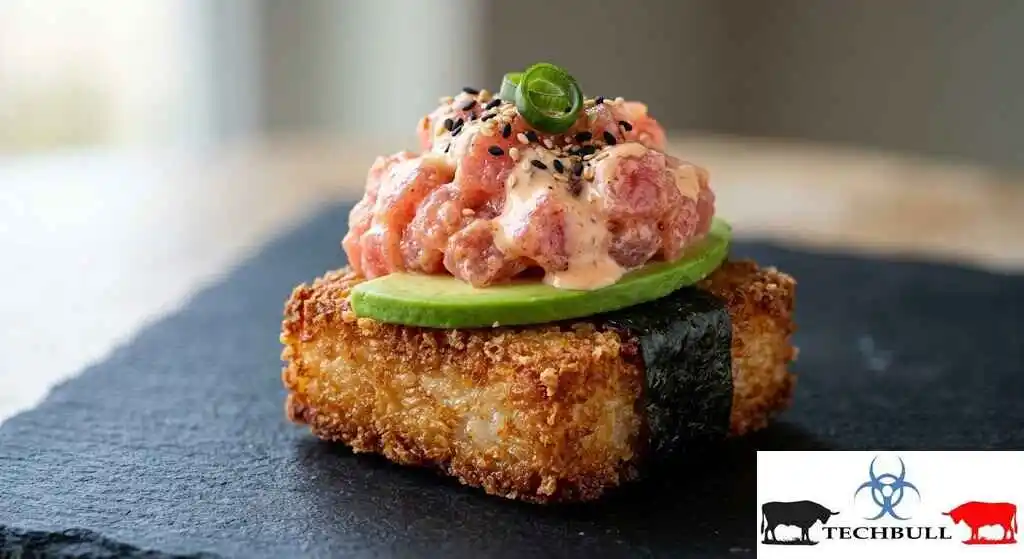
You know the exact feeling. You’re sitting in a dimly lit, overpriced sushi bar. The music is just loud enough to drown out your thoughts, and you just ordered the crispy rice with spicy tuna. Fifteen minutes later, the server places four perfectly square, golden, bite-sized pieces in front of you. Each one has a dollop of glistening, spicy tuna on top, maybe a slice of avocado, and a drizzle of spicy mayo. You eat them in exactly four bites. They cost $18. You are still hungry.
We do it anyway because the texture is unbeatable. The contrast between the shatteringly crisp rice cake and the cold, creamy, spicy tuna topping is a culinary masterpiece. But relying on a restaurant to satisfy that specific craving is a trap. You need a sushi-bar dupe that you can make in your own kitchen.
Enter the spicy tuna rice square.
By utilizing your air fryer, you can achieve that deep-fried restaurant crunch without setting up a dangerous vat of boiling oil in your kitchen. This is an easy sushi appetizer that feels infinitely customizable, looks incredibly impressive on a plate, and happens to be built for short-form video. If you’ve been searching for the ultimate air fryer sushi recipe, this is it.

We are going to break down exactly how to make air-fried rice squares, how to prep the perfect spicy tuna topping, and how to plate them so they look like they belong on your Instagram feed.
The Anatomy of a Perfect Spicy Tuna Rice Square
To build a successful sushi bar dupe, we need to understand the architecture of the bite. There are three critical components: the base, the crunch, and the topping. If any of these are off, the whole thing falls apart—sometimes literally.
The Rice Base
You cannot use leftover long-grain rice from Tuesday’s takeout. Spicy tuna rice squares require short-grain sushi rice. Why? Because of the starch. Short-grain rice has a high amylopectin content, which makes it sticky and cohesive. When pressed and chilled, it acts like edible glue.
You must season the rice. Cooking it in plain water isn’t enough. Once cooked, you fold in a mixture of rice vinegar, sugar, and salt. This seasoning (often called sushi-zu) gives the rice that signature tang that balances the rich, fatty flavor of the tuna. The sugar also helps with the crisping process in the air fryer, aiding the Maillard reaction to give you that beautiful golden-brown crust.
The Crunch Factor
Restaurants deep fry their rice squares in industrial vats of oil. At home, the air fryer is your best friend. It uses rapidly circulating hot air to mimic the effects of a deep fryer. But because we aren’t submerging the rice in oil, we have to be strategic.
To get those truly crispy rice squares, you must lightly coat the exterior of the rice blocks with oil before they go into the air fryer. Using an oil sprayer or a pastry brush to apply a thin layer of neutral oil (like canola, grapeseed, or avocado oil) ensures the exterior gets crispy and golden without becoming greasy or burning.
The Spicy Tuna Topping
This is where you need to be slightly careful, but not intimidated. The spicy tuna topping requires raw fish, and quality matters here. You must buy “sushi-grade” or “sashimi-grade” ahi tuna. This designation means the fish was frozen at a specific temperature for a specific duration to kill any potential parasites, making it safe for raw consumption.
If you cannot find sushi-grade tuna, or if you simply don’t want to eat raw fish, you have options. You can use high-quality canned tuna (drained well), or you can make an avocado crispy rice variation by mashing avocado with a bit of soy sauce and lime juice. The latter is a fantastic, highly satisfying vegetarian hack.
Equipment & Ingredients: What You Actually Need
Success in the kitchen usually comes down to prep and having the right tools. This recipe does not require a trip to a specialty kitchen store, but a few specific items will make your life dramatically easier.
The Gear
- An Air Fryer: Any standard basket or oven-style air fryer will work. You are looking to cook at around 400°F (200°C).
- A Loaf Pan or Baking Dish: This is for pressing the rice. A standard 9×5-inch loaf pan is the perfect size for 2 cups of cooked rice.
- Plastic Wrap: To line your baking dish so you can easily lift the compressed rice block out.
- A Sharp Knife: You need a very sharp, non-serrated knife to cut the compressed rice into clean squares. Have a damp paper towel nearby to wipe the blade between cuts.
- A Pastry Brush or Oil Sprayer: For evenly coating the rice squares before air frying.
The Ingredients
For the Rice:
- 1 cup short-grain sushi rice
- 1 ¼ cups water
- 2 tablespoons rice vinegar
- 1 tablespoon granulated sugar
- ½ teaspoon salt
For the Spicy Tuna Topping:
- ½ pound sushi-grade ahi tuna, finely diced
- 2 tablespoons Japanese mayonnaise (Kewpie is the gold standard for its richer, egg-yolk heavy texture)
- 1 tablespoon sriracha (adjust to taste)
- 1 teaspoon soy sauce
- ½ teaspoon toasted sesame oil
- 1 teaspoon finely chopped scallions (green parts only)
For the Garnish:
- 1 ripe avocado, thinly sliced
- Toasted sesame seeds
- Extra spicy mayo (sriracha + Kewpie mayo)
- Finely sliced scallions
- Thin strips of toasted nori (seaweed)
Traditional Deep-Fried vs. Air-Fried Rice Squares
To understand why the air fryer is the superior method for home cooks, let’s look at a quick comparison.
| Feature | Restaurant Deep-Fried | Air-Fried Rice Squares |
| Texture | Ultra-crisp, highly porous | Very crisp exterior, chewy interior |
| Oil Usage | Submerged in 4-6 cups of oil | 1-2 tablespoons brushed on exterior |
| Mess/Cleanup | Heavy oil splatter, disposal issues | Minimal, basket usually dishwasher safe |
| Prep Time | Fast (cooks in 90 seconds) | Slightly longer (cooks in 10-12 minutes) |
| Skill Level | High (requires oil temperature management) | Low (set it and monitor) |
The air fryer democratizes the crispy rice cake. It allows you to achieve 90% of the restaurant texture with 10% of the effort and cleanup.
Step-by-Step: Building and Air-Frying Your Rice Squares
Let’s get into the actual mechanics of this recipe. This process requires a bit of patience, primarily because the rice needs to chill before you can cut and fry it. Do not skip the chilling step, or your squares will crumble into a sad, messy pile in the air fryer basket.
Step 1: Cook and Season the Rice
- Rinse the rice: Place the sushi rice in a fine-mesh strainer and run it under cold water. Agitate the grains with your fingers until the water runs mostly clear. This removes excess surface starch that would make the rice gummy.
- Cook the rice: Combine the rinsed rice and water in a rice cooker or on the stovetop. Cook until the water is absorbed and the rice is tender.
- Make the sushi-zu: In a small microwave-safe bowl, combine the rice vinegar, sugar, and salt. Microwave for 15 seconds and stir until the sugar and salt are completely dissolved.
- Season: Transfer the hot rice to a large, wide bowl (a wooden hangiri is traditional, but glass or ceramic is fine). Pour the vinegar mixture over the rice. Use a rice paddle or spatula to gently fold the rice in a slicing motion. Do not smash the grains. Fan the rice simultaneously to cool it quickly and give it a glossy shine.
Step 2: Press and Chill
- Line your loaf pan or baking dish with plastic wrap, leaving enough overhang on the sides to lift the rice out later.
- Transfer the warm, seasoned sushi rice into the lined dish.
- Press the rice down firmly and evenly. You want it packed tightly—like a brick. The rice layer should be about ¾ inch to 1 inch thick.
- Fold the plastic wrap over the top and press down one more time.
- Place the dish in the refrigerator for at least 2 hours, or ideally overnight. The rice must be completely cold and set.
Pro-Tip: Chilling the rice retrogrades the starches. This is a food science term meaning the starch molecules crystallize and firm up. This physical change is exactly what allows the rice to hold its square shape in the intense heat of the air fryer without melting into mush.
Step 3: Cut and Prep
- Remove the dish from the fridge. Use the plastic wrap overhangs to lift the solid block of rice out of the pan and onto a cutting board.
- Using your sharp knife, cut the block into uniform squares or rectangles. A standard size is 1.5 x 1.5 inches.
- Crucial step: Wet your knife blade with a damp cloth before each cut. A wet blade prevents the starchy rice from sticking and tearing, giving you perfectly clean edges.
Step 4: The Air-Fry
- Preheat your air fryer to 400°F (200°C) for 3-5 minutes.
- Place the rice squares in the air fryer basket in a single layer, leaving space between them so the hot air can circulate. You will likely need to do this in batches.
- Using your oil sprayer or pastry brush, lightly coat the top of each square with neutral oil.
- Air fry for 8 to 12 minutes. Check them at the 8-minute mark. You are looking for a deep golden brown color on the edges and top. The top should feel hard to the touch.
- Gently flip the squares over (they should release easily if properly crisped). Air fry for another 3-5 minutes until the other side is equally golden and crisp.
- Remove from the air fryer and let them cool on a wire rack for 2 minutes. This is important—if you put the cold topping on hot rice immediately, the base will steam and lose its crunch.
Step 5: Topping and Assembly
While the rice squares are cooling, mix your spicy tuna. In a medium bowl, combine the finely diced sushi-grade tuna, Kewpie mayo, sriracha, soy sauce, sesame oil, and scallions. Gently fold until the tuna is evenly coated.
To assemble:
- Place a slice of avocado on top of each cooled crispy rice square.
- Spoon a generous dollop of the spicy tuna topping over the avocado.
- Garnish with a sprinkle of toasted sesame seeds, a slice of scallion, and a strip of toasted nori wrapped around the middle (this helps hold it together visually and adds a great oceanic flavor).
Serve immediately. The contrast of the cold, creamy topping and the warm, crunchy base is the entire point.
Variations, Substitutions, and Dietary Tweaks
One of the best things about this air fryer sushi recipe is its adaptability. Once you master the crispy rice base, the topping combinations are virtually endless.
Vegetarian and Vegan Options
If you want to skip the raw fish entirely, you can make incredible avocado crispy rice. Mash a ripe avocado with a squeeze of lime juice, a pinch of salt, and a dash of soy sauce. Top the crispy rice with the avocado, and add a drop of sriracha.
Another excellent vegan substitute is spicy tofu. Take extra-firm tofu, press out all the water, and finely dice it. Toss it with the same spicy mayo mixture (using a vegan mayo alternative) and add a teaspoon of white miso paste for umami. It mimics the texture of the tuna surprisingly well.
Budget-Friendly Protein Swaps
Sushi-grade tuna can be expensive, and sometimes you just want a quick snack without visiting a specialty fish market. You can absolutely use high-quality canned tuna. Drain it thoroughly, break up the flakes, and mix it with the spicy mayo. It will not have the buttery texture of raw sashimi, but it will still be delicious and satisfying.
Smoked salmon is another fantastic middle-ground. It doesn’t require raw fish handling, it lasts longer in the fridge, and its salty, smoky profile pairs beautifully with the crispy rice and creamy mayo.
Heat Adjustments
Not everyone likes the same level of spice. If you want the flavor without the burn, reduce the sriracha to half a teaspoon and add a teaspoon of sweet chili sauce or a dash of honey to the tuna mixture. If you are a heat seeker, add a few drops of chili oil (like Lao Gan Ma) or a sprinkle of shichimi togarashi (Japanese seven spice) into the mix.
The Short-Form Video Angle: Making Them Pop on Camera
This is a viral tiktok sushi recipe for a reason. The visual and auditory cues of making spicy tuna rice squares are perfectly suited for TikTok, Instagram Reels, and YouTube Shorts. If you are creating content around this recipe, here is how to make it perform.
The Visual Hook
Start the video with the final product. Show the drip of the spicy mayo, the perfect square shape, and a slow-motion bite where the crunch is audible. People eat with their eyes first. If you open with the finished, aesthetic shot, the viewer is hooked into watching the process.
The ASMR Element
The air fryer provides incredible audio. When you pull the crispy rice squares out of the basket and tap them with a fork or knife, record that sound. The hollow, crispy thwack is a major trend trigger. Ensure your microphone is close to the action when you cut the compressed rice block and when you air fry it.
Lighting and Plating
Shoot in natural light if possible. When plating, use a dark, matte surface (like a slate board or a dark ceramic plate) to make the vibrant pink of the tuna, the green of the avocado, and the golden brown of the rice pop. Use a pair of chopsticks to gently place the tuna on top to show manual dexterity and care.
The “Dupe” Narrative
In your captions or voiceover, lean into the cost-savings angle. Frame it as “I stopped buying $16 sushi appetizers and made them at home in the air fryer.” The economic angle is a massive driver for saves and shares on social media.
Troubleshooting: Why Your Rice Squares Fell Apart
Things go wrong in the kitchen. It happens to the best of us. If your rice squares are crumbling, soggy, or burning, here are the exact reasons why and how to fix them.
Problem: The rice falls apart when cutting.
- Cause: You didn’t press it hard enough in the pan, or it didn’t chill long enough.
- Fix: Next time, use a smaller pan to increase the thickness of the rice block, and press down with significant force using a flat-bottomed measuring cup. Chill for at least 4 hours.
Problem: The rice is falling apart in the air fryer.
- Cause: The squares are too thin, or the air fryer basket wasn’t preheated.
- Fix: Cut thicker squares (at least 1 inch thick). Always preheat your air fryer so the oil hits the rice immediately and creates a protective crust.
Problem: The rice is burnt on the outside but mushy inside.
- Cause: The temperature is too high, or you used too much oil.
- Fix: Lower the temperature slightly to 380°F (190°C). Only use a very light misting or thin brush of oil. Puddles of oil in the air fryer will smoke and burn the exterior before the interior crisps.
Problem: The squares are sticking to the air fryer basket.
- Cause: The basket isn’t non-stick, or you didn’t use enough oil on the bottom of the squares.
- Fix: Lightly spray the basket itself with oil before adding the squares, or use perforated air fryer parchment paper.
FAQ
- Can I make these spicy tuna rice squares ahead of time?
You can press and chill the rice block up to 2 days in advance. You can also air-fry the rice squares a few hours ahead of time and keep them at room temperature. However, you should only add the spicy tuna topping right before serving to prevent the rice from getting soggy.
- How long do leftovers last in the fridge?
Once assembled, they do not last well. The topping will make the crispy rice base soggy within an hour. If you have leftover components, store the crispy rice squares in an airtight container in the fridge and re-crisp them in the air fryer for 2-3 minutes. Store leftover spicy tuna in an airtight container for up to 24 hours.
- Can I use regular long-grain or jasmine rice?
No. Long-grain rice lacks the necessary starch content to stick together. It will fall apart completely when you try to cut and fry it. You must use short-grain sushi rice.
- What is the best air fryer temperature for crispy rice?
400°F (200°C) is ideal. This high heat quickly crisps the exterior while keeping the interior tender.
- Where do I buy sushi-grade tuna?
Look for it at high-end grocery stores, Japanese markets, or specialty seafood vendors. Always ask the fish counter if the tuna is safe for raw consumption.
- Can I freeze the compressed rice block?
Yes, you can freeze the pressed, uncut block of rice wrapped tightly in plastic wrap for up to 1 month. Thaw it completely in the refrigerator before cutting and frying. Do not freeze already-fried squares.
- How do I prevent my avocado from browning if I am serving them at a party?
Toss the avocado slices in a tiny amount of lemon or lime juice before placing them on the rice squares. The citric acid slows down the oxidation process.
- Is there a gluten-free version of this recipe?
Yes. Simply ensure you are using a gluten-free soy sauce (tamari) in your spicy tuna mixture. The rest of the ingredients are naturally gluten-free.
- Can I bake these in the oven instead of using an air fryer?
Yes, but the texture will be slightly different. Bake at 425°F (220°C) on a parchment-lined baking sheet for about 15-20 minutes, flipping halfway, until golden. The air fryer yields a crispier result due to the rapid air circulation.
- Why do I need to wet my knife when cutting the rice?
A wet blade prevents the sticky starches in the sushi rice from clinging to the metal, ensuring clean, sharp edges on your squares. Wipe and re-wet the knife between every cut.
- Can I use canned tuna instead of raw tuna?
Absolutely. If you are on a budget or wary of raw fish, drain canned tuna very well, flake it, and mix it with the spicy mayo. The texture will be different, but the flavor will still be excellent.
- How do I make the spicy mayo thicker?
To thicken spicy mayo, add slightly less sriracha (which is watery) and more Kewpie mayonnaise. You can also fold in a tiny pinch of cream cheese for a richer, stiffer texture.
- What can I substitute for Kewpie mayo?
If you cannot find Kewpie mayo, you can make a close substitute by whisking together regular mayonnaise, a tiny pinch of sugar, a few drops of rice vinegar, and a dash of MSG.
- Can I add other toppings besides avocado?
Yes. Try thinly sliced cucumber for crunch, a dab of masago (smelt roe) for texture, or a micro-greens salad on top.
- How do I make this recipe vegan?
Swap the tuna for finely diced, pressed extra-firm tofu. Use vegan mayonnaise instead of Kewpie. Ensure your sugar is certified vegan (some white sugar is processed with bone char).
- Why is my rice not getting crispy in the air fryer?
The most common reason is forgetting to coat the rice in oil. Without a thin layer of fat, the dry heat of the air fryer will just dry out the rice and make it hard, not crispy. Another reason is overcrowding the basket.
- Can I use brown sushi rice?
You can, but it requires a longer cooking time and more water. The texture will be chewier and slightly nuttier than white sushi rice, and the squares may not hold together quite as firmly due to the bran layer.
- How finely should I dice the tuna?
Dice the tuna into pieces roughly the size of a grain of corn (about ¼ inch). If it is too chunky, it will fall off the rice square. If it is too minced, it will become a paste.
- Do I need to use a rice cooker?
No. You can cook sushi rice on the stovetop by bringing it to a boil, covering it, and simmering on the lowest heat for 15 minutes, then letting it rest for 10 minutes off the heat.
- Can I make this recipe spicy without using sriracha?
Yes. You can use a spoonful of your favorite hot sauce, or for a more traditional Japanese flavor, use a pinch of shichimi togarashi (Japanese seven spice) or a drizzle of chili oil.
- What is the best way to press the rice if I don’t have a loaf pan?
You can use any rectangular or square baking dish. Alternatively, you can press the rice flat between two sheets of plastic wrap on a cutting board, place another cutting board on top, and weigh it down with a heavy can.
- How long does it take for the rice block to set?
It takes a minimum of 2 hours in the refrigerator to set properly, but leaving it overnight yields the best, most stable results for cutting.
- Can I use a different type of vinegar?
Rice vinegar has a specific, mild acidity that is essential for sushi. If you absolutely must substitute, use apple cider vinegar diluted with a little water, but avoid standard white vinegar as it is too harsh.
- Why did my rice burn in the air fryer?
Air fryers heat up very quickly and can have hot spots. Check your squares at the 8-minute mark. If they are browning too fast, lower the temperature by 20 degrees.
- Can I use imitation crab instead of tuna?
Yes. Finely shredded imitation crab (surimi) mixed with spicy mayo is a great, budget-friendly, and fully cooked alternative to raw tuna.
- Is it safe to eat raw tuna at home?
It is safe as long as you purchase “sushi-grade” or “sashimi-grade” tuna from a reputable source. This ensures the fish has been properly frozen to eliminate parasites. Pregnant women and those with compromised immune systems should consult a doctor before consuming raw seafood.
- How do I reheat the rice squares?
To reheat, place them back in the air fryer at 350°F (175°C) for 3-4 minutes until they crisp back up. Do not microwave them, or they will become rubbery and soft.
- Can I make these without a topping?
Yes. The crispy rice squares are delicious on their own. You can serve them as a side dish with a bowl of miso soup, or use them as dippers for a spicy tuna bowl.
- What kind of oil is best for air-frying?
Use an oil with a high smoke point. Avocado oil, grapeseed oil, or canola oil are the best choices. Avoid olive oil, which has a lower smoke point and can burn or impart an unwanted flavor.
- How thick should I cut the rice squares?
Aim for a thickness of about ¾ inch to 1 inch. If they are too thin, they will shatter when you bite into them. If they are too thick, the inside won’t warm up enough before the outside burns.
The spicy tuna rice square is the perfect intersection of high-end sushi bar aesthetic and accessible home cooking. By mastering the press, the chill, and the air-fry technique, you can recreate that shatteringly crisp, creamy, and spicy bite for a fraction of the cost. It is an easy sushi appetizer that demands a bit of patience but rewards you with an undeniably impressive result.
Stop paying $18 for four bites. Grab your air fryer, press your rice, and start building your own crispy rice squares at home. Your wallet—and your taste buds—will thank you.
Disclaimer: This content offers general health and nutrition information. It is not intended as medical advice, diagnosis, or treatment. Individual dietary needs vary. Please consult a qualified health professional with any questions about your personal health before implementing new meal plans or dietary changes. You are responsible for ensuring recipes are safe for your specific allergies and dietary needs.
