
Table of Contents
Easy 3-Ingredient Frozen Fruit & Yogurt Clusters
Three ingredients, one tray, and a freezer are all it takes to make the snack everyone keeps scrolling past and stopping for.
The Night My Freezer Saved My Sweet Tooth
It was almost eleven at night, I had a sugar craving that would not quit, and my kitchen had exactly three things going for it: half a tub of yogurt, a lonely bag of grapes, and a freezer with room to spare. I was too tired to bake, too broke that week for a fancy dessert run, and honestly too lazy to even wash a mixing bowl. So I did the laziest possible thing. I dunked grapes in yogurt, dropped them onto a sheet of parchment paper in little clumps, and shoved the whole tray into the freezer while I watched one more episode of whatever I was half-watching that night.
Two hours later, I pulled the tray out expecting a soupy, sad mess. Instead, I found little jewel-toned clusters, frosty and firm, that cracked open with a satisfying snap when I bit into them. Cold yogurt, sweet fruit, a texture somewhere between a popsicle and a fruit gummy. I ate the whole tray standing at the open freezer door like a raccoon who had found treasure, and I have made some version of this snack almost every week since.
What I did not know that night is that I had accidentally stumbled onto something that would take over food feeds everywhere. Frozen fruit clusters, sometimes called yogurt clusters or yogurt bark bites, have become one of the two biggest breakout recipes of the year, right alongside cottage cheese everything. And the wildest part is that the entire recipe is basically what I threw together out of boredom: fruit, yogurt, and a freezer.

This article is going to walk you through everything, from what frozen fruit clusters actually are, to where this trend came from, to a full step-by-step method, nutrition information, storage tips, and thirty questions people ask most often about them. Grab your yogurt tub, because by the end of this you are going to want to make a batch tonight.
What Are Frozen Fruit Clusters?
The Simple Definition
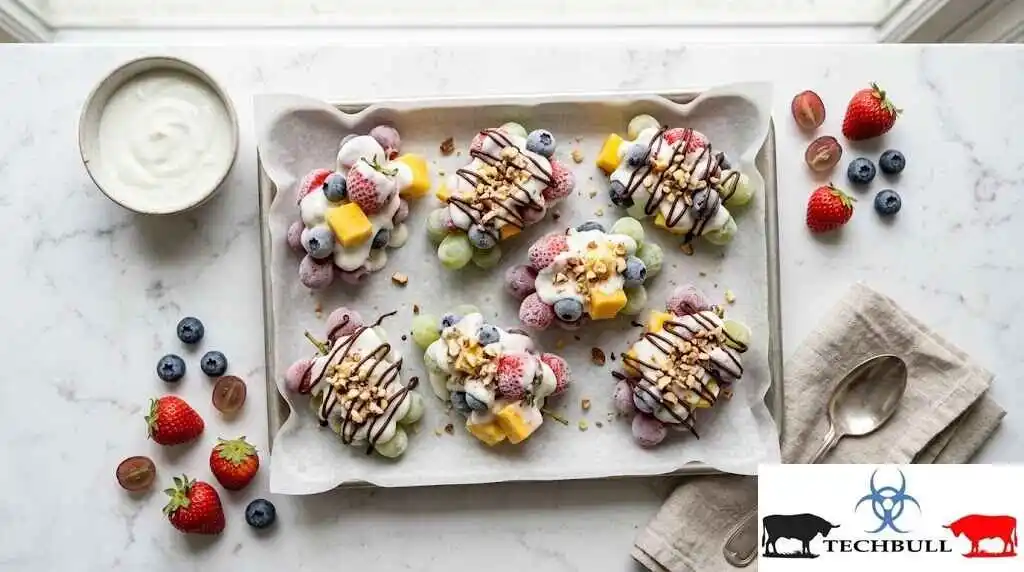
Frozen fruit clusters are small bite-sized clumps of fresh fruit coated in yogurt and frozen solid until firm. Think of them as the lazy cousin of chocolate-covered strawberries and the frosty cousin of a smoothie bowl. Instead of dipping each piece of fruit individually like a fondue, you toss cut fruit into a bowl of yogurt, scoop out small clusters with a spoon, and freeze them on a tray until they hold their shape.
The magic is in the texture contrast. The yogurt coating hardens into something between soft-serve ice cream and a thin frozen shell, while the fruit inside stays slightly chewy and juicy, especially with grapes, berries, or mango. Every bite delivers cold, creamy, tangy, and sweet all at once, and because the pieces are small, they feel like a snack rather than a dessert commitment.
Why Everyone Is Suddenly Making Them
Part of the appeal is purely visual. Frozen fruit clusters look like little edible gemstones, especially when you use a mix of colorful fruit like blueberries, raspberries, and pomegranate seeds. They photograph beautifully on a white plate or parchment sheet, which is exactly the kind of shot that does well on any food feed. The other part of the appeal is how ridiculously simple the process is. There is no baking, no cooking, and often no measuring. You need a bowl, a spoon, a tray, and a freezer, and most people already have all four sitting in their kitchen right now.
Frozen Fruit Clusters vs Other Frozen Snacks
It helps to place frozen fruit clusters next to their frozen dessert cousins so you understand exactly where they fit. Yogurt bark is poured flat and broken into shards, frozen fruit clusters are scooped into small individual mounds. Chocolate-covered fruit uses melted chocolate instead of yogurt and usually needs a double boiler or careful microwave melting. Smoothie bowls are blended and eaten with a spoon straight away rather than frozen into a solid, portable snack. Frozen fruit clusters borrow a little from each idea but land in their own space as a make-ahead, grab-and-go snack that needs almost no skill and almost no cleanup.
Why the Format Itself Matters
There is something worth noticing about why the cluster shape specifically caught on rather than a flat bark or a dipped skewer. Clusters are naturally portion-controlled. Each little mound is roughly one bite or two, which makes it easy to grab a handful without thinking too hard about serving sizes. They also freeze faster than a flat bark sheet because the mounds are smaller and thinner in places, so the yogurt sets before it has a chance to slide off the fruit. And because each cluster is its own little unit, you can mix flavors on a single tray, some with berries, some with mango, some with a chocolate drizzle, without anything blending together the way a single flat sheet would.
A Short History of the Frozen Fruit and Yogurt Combination
Freezing fruit for snacking is not new at all. Frozen grapes have been a household trick for generations, especially in warm climates where a bowl of frozen grapes works as a cheap, natural alternative to ice cream. Yogurt-covered raisins and yogurt-covered pretzels have been sold in health food stores since at least the 1970s and 1980s, built on the same idea of pairing tangy yogurt with something sweet or salty underneath.
What changed recently is the format. Somewhere in home kitchens and short-form cooking videos, someone combined the frozen fruit trick with the yogurt coating trick, then broke the mixture into small clusters instead of individual dipped pieces or a flat bark. This small change made the snack faster to make, easier to eat in one or two bites, and far more visually interesting than a flat sheet of yogurt bark, which is likely why it spread so quickly once people started sharing their trays online. Recipes rarely arrive out of nowhere. Most of the time, they are small, clever remixes of older ideas, and frozen fruit clusters are a great example of that pattern in action.
It is also worth noting how much this trend owes to the broader shift toward high-protein, low-effort snacking. Over the last few years, home cooks have leaned hard into recipes that deliver protein and flavour without requiring an oven, a stovetop, or any real cooking skill, which is the same wave that carried cottage cheese and yogurt-based recipes into the spotlight. Frozen fruit clusters sit right at the centre of that shift, combining a protein-rich base with fruit that needed no preparation beyond a wash and a chop, at a moment when people were actively looking for exactly that kind of recipe.
Ingredients You Need
The beauty of this recipe is how short the ingredient list actually is. At its core, you only need three things.
Fresh or frozen fruit is your first ingredient, and almost anything works. Grapes, strawberries, blueberries, raspberries, mango chunks, banana slices, and pomegranate seeds are all popular choices because they hold their shape well and taste bright even after freezing.
Plain or flavored yogurt is your second ingredient. Greek yogurt gives you the thickest, creamiest coating and the highest protein content, while regular yogurt is thinner but still works fine. Non-dairy yogurt made from coconut, almond, or oat milk is a good swap for anyone avoiding dairy.
A sweetener is your optional third ingredient. Honey, maple syrup, or a spoon of sugar can be stirred into the yogurt if your fruit is on the tart side or if you simply prefer a sweeter bite. Many people skip this entirely and let the natural sugar in the fruit do the work.
Beyond these three, a few optional extras take the clusters from good to genuinely exciting. Crushed nuts, granola, shredded coconut, chia seeds, or a light drizzle of melted chocolate can be sprinkled on top before freezing for extra crunch and flavor.
Choosing the Right Fruit
Not every fruit performs the same way once frozen, and knowing this ahead of time saves you a wasted tray. Grapes, berries, mango, banana, and pineapple all freeze beautifully because they hold their shape and their sweetness intensifies slightly in the cold. Watery fruit such as watermelon or cucumber, on the other hand, releases too much liquid as it thaws, which can make the yogurt coating slip off or turn slushy. If you want to use a softer fruit like kiwi or peach, cut the pieces a little larger than you normally would, since smaller pieces of delicate fruit tend to lose their shape once the yogurt is folded in.
Step-by-Step Recipe and Process
Preparing Your Fruit
Start by washing your fruit thoroughly and patting it completely dry with a clean towel. This step matters more than people expect, because excess water thins out the yogurt coating and stops it from clinging properly to the fruit. Cut larger fruit like strawberries, mango, or banana into bite-sized pieces roughly the size of a grape, so every cluster cooks down to a similar, manageable size.
Mixing the Yogurt Coating
In a mixing bowl, add your yogurt along with any sweetener you are using, and stir until smooth and well combined. If you want flavoured clusters, this is the moment to stir in a spoon of vanilla extract, a pinch of cinnamon, or a swirl of fruit puree for colour and taste.
Coating and Clustering
Add your prepared fruit directly into the yogurt bowl and gently fold everything together with a spatula until each piece is coated. Using a spoon, scoop small mounds of the fruit-and-yogurt mixture, roughly one to two tablespoons each, onto a baking tray lined with parchment paper. Leave a little space between each cluster so they do not merge together as they freeze.
Freezing
Place the tray flat into the freezer and let the clusters freeze for a minimum of two hours, though three to four hours gives you a firmer, easier-to-handle result. Avoid stacking anything on top of the tray while it freezes, since the clusters need to hold their shape before they can be moved or stored.
The Recipe Card
Recipe Card: Frozen Fruit Clusters
| Servings: 4 | Prep time: 15 minutes | Freeze time: 2 to 4 hours |
Ingredients
| • 2 cups mixed fruit (grapes, strawberries, blueberries, mango), cut into bite-sized pieces
• 1 cup Greek yogurt (or dairy-free yogurt of choice) |
• 1 to 2 tablespoons honey or maple syrup (optional)
• Optional toppings: crushed nuts, granola, shredded coconut, mini chocolate chips |
Method
- Wash and thoroughly dry all fruit, then cut larger pieces into bite-sized chunks.
- In a bowl, whisk the yogurt with honey or maple syrup until smooth.
- Fold the fruit gently into the yogurt until every piece is coated.
- Scoop small clusters onto a parchment-lined tray, spacing them apart.
- Sprinkle any optional toppings over the clusters while they are still wet.
- Freeze flat for at least 2 hours, or until completely firm.
- Peel clusters off the parchment and transfer to an airtight container or bag for storage.
Nutritional Value of Frozen Fruit Clusters
Frozen fruit clusters sit in a genuinely good spot nutritionally, especially compared to typical frozen desserts. A single cluster made with Greek yogurt and fresh berries generally lands somewhere around 25 to 45 calories, depending on the fruit and any added sweetener, which means a serving of four or five clusters usually stays under 200 calories.
Greek yogurt brings a meaningful amount of protein to the table, often 3 to 4 grams per cluster serving, along with calcium and probiotics that support gut health. The fruit contributes fibre, vitamin C, and antioxidants, particularly if you lean on berries and pomegranate seeds. Because there is no added fat from oil or butter and only a light touch of sweetener, if any, frozen fruit clusters are considerably lower in sugar and calories than ice cream, candy, or most packaged frozen desserts, while still satisfying the same craving for something cold and sweet.
If you are tracking macros or simply trying to eat a little cleaner, frozen fruit clusters are easy to adjust. Swapping full-fat Greek yogurt for a low-fat or non-fat version trims a few calories without changing the texture much. Skipping the added sweetener entirely and relying on naturally sweet fruit like grapes or mango is another simple way to cut sugar. On the other end, if you are making these for kids or want a slightly richer treat, a drizzle of melted chocolate or a sprinkle of granola adds calories and flavour without much extra effort. The recipe is flexible enough to fit almost any goal, which is part of why it has stuck around in so many different kinds of kitchens.
Chef’s Tip: A Case Study in Flavor Balance
I want to share a small case study from my own kitchen, because it taught me the single most useful lesson about this recipe. On my first few attempts, I used only very sweet fruit like grapes and mango with plain yogurt, and the clusters tasted flat, almost one-note. The next batch, I mixed in raspberries and a squeeze of lemon juice into the yogurt itself, and the difference was dramatic. The tartness of the raspberries and lemon cut through the sweetness and made every other flavour pop harder.
The chef’s tip that came out of that experiment is simple: always build a little contrast into your clusters. Pair a sweet fruit with a tart one, or add a small amount of citrus juice or zest into your yogurt base. Balance is what turns an average batch of frozen fruit clusters into a genuinely memorable one, and it costs you nothing extra to do.
Popular Variations
Chocolate Drizzle Clusters
Melt a small amount of dark or milk chocolate and drizzle it over the clusters right after scooping, before they go into the freezer. The chocolate hardens into a light crackly shell that pairs beautifully with the tangy yogurt underneath.
Tropical Clusters
Swap your usual fruit for mango, pineapple, and toasted coconut flakes, and use coconut yogurt as your base for a fully tropical flavor profile that tastes like a mini piña colada in cluster form.
Protein-Boosted Clusters
Stir a scoop of vanilla or unflavored protein powder into your yogurt before coating the fruit, which is an easy way to turn this snack into a genuine post-workout option without changing the method at all.
Peanut Butter Swirl Clusters
Warm a spoon of peanut butter until slightly runny and swirl it through the yogurt before adding the fruit, which works especially well with banana and strawberry combinations.
Spiced Clusters
A pinch of cinnamon, cardamom, or nutmeg stirred into the yogurt base adds warmth that pairs surprisingly well with apple, pear, or fig pieces, giving the clusters a cozier, almost dessert-like feel without adding any extra sugar.
Serving Suggestions
Frozen fruit clusters work well straight out of the freezer as a standalone snack, but they also shine in a few other settings. Pile a handful into a bowl alongside granola for a quick frozen yogurt parfait. Serve them on a platter at a party or kids’ birthday alongside toothpicks for an easy, no-mess finger food. Crush a few clusters over a bowl of oatmeal or overnight oats for a cold, fruity topping. They also work nicely as a lunchbox addition, since they thaw slightly by the time lunch rolls around, turning into a soft, creamy fruit salad by the time they are eaten.
Storage Tips
Once fully frozen, transfer your clusters into an airtight container or a freezer-safe zip bag, separating layers with a sheet of parchment paper so they do not stick together into one large block. Stored this way, frozen fruit clusters keep well in the freezer for up to two to three weeks without any noticeable change in taste or texture.
Avoid leaving them out at room temperature for more than five to ten minutes before eating, since the yogurt coating softens and loses its snap quickly once it starts to warm up. If you notice ice crystals forming after longer storage, this is normal and simply means the water content in the fruit has partially crystallized, though the clusters remain perfectly safe and tasty to eat.
A small trick worth knowing is to freeze the clusters on the tray first and only transfer them to a container once they are fully solid, usually after the full two to four hour freeze. Skipping this step and bagging the clusters while they are still soft is the most common reason people end up with one giant fused block instead of neat individual pieces.
Frozen Fruit Clusters vs Other Popular Frozen Snacks
| Feature | Frozen Fruit Clusters | Yogurt Bark | Chocolate-Covered Fruit | Popsicles |
| Prep effort | Very low | Low | Moderate | Low to moderate |
| Cooking required | None | None | Melting chocolate | None |
| Portion size | Bite-sized, portioned | Broken into random shards | Individual pieces | Fixed mould size |
| Protein content | High with Greek yogurt | High with Greek yogurt | Low | Usually none |
| Added sugar | Optional, low | Optional, low | Higher, from chocolate | Often high |
| Best for | Grab-and-go snacking | Sharing platters | Special occasions | Hot weather cooling |
| Storage life | 2 to 3 weeks | 2 to 3 weeks | 1 to 2 weeks | Several weeks |
Frozen fruit clusters are proof that the best recipes are not always the most complicated ones. Three ingredients, one tray, and a few hours in the freezer are all it takes to land on something that looks impressive, tastes genuinely good, and fits into almost any kind of eating pattern, from a light snack to a post-workout bite to a party finger food. My own late-night, low-effort accident turned into a snack I now make on purpose every week, and once you make your first batch, I suspect you will understand exactly why this tiny recipe took over so many feeds this year. Grab your fruit, grab your yogurt, and let your freezer do the rest.
FAQs
| Question | Answer |
| 1. What are frozen fruit clusters made of? | They are made from just fruit and yogurt, with an optional sweetener or topping. The fruit is coated in yogurt, scooped into small mounds, and frozen until firm. |
| 2. How long do frozen fruit clusters take to freeze? | Most clusters need a minimum of two hours to freeze solid, though three to four hours gives a firmer result. Leaving them overnight also works well if you want to prep ahead. |
| 3. Can I use frozen fruit instead of fresh fruit? | Yes, frozen fruit works, but let it thaw slightly first so the yogurt can coat it evenly. Using fully frozen fruit straight from the bag often makes the yogurt slide off before freezing. |
| 4. What is the best yogurt to use for this recipe? | Greek yogurt is the best choice because it is thick, creamy, and holds its shape well once frozen. Regular yogurt works too but produces a thinner, slightly less sturdy coating. |
| 5. Are frozen fruit clusters healthy? | Yes, they are a genuinely healthy snack, especially when made with Greek yogurt and fresh fruit. They offer protein, fiber, and vitamins with far less added sugar than most frozen desserts. |
| 6. Can I make frozen fruit clusters without added sugar? | Absolutely, many people skip the sweetener entirely and let the natural sugar in the fruit carry the flavor. Grapes, mango, and ripe berries are naturally sweet enough on their own. |
| 7. How many calories are in one frozen fruit cluster? | A single cluster typically has around 25 to 45 calories, depending on the fruit and yogurt used. A serving of four to five clusters usually stays under 200 calories. |
| 8. Can I use non-dairy yogurt for a vegan version? | Yes, coconut, almond, or oat milk yogurt all work well as dairy-free substitutes. The texture may be slightly different, but the clusters still freeze and taste great. |
| 9. Why did my yogurt coating slide off the fruit? | This usually happens when the fruit is not dried properly before mixing, since leftover water thins the yogurt. Always pat your fruit completely dry before combining it with the yogurt. |
| 10. Can kids help make frozen fruit clusters? | Yes, this recipe is very kid-friendly since there is no cooking or sharp knife work required for most fruits. Kids can help with mixing, scooping, and adding toppings. |
| 11. What fruits work best for frozen fruit clusters? | Grapes, strawberries, blueberries, raspberries, mango, and banana all freeze and hold their shape beautifully. Avoid very watery fruits like watermelon, which tend to turn slushy. |
| 12. How long can frozen fruit clusters be stored? | Stored in an airtight container in the freezer, they stay fresh for up to two to three weeks. Separating layers with parchment paper helps prevent them from sticking together. |
| 13. Can I add protein powder to the recipe? | Yes, stirring a scoop of vanilla or unflavored protein powder into the yogurt is an easy way to boost the protein content. This works especially well for a post-workout snack version. |
| 14. Do frozen fruit clusters melt quickly? | They soften fairly quickly at room temperature, usually within five to ten minutes, so they are best eaten straight from the freezer. This quick melt is part of what makes the texture so enjoyable. |
| 15. Can I use flavored yogurt instead of plain? | Yes, flavored yogurt like vanilla, strawberry, or honey adds extra sweetness and flavor without any additional steps. Just be mindful that flavored yogurts often already contain added sugar. |
| 16. What toppings work well on frozen fruit clusters? | Crushed nuts, granola, shredded coconut, chia seeds, and melted chocolate drizzle are all popular topping choices. Add toppings right after scooping, while the yogurt is still wet, so they stick properly. |
| 17. Can I make a big batch and freeze it for weeks? | Yes, this recipe scales up easily and freezes well for two to three weeks without losing flavor or texture. Just make sure clusters are fully solid before transferring them to a storage container. |
| 18. Is this recipe good for meal prep? | Yes, frozen fruit clusters are an excellent grab-and-go snack for meal prep, since they need no daily preparation once made. A single batch can cover snack cravings for a couple of weeks. |
| 19. Can I use Greek yogurt alternatives like skyr? | Yes, skyr and other thick strained yogurts work just as well as Greek yogurt in this recipe. The key requirement is thickness, since thin yogurt does not coat the fruit as evenly. |
| 20. Why are my clusters sticking together on the tray? | This usually happens when clusters are placed too close together before freezing. Leave at least an inch of space between each mound so they freeze as separate pieces. |
| 21. Can I dip the clusters in chocolate after freezing? | Yes, once the clusters are fully frozen, you can quickly dip them in melted chocolate and return them to the freezer for a few minutes to set. Work fast since the frozen clusters melt quickly at room temperature. |
| 22. Is this recipe suitable for people with diabetes? | Frozen fruit clusters made without added sugar and with lower-sugar fruit like berries can fit into many diabetes-friendly eating plans. It is always best to check with a doctor or dietitian for individual advice. |
| 23. Can I make these in an ice cube tray instead of a baking sheet? | Yes, using a silicone ice cube tray gives you neat, uniform shapes instead of loose clusters. This method also makes them easier to pop out and store individually. |
| 24. How do frozen fruit clusters compare to popsicles? | Popsicles are usually liquid-based and poured into moulds, while frozen fruit clusters keep the fruit’s texture intact inside a yogurt coating. Clusters generally offer more protein and a more varied texture in every bite. |
| 25. Can I use this recipe for a party or gathering? | Yes, frozen fruit clusters are a great party snack since they can be made ahead of time and served straight from the freezer. Arrange them on a platter with toothpicks for easy, mess-free serving. |
| 26. What is the ideal cluster size? | Around one to two tablespoons of fruit-and-yogurt mixture per cluster is ideal for a proper bite-sized snack. Larger clusters take longer to freeze and can be harder to eat in one go. |
| 27. Can I reuse the parchment paper for multiple batches? | Yes, as long as the parchment paper is clean and dry, it can be reused for another batch. Just check that no yogurt residue is stuck to it before reusing. |
| 28. Do frozen fruit clusters taste good with citrus fruit? | Yes, citrus segments like mandarin or small orange pieces work well, especially when paired with a touch of honey in the yogurt. The tartness adds a nice contrast to the creamy coating. |
| 29. Why is this recipe considered one of the breakout trends this year? | It combines visual appeal, minimal effort, and genuine nutrition into one snack, which is a rare combination in viral food trends. The simplicity of only needing fruit and yogurt makes it accessible to almost anyone. |
| 30. Can I turn this into a smoothie if the clusters melt too much? | Yes, if your clusters melt down, you can blend them with a splash of milk for a quick smoothie instead of wasting them. This is a handy backup if you forget them out of the freezer for too long. |
Disclaimer: The content on this blog is for informational purposes only. The author’s opinions are personal and not endorsed. Efforts are made to provide accurate information, but completeness, accuracy, or reliability are not guaranteed. The author is not liable for any loss or damage resulting from the use of this blog. It is recommended to use the information on this blog at your own discretion.
